
Menopause is a natural time in every woman’s life. It usually happens between ages 45 and 55. During this time, your body goes through many changes. You might feel hot suddenly, have trouble sleeping, or feel moody. These symptoms can be hard to deal with.
The good news is that yoga can help. Yoga is a gentle exercise that combines simple movements with breathing. It helps your body and mind feel calmer and stronger.
Why Does Menopause Make You Feel Bad?
When menopause starts, your hormones change. These hormone changes cause different problems:
- Hot flashes that make you feel suddenly warm
- Night sweats that wake you up
- Trouble sleeping through the night
- Joint pain and body aches
- Feeling tired all the time
- Mood swings and feeling sad or angry
- Forgetting things easily
These symptoms are normal, but they don’t feel good. Many women want natural ways to feel better without taking medicines.
How Yoga Helps with Menopause
Yoga is not just exercise. It helps your whole body work better. Here’s how:
Calms Your Mind
When you practice yoga, you breathe slowly and deeply. This tells your brain to relax. Less stress means fewer hot flashes and better sleep.
Makes Your Bones Stronger
During menopause, your bones can become weak. Yoga poses help keep bones strong and healthy. This protects you from breaking bones as you get older.
Reduces Hot Flashes
Gentle yoga poses cool down your body. Special breathing tricks can stop a hot flash quickly.
Helps You Sleep Better
Doing yoga before bed relaxes your body. When your body is relaxed, you fall asleep faster and sleep deeper.
Eases Pain
Yoga stretches your muscles and joints. This reduces stiffness and pain that comes with menopause.
Easy Yoga Poses for Beginners
You don’t need to be flexible to start yoga. These simple poses work for everyone.
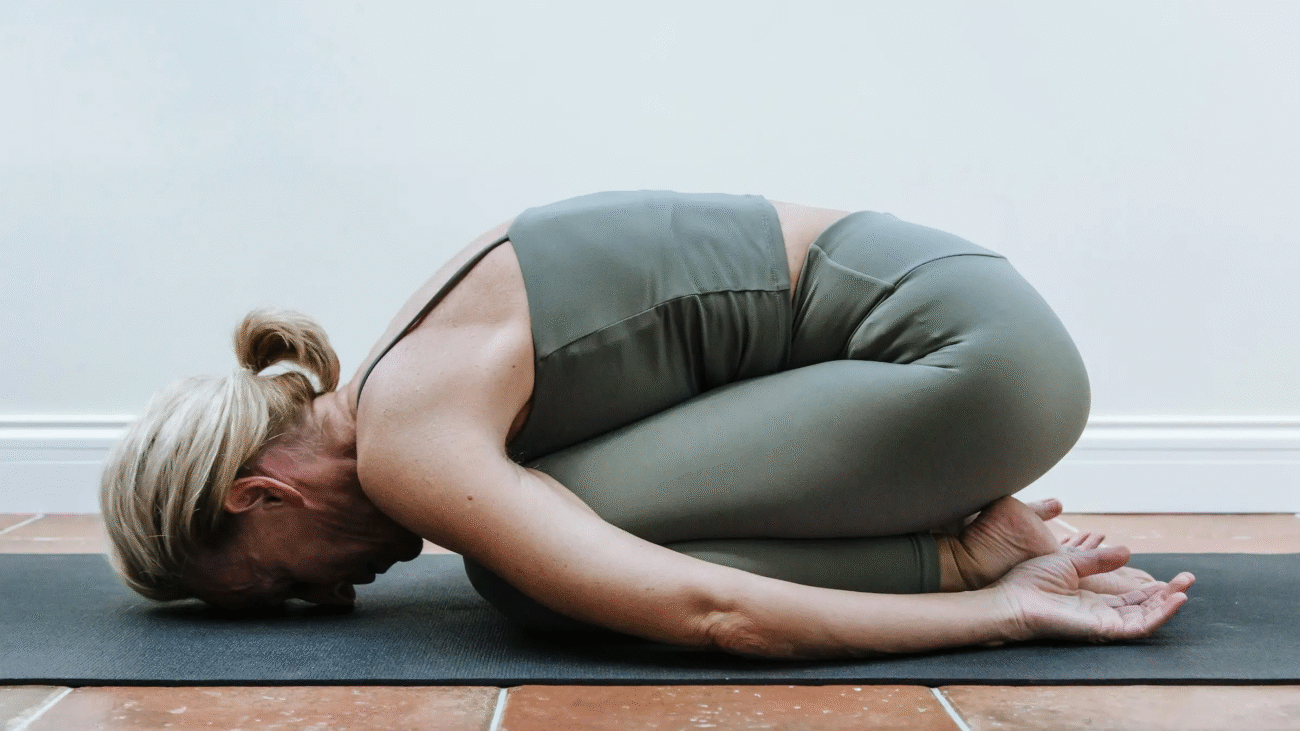
Child’s Pose
This pose calms you down when you feel stressed.
Kneel on the floor. Sit back on your heels. Bend forward and rest your head on the ground or a pillow. Put your arms by your sides. Stay here for 3 minutes and breathe slowly.
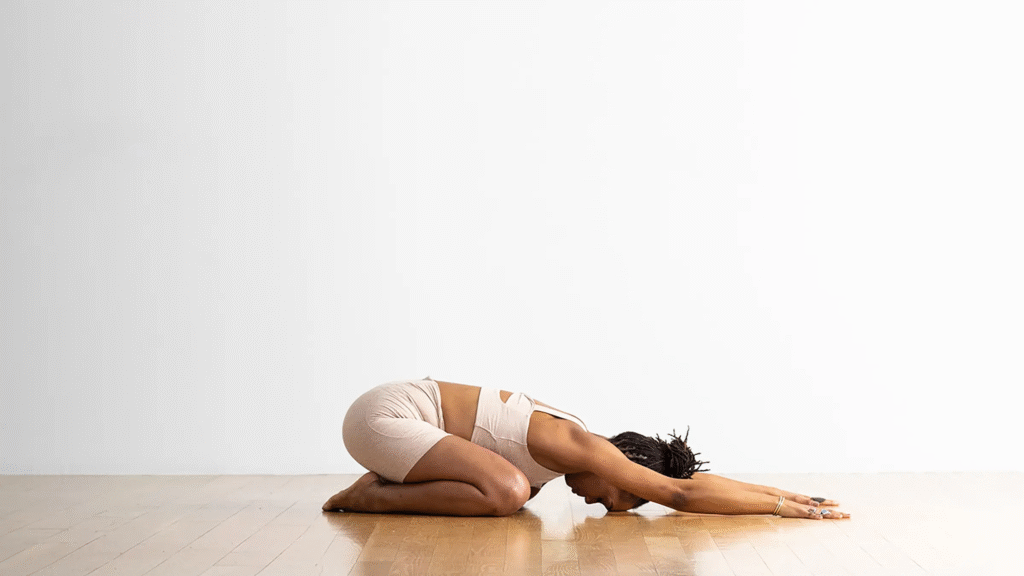
Legs Up the Wall
This pose is great for tired legs and helps you relax.
Sit next to a wall. Lie down on your back and swing your legs up against the wall. Your body makes an L shape. Rest your arms by your sides. Stay for 5 minutes.
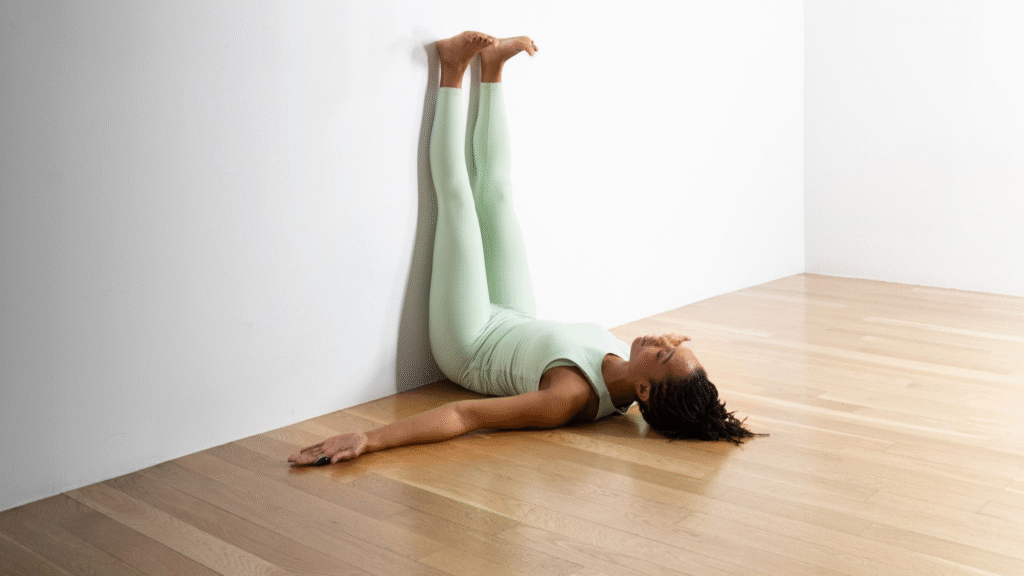
Cat-Cow Stretch
This movement helps your back feel better.
Get on your hands and knees. Arch your back up like a cat, then let your belly drop down like a cow. Move slowly back and forth for 1 minute.
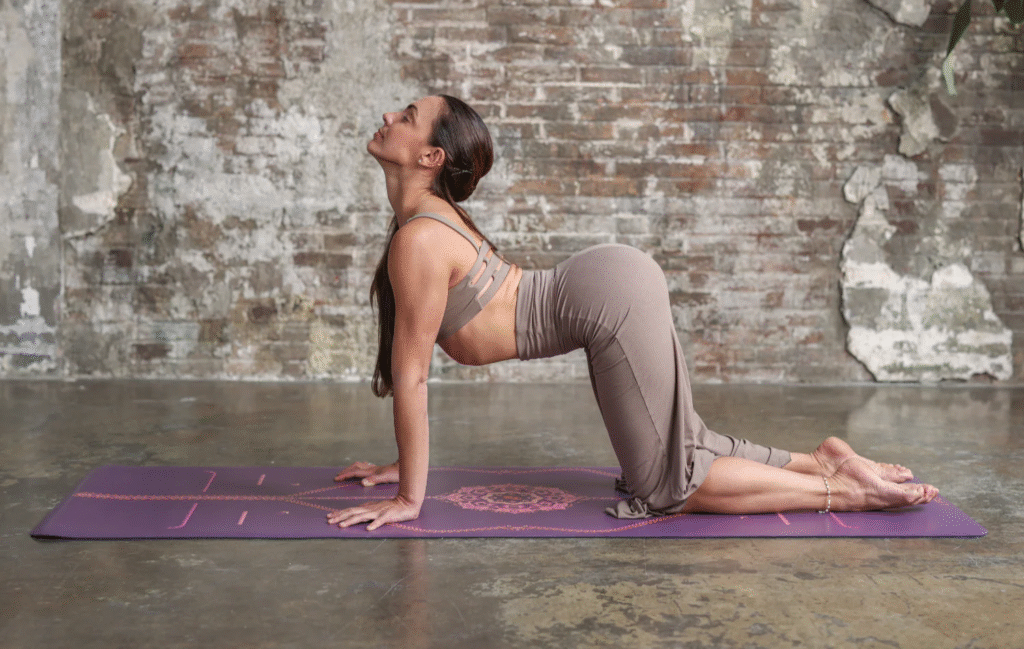
Bridge Pose
This pose makes your back and legs stronger.
Lie on your back with knees bent and feet flat on the floor. Lift your hips up toward the ceiling. Keep your shoulders on the ground. Hold for 30 seconds.
Simple Twist
This gentle twist helps your digestion and reduces belly fat.
Sit with your legs crossed. Put your right hand on your left knee. Twist gently to the left. Hold for 30 seconds. Then twist to the other side.
Breathing Tricks for Hot Flashes
Cooling Breath
When a hot flash starts, try this:
Stick out your tongue and curl it like a tube. Breathe in through your curled tongue. Close your mouth. Breathe out through your nose. Do this 10 times. You’ll feel cooler fast.
Slow Belly Breathing
Put one hand on your belly. Breathe in slowly so your belly rises. Count to 4. Breathe out slowly. Count to 6. Do this for 5 minutes. This calms anxiety and helps you sleep.
Your Daily Yoga Plan
Morning Routine (10 Minutes)
- Cat-Cow Stretch (2 minutes)
- Bridge Pose (1 minute)
- Simple standing stretches (3 minutes)
- Slow breathing (4 minutes)
Before Bed (10 Minutes)
- Child’s Pose (3 minutes)
- Legs Up the Wall (5 minutes)
- Slow Belly Breathing (2 minutes)
Tips for Starting Yoga
Go Slow
Don’t rush. Start with just 10 minutes a day. Your body needs time to learn new movements.
Listen to Your Body
If something hurts, stop. Yoga should feel good, not painful. It’s okay to take breaks.
Use Props
Use pillows, blankets, or blocks to make poses easier. Props help you stay comfortable.
Wear Comfortable Clothes
Wear loose, breathable clothes. This is important if you get hot flashes.
Practice Every Day
Even 5 minutes daily is better than doing nothing. Regular practice brings the best results.
Be Patient
You won’t feel better overnight. Most women notice changes after 2 to 4 weeks of daily practice.
When Will You Feel Better?
Everyone is different. Most women notice:
- Better sleep in 1 to 2 weeks
- Less stress in 2 weeks
- Fewer hot flashes in 3 to 4 weeks
- Stronger body in 2 to 3 months
- Better mood in 1 month
Other Ways to Help Yourself
Yoga works best when you also:
- Eat healthy foods with vegetables and fruits
- Drink plenty of water every day
- Avoid spicy foods that trigger hot flashes
- Keep your bedroom cool at night
- Spend time with friends and family
- Get sunlight every day
When to See a Doctor
Yoga helps many women, but sometimes you need more help. See your doctor if:
- Hot flashes are very severe
- You feel very depressed
- You have heavy bleeding
- Symptoms don’t get better after trying yoga for 2 months
Your doctor can suggest other treatments that work with yoga.
Conclusion
Menopause doesn’t have to be miserable. Yoga gives you simple tools to feel better naturally. You don’t need special equipment or a gym membership. You can practice at home in comfortable clothes.
Start with one easy pose today. Try Child’s Pose or Legs Up the Wall. Notice how you feel. Breathe deeply. Be kind to yourself.
Remember, every woman’s menopause is different. What helps your friend might not help you the same way. Try different poses and find what makes YOU feel best.
Yoga is your gift to yourself. It’s a few minutes each day where you focus on feeling good. With regular practice, you’ll feel calmer, stronger, and happier during this important time in your life.
About the Author:
This article is written by the team at Kundalini Yogashala, a Yoga Alliance–certified yoga school in Rishikesh with over 10 years of experience in yoga education, retreats, and holistic wellness. Guided by expert teachers, Kundalini Yogashala shares authentic yogic wisdom to support physical, mental, and spiritual well-being.