
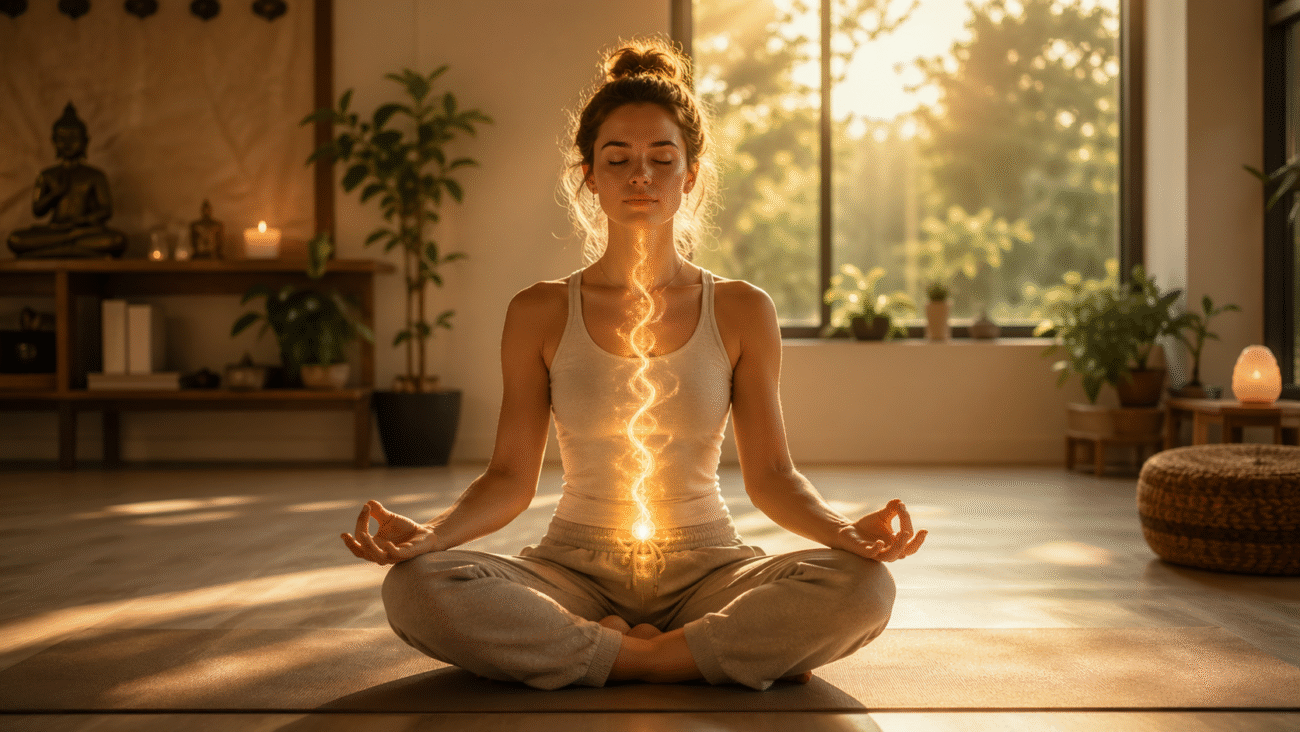
Many people feel curious about spiritual growth today. They read about energy rising, inner light, and deep awareness. Some want to try kundalini without guru support. Others feel sudden changes and worry something is wrong. This can create fear, confusion, and stress. Body sensations may feel strange. Emotions may rise quickly. Thoughts may become intense.
The truth is simple. Self-kundalini awakening can happen naturally for some people. But it needs care, patience, and balance.
What Is Kundalini Awakening Without a Guru?
Kundalini awakening means inner life energy becomes active. In yoga traditions, this energy rests quietly until the body and mind are ready. When awakened, some people feel more awareness, peace, or sensitivity. Others may feel discomfort first.
Kundalini without guru means trying to awaken this energy alone. A person may use meditation, breathwork, yoga, prayer, silence, or self-study. Some people also experience solo spiritual awakening without trying. This can happen during life change, grief, deep devotion, or intense practice. Guidance can help, but not every path uses a teacher.
Is Kundalini Awakening Without a Guru Safe or Risky?
Kundalini awakening without a guru can be safe if done slowly and wisely. It becomes risky when people force practices, ignore symptoms, or lack grounding support.
Safety depends on preparation. A calm body, stable emotions, and gentle methods reduce risk. Aggressive breathwork, sleep loss, fear, or obsession increase risk. The key is not speed. The key is balance. Many beginners think stronger practice gives faster growth. Often, slower practice gives better results.

Signs of Self Kundalini Awakening
Self-kundalini awakening may include heat, tingling, emotional release, vivid dreams, inner clarity, or strong sensitivity. Symptoms vary from person to person.
Some signs feel beautiful and peaceful. Others feel confusing at first. This does not always mean danger. It means awareness is changing. Still, strong distress should never be ignored. Listening to your body matters most.
Common Physical Signs
- Tingling in spine or body
- Heat or waves of energy
- Changes in sleep patterns
- Body shaking or twitching
- Pressure in head or chest
- Sensitivity to sound or light
- Sudden tiredness or bursts of energy
Emotional and Mental Signs
- Sudden sadness or tears
- Old memories returning
- Anxiety or fear
- Deep joy or love
- Need for solitude
- Fast thoughts
- Feeling disconnected sometimes
Why Do People Try Kundalini Without Guru Support?
Many people choose solo practice for personal reasons. Some do not have access to a trusted teacher nearby. Others want privacy and self-discovery. Some had negative experiences with false teachers and prefer independence. The internet also makes spiritual knowledge easy to find.
This path is possible, but discernment matters. Online advice can be mixed. Some teachings are deep and helpful. Others are careless or dramatic. Beginners need truth, not hype. Good practice builds stability, not confusion.
Main Risks of Solo Spiritual Awakening
Trying self-kundalini awakening without preparation may create imbalance. This does not happen to everyone, but it can happen. Risks increase when people copy advanced methods too early.
Common risks include poor sleep, anxiety, fear, emotional overload, isolation, and obsession with mystical experiences. Some people mistake stress symptoms for awakening. Others ignore medical or mental health needs. Spiritual practice should support health, not replace wise care.
If symptoms feel severe, seek professional support. Safety is strength, not failure.
Kundalini Awakening vs Imbalance
Kundalini awakening often brings growth, awareness, healing, and sensitivity. Imbalance happens when the nervous system feels overloaded. Both may include unusual sensations, so people confuse them.
A healthy awakening usually includes increasing clarity over time. Even difficult phases slowly become more balanced. Imbalance often feels chaotic, draining, and hard to manage daily. If work, sleep, relationships, or mental stability suffer, grounding support is needed first.
How to Practice Safely Without a Guru
Safety is possible when your pace is gentle. You do not need dramatic methods. You need steady habits and respect for limits.
Safe Beginner Steps
- Practice 10–15 minutes daily only
- Choose calm breathing, not forceful breathing
- Sit comfortably with relaxed posture
- Stop if fear rises strongly
- Keep regular sleep times
- Eat nourishing meals daily
- Spend time in nature often
- Journal your experiences calmly
Grounding Practices for Fast Relief
If energy feels too strong, grounding helps quickly. Grounding means bringing awareness back to the body and daily life. This is one of the best healing tools.
Try walking barefoot on grass if safe. Hold a warm cup of tea. Eat simple food. Stretch your legs slowly. Clean your room. Take a warm shower. Speak with a trusted person. Reduce intense meditation for a few days. These simple actions often help more than complex rituals.

Breathwork and Meditation Tips
Breathwork can help or disturb balance. Beginners should stay gentle. Avoid long breath retention or aggressive, rapid breathing without expert support.
Best beginner methods include slow belly breathing, natural breath watching, and short mindful sitting. Keep sessions brief. Five to ten minutes can be enough. If pressure, panic, or dizziness starts, stop immediately and return to normal breathing. Calm is progress.
Foods and Lifestyle Support
The body needs support during spiritual change. Many people forget this part. Strong energy work with weak lifestyle habits often causes trouble.
Choose regular meals with whole foods. Drink enough water. Sleep at consistent times. Reduce excess caffeine if anxious. Limit overstimulating media. Keep healthy routines. Gentle exercise helps move stress from the body. Stability in daily life supports stable inner growth.
When to Seek Professional Help
Some experiences need more than self-help. Reach out if symptoms feel severe or lasting. This is wise and responsible.
Seek help if you have panic attacks, inability to sleep for many nights, strong depression, dangerous behavior, confusion, or trouble functioning daily. A licensed health professional can help. A trauma-informed yoga teacher may also support recovery. Use both practical care and spiritual wisdom.
Who Gets Kundalini Awakening Most Often?
Anyone can explore spiritual growth, but some people may be more sensitive. This includes meditators, yoga practitioners, emotionally open people, and those in major life transitions.
Stressful life events sometimes trigger inner change too. This does not mean everyone in crisis is having an awakening. It means life pressure can open deeper questions and hidden emotions.
Beginner Tips to Avoid Problems
Beginners often do well when they stay simple. You do not need advanced rituals. You need patience.
- Start slowly
- Avoid comparing experiences
- Do not chase visions
- Keep normal life routines
- Stay socially connected
- Rest when tired
- Use trusted sources only
- Respect fear signals
Internal Linking Suggestions:
- Beginner Kundalini Yoga Guide
- Kundalini Yoga Retreat
Benefits of Safe Healing and Balanced Awakening
When handled wisely, inner growth can feel beautiful and practical. Many people report more peace, stronger self-awareness, emotional release, and deeper compassion.
Balanced awakening may also improve discipline, clarity, gratitude, and connection with life. The goal is not strange experiences. The goal is a healthier, wiser, calmer life.
Common Mistakes to Avoid
Many problems come from avoidable habits. These mistakes are common for beginners.
- Forcing breath practices daily
- Meditating too long too soon
- Ignoring body stress signs
- Believing every sensation is mystical
- Stopping sleep and food routines
- Isolating from others
- Following fear-based online content
FAQs
Is kundalini awakening without a guru safe?
Yes, it can be safe when done slowly. Gentle practice, grounding, and healthy routines reduce risk.
Can beginners experience self-kundalini awakening?
Yes, beginners can experience it naturally or through practice. Slow methods and balance are strongly recommended.
How long do kundalini side effects healing take?
Healing time varies. Mild imbalance may settle in days or weeks. Stronger cases may need longer support and lifestyle changes.
Conclusion
Kundalini awakening without a guru is neither automatically safe nor automatically risky. It depends on your methods, pace, health, and awareness. Self-kundalini awakening can be meaningful when approached gently. Solo spiritual awakening needs grounding, patience, and honesty.
