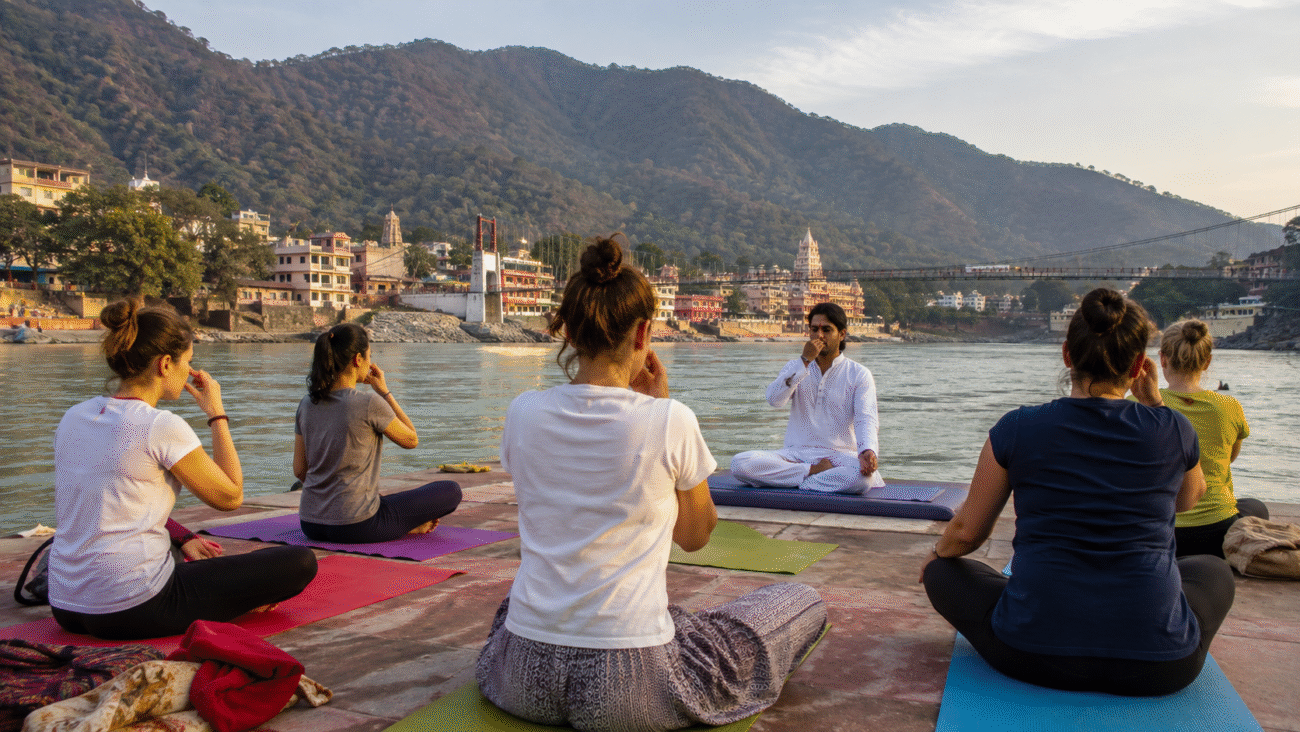
Pranayama in Rishikesh is the practice of learning traditional yogic breathing techniques under experienced teachers in the birthplace of yoga. A qualified teacher helps you develop correct breathing habits, avoid common mistakes, understand ancient techniques, and build a safe daily practice that supports both physical and mental well-being.
What is Pranayama?
Pranayama is the yogic practice of controlling and expanding the breath. In Sanskrit, “Prana” means life energy, and “Ayama” means expansion or control.
It is not simply breathing deeply. Every breathing pattern has a purpose. Some techniques help calm the mind, while others increase energy or improve focus.
Traditional pranayama combines:
- Correct posture
- Controlled breathing
- Mental awareness
- Proper rhythm
- Gradual progression
Together, these create a balanced practice that supports overall health.
Why Learning Pranayama in Rishikesh Matters
Rishikesh has been known as the Yoga Capital of the World for generations. Students from across the globe visit to study authentic yoga traditions from experienced teachers.
Learning from a traditional teacher offers several advantages:
- Personal correction during practice
- Safe progression from beginner to advanced techniques
- Clear understanding of ancient yogic principles
- Daily guided practice
- Immediate answers to your questions
Unlike recorded videos, live instruction allows your teacher to notice small mistakes that may affect your breathing practice.
Whether you attend in person or choose to learn pranayama online from India, guidance from teachers based in Rishikesh helps preserve the traditional approach while making learning accessible worldwide.
How Traditional Pranayama Training Works
Step 1: Learn Proper Sitting Posture
A stable posture allows the lungs to expand naturally and helps maintain focus during breathing practice.
Step 2: Observe Your Natural Breath
Before learning advanced techniques, your teacher helps you understand your normal breathing pattern.
Step 3: Practice Basic Techniques
Most beginners start with simple breathing exercises that build awareness without forcing the breath.
Step 4: Improve Breath Control
Once the basics become comfortable, you gradually learn longer inhalations, smooth exhalations, and gentle breath retention where appropriate.
Step 5: Build a Daily Practice
Consistency matters more than intensity. Most teachers recommend practicing a little every day rather than occasionally practicing for long periods.
Timeline for Learning
Every student learns at a different pace, but a general timeline looks like this:
| Stage | Typical Duration |
|---|---|
| Understanding basic breathing | 1-2 weeks |
| Building daily consistency | 1 month |
| Learning multiple techniques | 2-3 months |
| Developing deeper awareness | 6 months or longer |
Pranayama is a lifelong practice. There is always something new to learn.
Types of Pranayama
Traditional teachers may introduce different techniques depending on your experience.
Some common practices include:
- Natural Yogic Breathing
- Nadi Shodhana (Alternate Nostril Breathing)
- Ujjayi Pranayama
- Bhramari Pranayama
- Kapalabhati
- Bhastrika
- Sheetali
- Sheetkari
Not every technique is suitable for every person. A trained teacher helps you choose the right practice.
Benefits of Traditional Pranayama Training
Regular practice under proper guidance may help:
- Improve breathing efficiency
- Increase concentration
- Reduce everyday stress
- Support better sleep
- Improve lung capacity
- Build emotional balance
- Increase body awareness
- Prepare for meditation
- Support yoga practice
- Develop healthier breathing habits
These benefits usually appear gradually through regular practice rather than overnight.
Risks, Side Effects, or Limitations
Pranayama is generally safe when practiced correctly, but there are important considerations.
Potential risks include:
- Dizziness from overbreathing
- Headache due to excessive force
- Breath-holding beyond personal capacity
- Poor posture reducing breathing quality
- Practicing advanced techniques too early
People with certain medical conditions, including serious heart or respiratory problems, should seek advice from their healthcare provider before beginning advanced breathing exercises.
This is one reason why traditional pranayama training with qualified guidance is recommended.
Practical Example
Imagine two beginners.
The first watches random online videos and practices different breathing methods every day without understanding the purpose.
The second learns with a traditional teacher from Rishikesh. The teacher first corrects posture, then teaches one simple breathing technique, monitors progress, and gradually introduces new practices.
After several weeks, the second student usually develops a more stable, comfortable, and confident practice because the learning follows a structured path.
Tips for Beginners
If you’re just starting, remember these simple tips:
- Practice on an empty or light stomach.
- Sit comfortably with a straight spine.
- Never force the breath.
- Start with short daily sessions.
- Focus on smooth breathing instead of deep breathing.
- Practice in a quiet place.
- Learn from a qualified teacher whenever possible.
- Stay patient with your progress.
Small improvements every day often lead to lasting results.
Common Mistakes to Avoid
Many beginners make similar mistakes.
Avoid these habits:
- Breathing too fast
- Holding the breath for too long
- Raising the shoulders while inhaling
- Practicing immediately after eating
- Jumping into advanced techniques
- Ignoring body discomfort
- Changing techniques every day
- Depending only on videos without guidance
Correcting these early helps build a stronger foundation.
Expert Insights
Experienced yoga teachers often observe that beginners focus too much on “taking bigger breaths.”
In reality, good pranayama is about developing smooth, controlled, and relaxed breathing—not simply breathing more.
Teachers in Rishikesh also emphasize that pranayama is closely connected with mindfulness. The quality of attention matters just as much as the breathing technique itself.
Whether you choose to study in person or learn pranayama online from India, regular feedback from an experienced teacher helps refine your practice over time.
Frequently Asked Questions
1. What is the best place to learn pranayama?
Rishikesh is one of the most respected places because of its long yoga tradition and experienced teachers. Many schools also offer live online classes from Rishikesh, allowing students worldwide to learn authentic techniques.
2. Can beginners learn pranayama?
Yes. Beginners can safely learn pranayama when they start with simple techniques under proper guidance. Most traditional teachers begin with breathing awareness before introducing more advanced practices.
3. How long should I practice pranayama daily?
Around 10 to 20 minutes is enough for most beginners. As your experience grows, your teacher may recommend gradually increasing the duration based on your comfort and goals.
4. Is learning from YouTube enough?
Videos can introduce basic concepts, but they cannot correct your posture, breathing rhythm, or technique. Live guidance helps prevent mistakes and supports steady progress.
5. Can I learn pranayama online from India?
Yes. Many traditional yoga schools in Rishikesh now offer live online classes. This allows students to receive real-time guidance from experienced teachers while practicing from home.
6. How soon will I notice benefits?
Some people feel calmer after a few sessions, while improvements in breathing habits and focus often develop over several weeks of regular practice. Consistency is more important than speed.
7. Is pranayama safe for everyone?
Most basic techniques are safe for healthy individuals. However, people with certain medical conditions or pregnancy should consult both their healthcare provider and a qualified yoga teacher before practicing advanced techniques.
8. What should I wear during pranayama practice?
Wear comfortable clothing that allows easy movement of your chest and abdomen. Tight clothing may restrict natural breathing and reduce comfort during practice.
Conclusion
Learning pranayama in Rishikesh is more than attending a breathing class. It is an opportunity to study authentic yogic traditions with experienced teachers who guide each step of your journey.
A traditional teacher helps you build the right foundation, correct mistakes early, and develop a safe, sustainable practice that supports both body and mind.
Whether you visit Rishikesh in person or choose to learn pranayama online from India, learning from qualified teachers brings depth, confidence, and authenticity that self-study alone often cannot provide.
If you’re ready to begin, start with the basics, practice consistently, and allow your breath to become a lifelong tool for better health, greater awareness, and inner balance.
Continue Your Pranayama Journey
Building a strong foundation through pre-pranayama is the first step toward a safe and rewarding breathwork practice. Once you develop breath awareness, diaphragmatic control, and nervous system regulation, you can gradually progress through different levels of pranayama training.
Explore the next steps in your journey:
- Start with our 9-Day Foundation Breathwork & Pre-Pranayama Course
- Learn the fundamentals in our Beginner Pranayama Course
- Deepen your skills with the intermediate breathwork training.
- Master advanced techniques through our Advanced Pranayama Training
