You just started paying attention to your breath, and now you keep hearing two different words for it—pranayama and breathwork. They sound similar. Some people even use them like they mean the same thing.
But they don’t.
If you are confused about pranayama vs. breathwork, you are not alone. Most beginners struggle to tell them apart because both involve breathing techniques, both are used for stress relief, and both are taught in yoga studios and wellness centers.
In this guide, you will learn exactly what separates the two, how each one works, which one suits your goals, and how to start practicing safely—even as a complete beginner.
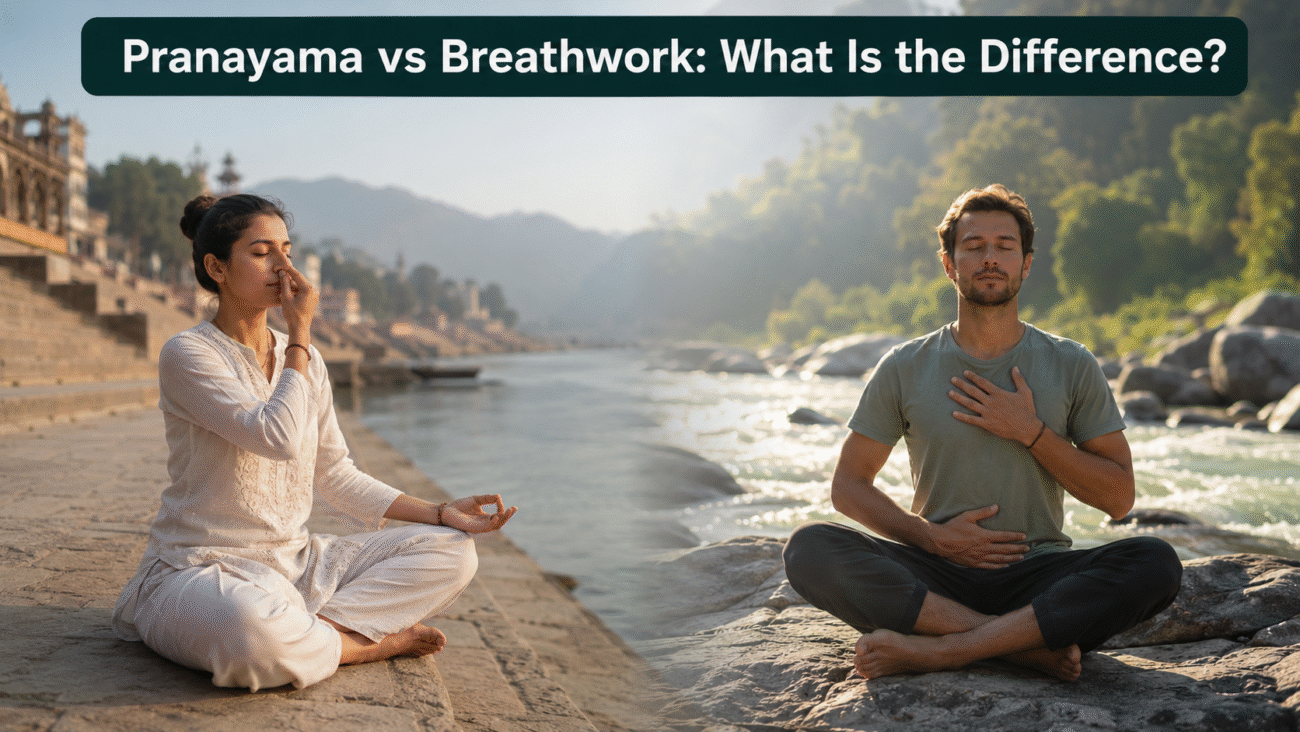
Pranayama is a traditional yogic breathing system rooted in ancient Indian philosophy, focused on controlling life energy (prana) through specific techniques. Breathwork is a modern, broader term for any conscious breathing practice used for relaxation, emotional release, or performance—often drawing from pranayama, the Wim Hof method, holotropic breathing, and other styles.
What Is Pranayama
Pranayama is a Sanskrit word. “Prana” means life force or vital energy. “Ayama” means to extend or control.
So pranayama literally means controlling your breath to control your life energy.
It comes from classical yoga texts like the Yoga Sutras and Hatha Yoga Pradipika. It is one of the eight limbs of yoga, sitting right before meditation in traditional practice.
Pranayama is not just breathing exercises. It follows fixed techniques, ratios, and sequences that have been practiced for thousands of years.
What Is Breathwork
“Breathwork” is a modern umbrella term. It covers any structured breathing practice used to shift your physical or mental state.
This includes:
- Traditional pranayama techniques
- Wim Hof Method
- Holotropic breathing
- Box breathing
- Somatic breathwork used in therapy
Breathwork does not follow one fixed system. Instructors often mix techniques from different traditions based on the goal — whether that’s stress relief, trauma release, or better focus.
Think of it this way: pranayama is one specific path. Breathwork is the wider road that pranayama sits on.
Why This Difference Matters
If you only know one of these terms, you might pick the wrong class or technique for your goal.
Someone looking for deep emotional release might feel unsatisfied in a slow, traditional pranayama class. Someone wanting a spiritual yogic path might feel lost in a high-intensity breathwork session.
Knowing the difference helps you:
- Choose the right teacher
- Set realistic expectations
- Avoid overtraining your nervous system
- Understand what you are actually paying for
How Each One Works
Pranayama works through the following:
- Fixed breath ratios (like inhale 4, hold 4, exhale 4)
- Specific nostril or throat techniques
- Slow progression from beginner to advanced practice
- Integration with meditation and spiritual growth
- Regulation of the nervous system through steady rhythm
Breathwork works through:
- Faster or deeper breathing patterns
- Activation of the sympathetic nervous system for release
- Guided sessions, often with music
- Techniques borrowed from multiple traditions
- Focus on emotional or physical outcomes rather than spiritual lineage
Types of Pranayama and Breathwork
Common Pranayama Techniques
- Nadi Shodhana (Alternate Nostril Breathing)
- Kapalabhati (Skull Shining Breath)
- Bhastrika (Bellows Breath)
- Ujjayi (Victorious Breath)
- Sheetali (Cooling Breath)
Common Breathwork Styles
- Box Breathing
- Wim Hof Method
- Holotropic Breathwork
- 4-7-8 Breathing
- Somatic or Trauma-Release Breathwork
Benefits
Pranayama benefits include the following:
- Calmer nervous system
- Better focus for meditation
- Improved lung capacity over time
- Deeper connection to traditional yoga practice
Breathwork benefits include the following:
- Quick stress and anxiety relief
- Emotional release
- Better performance under pressure
- Flexibility to combine styles for personal goals
Both practices, done consistently, support better sleep, lower stress, and improved mental clarity.
Risks, Side Effects or Limitations
Neither practice is risk-free if done incorrectly.
- Fast breathwork styles (like Wim Hof or Kapalabhati) can cause dizziness or lightheadedness.
- People with epilepsy, heart conditions, or pregnancy should avoid intense breathwork without medical guidance.
- Beginners doing pranayama too fast may feel breathless instead of calm.
- Some breathwork sessions can bring up strong emotions, which is normal but can feel overwhelming without proper guidance.
Always start slow and stop if you feel unwell.
Practical Example
Riya, a beginner in Rishikesh, joined a yoga retreat expecting to learn “breathwork” for stress relief. Instead, her teacher started with Nadi Shodhana pranayama, explaining its roots in yogic philosophy.
She later tried a separate breathwork workshop using faster techniques for emotional release. She realized both helped her, but for different reasons—one calmed her mind, the other helped her release built-up tension.
This is a common beginner experience. Both paths work. They just work differently.
Tips for Beginners
- Start with slow pranayama before trying intense breathwork styles.
- Practice on an empty stomach, ideally in the morning.
- Sit in a comfortable, upright position.
- Never force your breath—control, don’t strain.
- Try short 5-minute sessions before moving to longer practices.
Common Mistakes to Avoid
- Jumping straight into advanced techniques like Bhastrika without guidance.
- Holding your breath too long, too soon.
- Practicing intense breathwork while lying down without supervision.
- Ignoring dizziness or discomfort instead of stopping.
- Comparing your progress to advanced practitioners.
Expert Insights
Teachers who train both styles often say the real difference is intention. Pranayama is practiced as part of a spiritual and physical discipline, built over years. Breathwork is often goal-based, used for a specific outcome in a single session.
Neither is “better.” The right choice depends on whether you want a long-term yogic practice or a flexible tool for immediate relief.
Conclusion
Pranayama and breathwork both use the breath as a tool, but they come from different roots and serve different purposes. Pranayama is a structured yogic system built over centuries. Breathwork is a modern, flexible practice drawing from many traditions, including pranayama itself.
If you want a spiritual, disciplined path, start with pranayama. If you want fast, goal-focused relief, breathwork may suit you better. Many practitioners eventually use both.
Start small, breathe with awareness, and let your body guide the pace.
Frequently Asked Questions
1. Is pranayama the same as breathwork? No. Pranayama is a traditional yogic breathing system, while breathwork is a modern umbrella term that includes pranayama along with other styles like Wim Hof Method and holotropic breathing.
2. Which is better for anxiety, pranayama or breathwork? Both help with anxiety. Slow pranayama techniques like Nadi Shodhana calm the nervous system gradually, while breathwork styles like box breathing offer faster relief during acute stress.
3. Can beginners do breathwork safely? Yes, but beginners should start with gentle techniques and avoid intense styles like holotropic breathwork without a trained facilitator, especially if they have health conditions.
4. How long does it take to learn pranayama? Basic pranayama techniques can be learned in a few sessions, but mastering breath control and advanced techniques takes months to years of consistent practice.
5. Is breathwork a form of meditation? Breathwork is not meditation itself, but it often leads into a meditative state. Many people use breathwork as a warm-up before deeper meditation practice.
6. What is the main goal of pranayama? The main goal of pranayama is to control and direct life energy (prana) through the breath, supporting physical health and preparing the mind for meditation.
7. Can I practice pranayama without a yoga teacher? Beginners can start with simple techniques like deep belly breathing or Nadi Shodhana using online guidance, but advanced techniques are best learned under a qualified teacher.
8. Does breathwork have spiritual roots like pranayama? Some breathwork styles do, especially those derived from pranayama or Eastern traditions. Others, like the Wim Hof Method, are more physical and performance-focused rather than spiritual.
9. Is it safe to combine pranayama and breathwork? Yes, many practitioners combine both. A common approach is using pranayama for daily practice and breathwork for specific goals like stress release or emotional processing.
10. What should a beginner learn first, pranayama or breathwork? Beginners often benefit from starting with slow, traditional pranayama to build breath awareness before trying faster or more intense breathwork techniques.
Continue Your Pranayama Journey
Building a strong foundation through pre-pranayama is the first step toward a safe and rewarding breathwork practice. Once you develop breath awareness, diaphragmatic control, and nervous system regulation, you can gradually progress through different levels of pranayama training.
Explore the next steps in your journey:
- Start with our 9-Day Foundation Breathwork & Pre-Pranayama Course
- Learn the fundamentals in our Beginner Pranayama Course
- Deepen your skills with the intermediate breathwork training.
- Master advanced techniques through our Advanced Pranayama Training
