
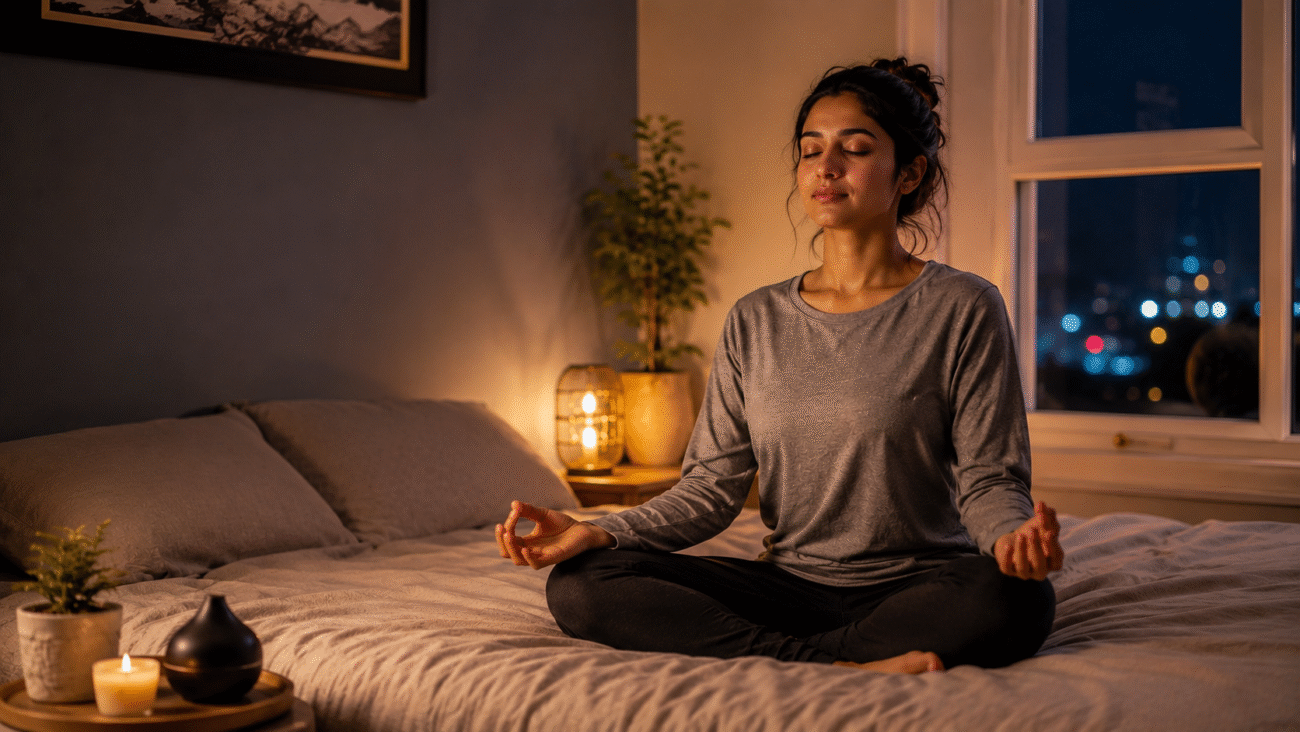
Lying in bed at 1 AM, staring at the ceiling, mind racing? You are not alone. Millions of people struggle to fall asleep every night, even when their body is exhausted.
The good news is your breath can help. Pranayama for sleep is one of the simplest, most natural ways to calm your nervous system before bed. No pills, no gadgets, no cost.
In this guide, you will learn what pranayama is, why it helps with sleep, and 4 easy evening breathing techniques you can start using tonight.
Pranayama for sleep works by slowing your breath and activating your parasympathetic nervous system, which lowers heart rate and calms the mind. Techniques like 4-7-8 breathing, alternate nostril breathing, and belly breathing can help you fall asleep faster when practiced 10-15 minutes before bed.
What is Pranayama
Pranayama is an ancient yogic breathing practice. The word comes from two Sanskrit terms: “prana” (life energy) and “ayama” (control or extension).
In simple words, pranayama means controlling your breath on purpose. Instead of breathing automatically, you slow it down, deepen it, or change its rhythm.
This isn’t just spiritual theory. Controlled breathing has real, measurable effects on your heart rate, blood pressure, and stress hormones.
Why It Matters
Most sleepless nights are not caused by the body. They are caused by an overactive mind and nervous system.
When you are stressed, your body stays in “fight or flight” mode. Your heart beats faster, muscles stay tense, and your brain stays alert. This makes it very hard to fall asleep.
Breathing exercises for insomnia work because they directly signal your brain that it is safe to relax. Slow, deep breaths tell your body to switch out of stress mode and into rest mode.
This is why yoga breathing before bed is often recommended by sleep coaches, not just yoga teachers.
How It Works
Here is the simple science behind why pranayama helps you sleep:
Step 1: You breathe slowly and deeply. This increases oxygen flow and reduces the workload on your heart.
Step 2: Your vagus nerve gets activated. This nerve is the main switch for your body’s relaxation response.
Step 3: Your heart rate slows down. A slower heart rate signals safety to your brain.
Step 4: Stress hormones like cortisol drop. Lower cortisol means less mental chatter and anxiety.
Step 5: Your brain shifts toward sleep-friendly brainwaves. This makes it easier to drift off naturally.
4 Evening Breathing Techniques That Work
1. 4-7-8 Breathing
This is one of the most popular breathing exercises for insomnia.
- Inhale through your nose for 4 seconds
- Hold your breath for 7 seconds
- Exhale slowly through your mouth for 8 seconds
- Repeat this cycle 4 times
The long exhale is the key part. It strongly activates your body’s relaxation response.
2. Alternate Nostril Breathing (Nadi Shodhana)
This technique balances your nervous system and clears mental clutter.
- Close your right nostril with your thumb
- Inhale through your left nostril
- Close the left nostril, release the right, and exhale through it
- Inhale through the right, then switch and exhale through the left
- Continue this pattern for 5-10 rounds
3. Belly Breathing (Diaphragmatic Breathing)
Most people breathe shallowly from the chest, especially when stressed. Belly breathing reverses this.
- Lie down and place one hand on your belly
- Inhale slowly through your nose, letting your belly rise
- Exhale gently, feeling your belly fall
- Continue for 5-10 minutes
This is a great starting point if you are completely new to pranayama for sleep.
4. Bhramari (Humming Bee Breath)
This technique uses sound vibration to calm the mind quickly.
- Close your eyes and plug your ears gently with your thumbs
- Inhale through your nose
- Exhale slowly while making a soft humming sound, like a bee
- Repeat 5-7 times
Many beginners feel immediate calm after just a few rounds.
Timeline: How Long Until You See Results
Some people feel calmer after their very first session. For consistent, lasting improvement in sleep quality, most people notice a real difference within 1-2 weeks of nightly practice.
Consistency matters more than perfection. Even 5-10 minutes every evening is enough to build the habit.
Benefits
- Falls asleep faster
- Reduces nighttime anxiety and racing thoughts
- Lowers heart rate and blood pressure
- Improves overall sleep quality
- No cost, no equipment needed
- Can be combined with other bedtime routines
Risks, Side Effects or Limitations
Pranayama is generally very safe for most healthy adults. However, a few points to keep in mind:
- People with severe respiratory conditions like asthma or COPD should consult a doctor first
- Breath-holding techniques (like 4-7-8) should be avoided during pregnancy unless approved by a doctor
- Some beginners may feel mild dizziness if they breathe too forcefully—always keep it gentle
- Pranayama supports sleep, but it does not replace medical treatment for chronic insomnia
Practical Example
Priya, a 32-year-old working professional, struggled with racing thoughts every night after work. She started practicing 4-7-8 breathing for just 5 minutes before bed.
Within the first week, she noticed she was falling asleep about 15-20 minutes faster than before. By the second week, it had become a natural part of her bedtime routine.
Tips for Beginners
- Practice in a quiet, dim-lit room
- Sit or lie down comfortably before starting
- Keep your shoulders relaxed, not tense
- Start with just one technique; don’t try all four at once
- Practice at the same time every night to build a habit
Common Mistakes to Avoid
- Forcing the breath instead of keeping it gentle
- Practicing while distracted by phone or TV
- Expecting instant results after one session
- Holding the breath too long, especially as a beginner
- Skipping practice on “bad” nights when it’s needed most
Expert Insights
Yoga teachers often recommend starting with belly breathing before moving to more advanced techniques like alternate nostril breathing. This builds body awareness first.
A common practical tip: pair your breathing practice with dimming the lights and putting your phone away 30 minutes before bed. Breathing works best as part of a full wind-down routine, not as a standalone fix.
Frequently Asked Questions
1. Which pranayama is best for sleep? 4-7-8 breathing is widely considered the best starting point for sleep because its long exhale directly triggers the body’s relaxation response. It is simple, quick, and needs no prior experience.
2. How long should I practice pranayama before bed? 5 to 15 minutes is usually enough. Beginners can start with just 4-5 rounds of one technique and gradually increase the duration as it becomes a comfortable habit.
3. Can breathing exercises really cure insomnia? Pranayama can significantly reduce mild to moderate sleep difficulty caused by stress and anxiety. For chronic or severe insomnia, it works best alongside professional medical guidance, not as a replacement.
4. Is it safe to do pranayama every night? Yes, for most healthy adults, nightly practice is safe and often more effective than occasional practice. Consistency helps train your nervous system to relax faster over time.
5. Can beginners do alternate nostril breathing? Yes, it is beginner-friendly, but it’s best to master simple belly breathing first. This helps you get comfortable with breath control before adding the nostril-switching pattern.
6. Does pranayama work immediately, or does it take time? Some people feel calmer within a few minutes of their first session. However, noticeable improvement in overall sleep quality usually takes about 1-2 weeks of consistent nightly practice.
7. What is the best position for pranayama before sleep? Lying down in bed or sitting comfortably against a pillow both works well. Choose whichever position lets your body stay fully relaxed without straining your neck or back.
8. Can pranayama help with anxiety-related sleep problems? Yes, slow breathing techniques directly calm the nervous system, which is often the root cause of anxiety-driven sleeplessness. This makes pranayama especially effective for racing thoughts at night.
Conclusion
Pranayama for sleep is a simple, free, and natural tool that anyone can start using tonight. The 4 techniques covered here—4-7-8 breathing, alternate nostril breathing, belly breathing, and Bhramari—all work by calming your nervous system through controlled breath.
Start small. Pick just one technique tonight, practice it for 5 minutes before bed, and stay consistent for at least a week. Your body already knows how to relax — sometimes it just needs your breath to remind it.
Continue Your Pranayama Journey
Building a strong foundation through pre-pranayama is the first step toward a safe and rewarding breathwork practice. Once you develop breath awareness, diaphragmatic control, and nervous system regulation, you can gradually progress through different levels of pranayama training.
Explore the next steps in your journey:
- Start with our 9-Day Foundation Breathwork & Pre-Pranayama Course
- Learn the fundamentals in our Beginner Pranayama Course
- Deepen your skills with the intermediate breathwork training.
- Master advanced techniques through our Advanced Pranayama Training
