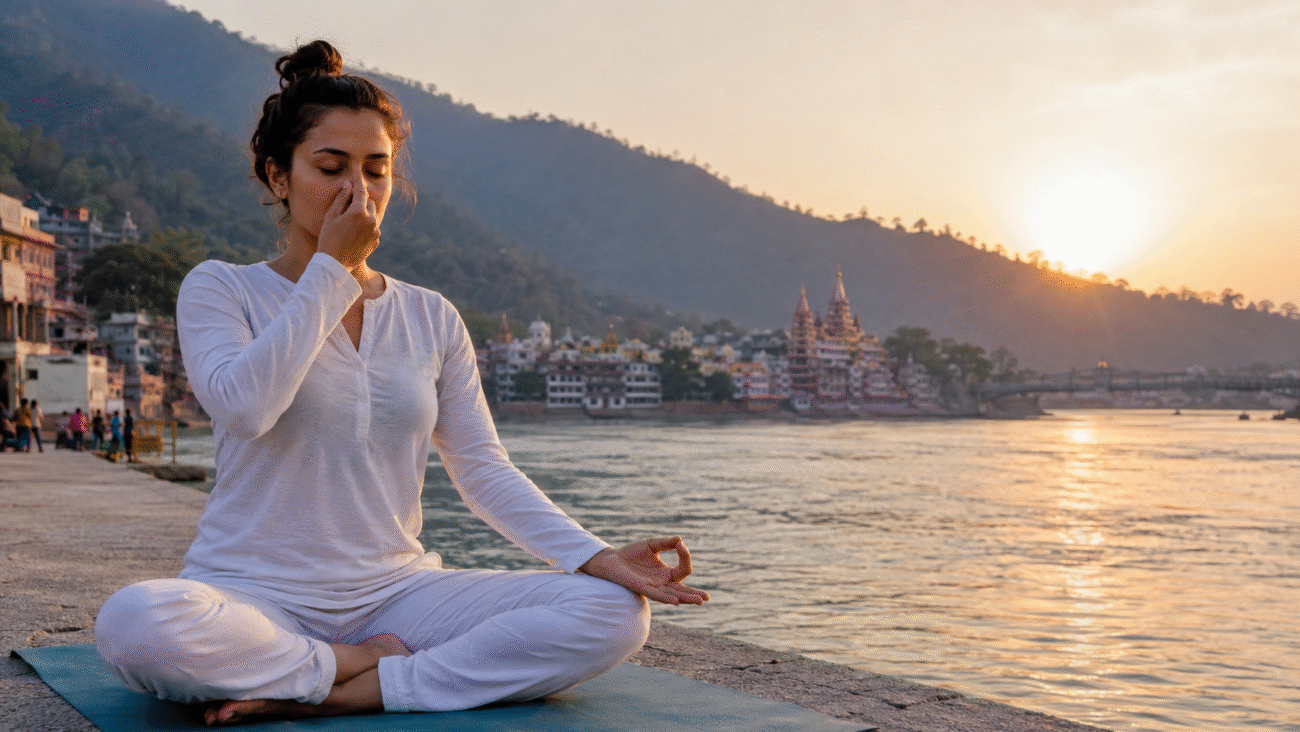
Pranayama is the practice of controlling your breath through simple breathing techniques. It is an important part of yoga and can help improve relaxation, focus, lung function, and overall well-being. Beginners should start with gentle breathing exercises for 5–10 minutes daily and practice slowly without forcing the breath.
What Is Pranayama?
Pranayama is a breathing practice from the ancient tradition of yoga. The word comes from two Sanskrit words:
- Prana = life energy or vital force
- Ayama = expansion or control
Simply put, pranayama means learning how to breathe with awareness and control.
Unlike normal breathing, pranayama involves specific breathing patterns that help calm the mind and support physical health.
Why Pranayama Matters
Most people breathe without thinking.
Stress, poor posture, long working hours, and anxiety often lead to shallow breathing. Over time, this may leave you feeling tired, distracted, or tense.
Practicing pranayama helps you become more aware of your breath and encourages slower, deeper breathing. Many people use it alongside yoga, meditation, or relaxation practices.
How Pranayama Works
Breathing connects the body and mind.
When your breathing becomes slow and steady, your nervous system often shifts toward a more relaxed state.
A simple beginner routine looks like this:
Step 1: Find a Comfortable Position
Sit on a chair or on the floor with your back straight.
Relax your shoulders.
Step 2: Focus on Natural Breathing
Observe your breathing for one or two minutes.
Do not try to change it yet.
Step 3: Slow Your Breath
Breathe in gently through your nose.
Exhale slowly through your nose.
Step 4: Maintain a Comfortable Rhythm
Keep your breathing smooth and relaxed.
Never force deep breaths.
Step 5: Finish Calmly
Return to normal breathing before standing up.
Take a few moments to notice how you feel.
How Long Does It Take to See Results?
Many beginners notice feeling calmer immediately after a session.
With regular daily practice:
- After one week: Better awareness of breathing
- After two to four weeks: Improved relaxation and focus
- After several months: Easier breathing habits and greater consistency
Results vary from person to person and depend on regular practice.
Types of Pranayama
There are many breathing techniques. Beginners should start with the simplest ones.
| Type of Pranayama | Purpose | Beginner-Friendly |
|---|---|---|
| Deep Breathing | Relaxation | Yes. |
| Diaphragmatic Breathing | Better breathing habits | Yes. |
| Alternate Nostril Breathing | Balance and focus | Yes. |
| Bee Breath (Bhramari) | Calm the mind. | Yes. |
| Ocean Breath (Ujjayi) | Mindful breathing | Yes. |
| Victorious Breath | Meditation support | Yes. |
| Bellows Breath (Bhastrika) | Energizing | Best after learning basics |
| Skull-Shining Breath (Kapalabhati) | Active breathing practice | Learn with proper guidance. |
If you are completely new, begin with deep breathing or alternate nostril breathing before trying more advanced techniques.
Benefits of Pranayama
Regular pranayama practice may offer several benefits when practiced safely.
Supports Relaxation
Slow breathing can help many people feel calmer during stressful situations.
Improves Breath Awareness
You become more aware of unhealthy breathing habits and learn better control.
Helps Improve Focus
Many people practice pranayama before meditation, studying, or work because it encourages mental clarity.
Supports Lung Function
Deep breathing encourages fuller use of the lungs, although it is not a treatment for lung disease.
May Improve Sleep
Relaxing breathing exercises before bedtime may help some people unwind.
Complements Yoga Practice
Pranayama is often practiced before or after yoga poses to prepare the body and mind.
Encourages Mindfulness
Focusing on breathing helps bring attention to the present moment.
Risks, Side Effects, or Limitations
Pranayama is generally gentle, but it is not suitable for every situation.
Possible issues include:
- Dizziness from over-breathing
- Light-headedness
- Discomfort if breathing is forced
- Fatigue after advanced techniques
Avoid intense breathing exercises if you:
- Feel unwell
- Have uncontrolled high blood pressure
- Have certain heart or respiratory conditions unless advised by a healthcare professional
- Feel dizzy during practice
Stop immediately if you experience pain, severe discomfort, or difficulty breathing.
Practical Example
Imagine someone who spends eight hours working at a computer.
They often feel stressed and notice they breathe quickly during the day.
Instead of reaching for another coffee, they spend five minutes practicing slow nasal breathing before lunch.
After finishing, they feel calmer, more focused, and ready to continue working.
This is a simple example of how pranayama can fit into everyday life.
Tips for Beginners
If you are just getting started, keep things simple.
- Practice in a quiet place.
- Breathe through your nose unless instructed otherwise.
- Sit comfortably.
- Start with five minutes.
- Practice daily rather than occasionally.
- Never force your breathing.
- Stay relaxed throughout the session.
- Learn advanced techniques from a qualified yoga instructor.
Common Mistakes to Avoid
Many beginners make these mistakes:
- Breathing too fast
- Trying advanced techniques immediately
- Holding the breath too long
- Practicing after a heavy meal
- Slouching while sitting
- Ignoring dizziness
- Expecting instant results
Consistency is more important than intensity.
Expert Insights
Experienced yoga teachers often recommend mastering natural breathing before moving to advanced pranayama techniques.
Building a daily habit of slow, comfortable breathing creates a strong foundation. As your confidence grows, you can gradually explore additional breathing practices under proper guidance.
Remember that pranayama is a skill developed through patience, not speed.
Frequently Asked Questions
1. What is the best pranayama for beginners?
Deep breathing and alternate nostril breathing are usually the easiest places to start. They are simple, gentle, and help develop good breathing habits before learning more advanced techniques.
2. How long should I practice pranayama every day?
Five to ten minutes is enough for most beginners. As you become comfortable, you can slowly increase your practice to around 15–20 minutes if it feels comfortable.
3. Can I practice pranayama every day?
Yes. Gentle pranayama can usually be practiced daily. Consistency often provides better results than practicing for long periods only once in a while.
4. Is pranayama the same as meditation?
No. Pranayama focuses on breathing techniques, while meditation focuses on training attention and awareness. However, many people practice pranayama before meditation.
5. Should pranayama be done before or after yoga?
Many yoga practitioners perform pranayama after physical yoga poses and before meditation. However, gentle breathing exercises can also be practiced on their own.
6. Can pranayama cure diseases?
No. Pranayama is not a cure for medical conditions. It may support general well-being, but it should not replace professional medical advice or treatment.
7. What is the best time to practice pranayama?
Many people prefer practicing in the morning because the mind is usually fresh and the environment is quieter. You can also practice later in the day if it fits your routine.
8. Can children practice pranayama?
Simple breathing exercises may be suitable for children when taught appropriately. Advanced techniques should be learned under qualified supervision.
Conclusion
Pranayama is one of the simplest ways to become more aware of your breathing and support your overall well-being. You do not need expensive equipment or years of experience to begin.
Start with gentle breathing for just five to ten minutes a day. Stay relaxed, be consistent, and progress slowly. Over time, this simple habit can become an enjoyable part of your daily wellness routine.
Continue Your Pranayama Journey
Building a strong foundation through pre-pranayama is the first step toward a safe and rewarding breathwork practice. Once you develop breath awareness, diaphragmatic control, and nervous system regulation, you can gradually progress through different levels of pranayama training.
Explore the next steps in your journey:
- Start with our 9-Day Foundation Breathwork & Pre-Pranayama Course
- Learn the fundamentals in our Beginner Pranayama Course
- Deepen your skills with the intermediate breathwork training.
- Master advanced techniques through our Advanced Pranayama Training
