
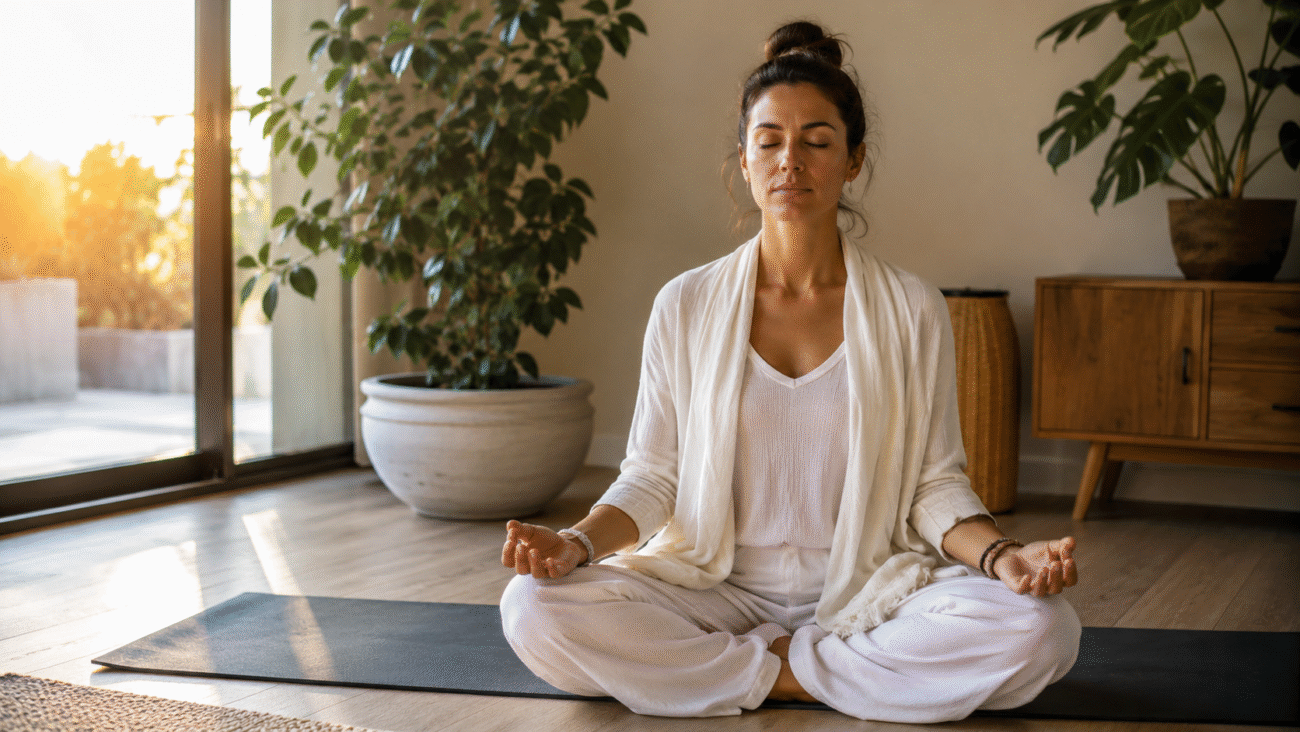
Kundalini yoga is a type of yoga that combines the following:
- Breathing exercises
- Meditation
- Chanting
- Physical movements
- Mindfulness
The goal is to awaken your inner energy, often called “Kundalini energy.” This practice focuses heavily on mental clarity and emotional balance.
Unlike fast workout-style yoga, Kundalini Yoga is slower and more focused on breathing and awareness. Many people use it for stress relief and emotional healing.
Today, many beginners explore kundalini for mental health because it feels calming and deeply relaxing.
How Kundalini Yoga for Anxiety Works
Kundalini Yoga may help anxiety and depression by calming the nervous system. It teaches the body to slow down and relax.
Step 1: Breath Control
Breathing exercises are very important in Kundalini Yoga.
Slow breathing can
- Reduce stress hormones
- Lower heart rate
- Calm racing thoughts
A simple breathing exercise can help during panic or anxiety episodes.
Step 2: Physical Movement
Gentle yoga poses improve blood flow and release tension stored in the body.
Many people carry stress in the following:
- The shoulders
- Neck
- Chest
- Back
Movement helps relax these areas.
Step 3: Meditation
Meditation trains the mind to focus on the present moment.
This may help:
- Reduce overthinking
- Improve emotional control
- Increase mental clarity
Step 4: Sound and Chanting
Kundalini Yoga often uses mantras or chanting.
The repeated sounds may create a calming effect and help quiet mental noise.
How Long Does It Take to See Results?
Results are different for everyone.
Some people feel calmer after one session. Others may notice changes after several weeks.
Typical Timeline
| Time Period | Possible Changes |
|---|---|
| 1 Day | Relaxation and calmness |
| 1–2 Weeks | Better sleep and less stress |
| 1 Month | Improved mood and focus |
| 2–3 Months | Stronger emotional balance |
Consistency matters more than perfection.
Even 10–15 minutes daily can help.
Signs Kundalini Yoga May Be Helping
When practicing kundalini yoga for anxiety, some positive signs may include:
Mental Signs
- Less overthinking
- Better concentration
- Reduced panic feelings
- Improved emotional control
Physical Signs
- Better sleep
- Slower breathing
- Reduced muscle tension
- More energy
Emotional Signs
- Feeling calmer
- More patience
- Better self-awareness
- Increased positivity
Small improvements are still important to progress.
Benefits of Kundalini Yoga for Mental Health
Many people explore yoga for depression healing because it supports both the body and mind.
1. Reduces Stress
Breathing and meditation help calm the nervous system.
This may lower feelings of fear and worry.
2. Improves Mood
Movement and mindful breathing may increase feel-good brain chemicals like serotonin and dopamine.
3. Helps Sleep
Anxiety often causes poor sleep.
Kundalini Yoga may relax the body before bedtime.
4. Builds Emotional Awareness
The practice teaches people to notice thoughts and emotions without reacting too quickly.
5. Creates a Healthy Routine
Daily practice encourages structure and self-care habits.
Risks and Side Effects
Although Kundalini Yoga can be helpful, it is not perfect for everyone.
Possible Risks
- Emotional overwhelm
- Dizziness from intense breathing
- Fatigue after long sessions
- Strong emotional release
Some people may feel emotional during meditation because buried feelings can surface.
Important Reminder
Kundalini yoga should not replace the following:
- Therapy
- Medical treatment
- Mental health support
People with severe anxiety or depression should speak with a healthcare professional before starting intense spiritual practices.
Tips for Beginners
Starting slowly is the best approach.
Beginner-Friendly Tips
- Practice 10 minutes daily
- Focus on breathing first
- Use beginner videos or classes
- Avoid forcing difficult poses
- Stay hydrated
- Rest if overwhelmed
Simple Beginner Practice
- Sit comfortably
- Close your eyes
- Take slow, deep breaths
- Inhale for 4 seconds
- Exhale for 6 seconds
- Repeat for 5 minutes
This simple exercise can support emotional calmness.
Common Mistakes to Avoid
Many beginners try to do too much too quickly.
1. Expecting Instant Healing
Kundalini Yoga supports healing, but it takes time and consistency.
2. Overdoing Breathing Exercises
Strong breathing techniques can feel overwhelming if done incorrectly.
Start gently.
3. Ignoring Mental Health Support
Yoga can help, but professional support is still important for serious depression or anxiety.
4. Comparing Yourself to Others
Everyone experiences yoga differently.
Focus on your own progress.
5. Skipping Rest
Rest and recovery are part of emotional healing.
FAQs About Kundalini Yoga for Anxiety
Does kundalini yoga help anxiety?
Many people report feeling calmer and less stressed after regular practice. Breathing and meditation may help relax the nervous system.
Can Kundalini Yoga cure depression?
No. It is not a cure. However, it may support emotional wellness alongside therapy and healthy lifestyle habits.
Is Kundalini Yoga safe for beginners?
Yes, when practiced gently and slowly. Beginners should avoid intense sessions at first.
How often should I practice?
Start with 10–15 minutes daily or 3–4 times weekly.
Can breathing exercises stop panic attacks?
Slow breathing may reduce panic symptoms, but it may not fully stop severe panic attacks.
What is the best time to practice Kundalini yoga?
Morning practice is popular because it helps create mental clarity for the day.
Conclusion
So, does kundalini yoga for anxiety really work?
For many people, it can be a helpful tool for stress relief, emotional balance, and mental clarity. Breathing exercises, meditation, and mindful movement may support better mental wellness over time.
However, Kundalini Yoga is not magic. It works best when combined with:
- Healthy habits
- Proper sleep
- Therapy if needed
- Medical guidance
Start slowly, stay consistent, and listen to your body.
Small daily steps can create meaningful change.
