
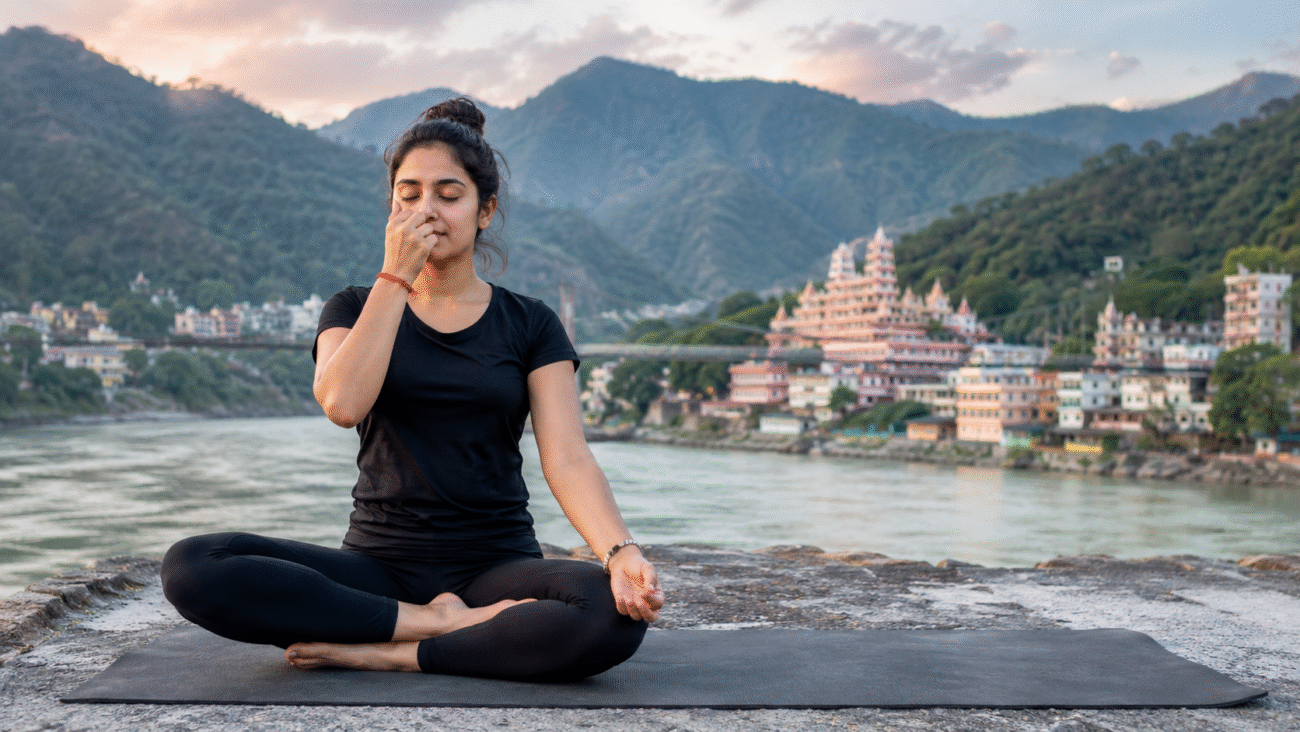
You are ready for intermediate pranayama when you can practice beginner breathing techniques comfortably, maintain smooth and controlled breathing, sit with steady posture, stay mentally focused, and practice consistently without strain. Moving to an intermediate pranayama course helps you build deeper breath awareness, better control, and confidence through guided progression.
What Is Intermediate Pranayama?
Intermediate pranayama is the next stage after mastering beginner breathing practices. It introduces more refined breathing techniques, longer breath control, improved awareness, and greater mental focus.
Unlike beginner exercises that help you become familiar with breathing, intermediate practices develop better rhythm, stability, and deeper mind-body connection.
The goal is not simply breathing longer. It is learning to breathe with control, ease, and awareness.
Why Progression Matters
Pranayama is a skill that develops gradually.
Just as you would not lift heavy weights on your first day in the gym, you should not rush into advanced breathing techniques.
A step-by-step progression helps you:
- Build healthy breathing habits
- Improve lung efficiency naturally
- Develop mental concentration
- Reduce unnecessary tension
- Practice safely with confidence
Proper progression also prepares your body for more advanced yogic breathing in the future.
How Pranayama Progression Works
Step 1: Master Basic Breathing
Practice simple diaphragmatic breathing and beginner pranayama regularly.
Your breath should feel smooth rather than forced.
Step 2: Build Consistency
Practice several days each week.
Consistency matters much more than long practice sessions.
Step 3: Improve Breath Awareness
Notice how your breath changes during practice.
You should be able to observe inhalation, exhalation, and natural pauses without discomfort.
Step 4: Increase Breath Control
Gradually extend your breathing without creating stress.
Comfort should always come before longer breath counts.
Step 5: Learn Intermediate Techniques
Once the basics become natural, guided intermediate training introduces more structured breathing patterns, improved rhythm, and deeper awareness.
7 Signs You Are Ready for Intermediate Pranayama
1. Your Breath Feels Calm and Steady
Your breathing stays smooth throughout practice.
You no longer gasp, rush, or struggle to maintain rhythm.
2. You Can Sit Comfortably
You can maintain an upright seated posture for at least 20 to 30 minutes without significant discomfort.
Good posture supports better breathing.
3. You Practice Regularly
You have developed a consistent routine instead of practicing only occasionally.
Regular practice creates a strong foundation.
4. You Stay Relaxed During Practice
Your shoulders remain soft.
Your face stays relaxed.
You are not forcing the breath.
5. You Can Focus Easily
Your attention remains on your breathing for most of the practice session without constant distraction.
6. Basic Techniques Feel Natural
Practices like deep breathing, simple alternate nostril breathing, and beginner breath awareness no longer feel difficult.
7. You Want to Deepen Your Practice
Curiosity is a positive sign.
If you feel ready to explore more structured breathwork with proper guidance, intermediate training is often the next logical step.
Timeline for Progression
Every person learns at a different pace.
There is no fixed number of weeks.
Many practitioners become ready after several weeks or a few months of regular beginner practice.
Your progress depends on:
- Practice consistency
- Overall health
- Breath awareness
- Quality of instruction
- Individual comfort
Progress should always feel natural rather than rushed.
Benefits of Intermediate Pranayama
Intermediate pranayama can help you
- Develop stronger breath control
- Improve breathing efficiency
- Increase mental clarity
- Build better concentration
- Deepen relaxation
- Improve body awareness
- Create a stronger meditation foundation
- Strengthen your daily breathing practice
The biggest benefit is learning how to breathe with greater precision and awareness.
Risks of Advancing Too Soon
Moving ahead before you are ready may create challenges.
Possible problems include:
- Breath strain
- Dizziness
- Frustration
- Poor breathing habits
- Difficulty maintaining focus
- Inconsistent practice
This is why gradual progression is always recommended.
Tips for Beginners
If you’re planning to move toward intermediate pranayama:
- Practice at the same time each day.
- Never force your breathing.
- Sit with proper posture.
- Focus on smooth, natural breaths.
- Increase difficulty gradually.
- Listen to your body.
- Learn from qualified instructors whenever possible.
Small improvements each day create lasting progress.
Common Mistakes to Avoid
Many beginners delay or slow their progress because they:
- Hold your breath longer than comfortable.
- Compare themselves with others.
- Skip beginner practice.
- Practice irregularly.
- Ignore posture.
- Rush into advanced techniques.
- Expect quick results.
Patience produces better long-term outcomes.
Expert Insights
Experienced yoga teachers often observe that students progress best when they focus on quality instead of speed.
A relaxed, controlled breath is far more valuable than forcing longer breathing cycles.
Structured guidance also helps correct small mistakes before they become habits.
If you already meet the readiness signs discussed above, joining a well-designed intermediate training program can provide the next level of instruction while keeping your progression safe and systematic.
If you’re ready to deepen your practice, explore the Intermediate Breathwork Training here:
https://kundaliniyogashala.com/intermediate-breathwork-training-online.php
Frequently Asked Questions
1. What is intermediate pranayama?
Intermediate pranayama is the next stage of breathwork after beginner practice. It focuses on improved breath control, deeper awareness, and more structured breathing techniques while maintaining comfort and safety.
2. How do I know I am ready for intermediate pranayama?
You are generally ready if your breathing feels smooth, your posture is stable, you practice consistently, and beginner techniques feel comfortable without strain.
3. Can beginners start intermediate pranayama immediately?
It is usually better to master beginner techniques first. A strong foundation helps you learn more advanced breathing safely and effectively.
4. How long should I practice beginner pranayama before advancing?
There is no universal timeline. Some people are ready after several weeks, while others need a few months. Consistency matters more than speed.
5. Is intermediate pranayama difficult?
It is more structured than beginner practice but should not feel overwhelming. Proper instruction helps you progress gradually and comfortably.
6. Can intermediate pranayama improve meditation?
Yes. Better breath control often supports improved concentration, mental calmness, and a stronger meditation practice over time.
7. What happens if I progress too quickly?
Advancing too soon may lead to breath strain, poor technique, frustration, or inconsistent practice. Gradual progression reduces these risks.
8. Should I learn intermediate pranayama from a teacher?
Yes. Learning with qualified guidance helps improve technique, avoid common mistakes, and build confidence throughout your practice.
Conclusion
Progressing from beginner to intermediate pranayama is not about rushing toward harder techniques. It is about building confidence, awareness, and steady breath control.
If your breathing feels natural, your practice is consistent, and you are ready to deepen your skills, intermediate pranayama can become an important next step in your yoga journey.
Learning through a structured program gives you clear guidance, safe progression, and practical techniques that help you continue growing with confidence.
Continue Your Pranayama Journey
Building a strong foundation through pre-pranayama is the first step toward a safe and rewarding breathwork practice. Once you develop breath awareness, diaphragmatic control, and nervous system regulation, you can gradually progress through different levels of pranayama training.
Explore the next steps in your journey:
- Start with our 9-Day Foundation Breathwork & Pre-Pranayama Course
- Learn the fundamentals in our Beginner Pranayama Course
- Deepen your skills with the intermediate breathwork training.
- Master advanced techniques through our Advanced Pranayama Training
