
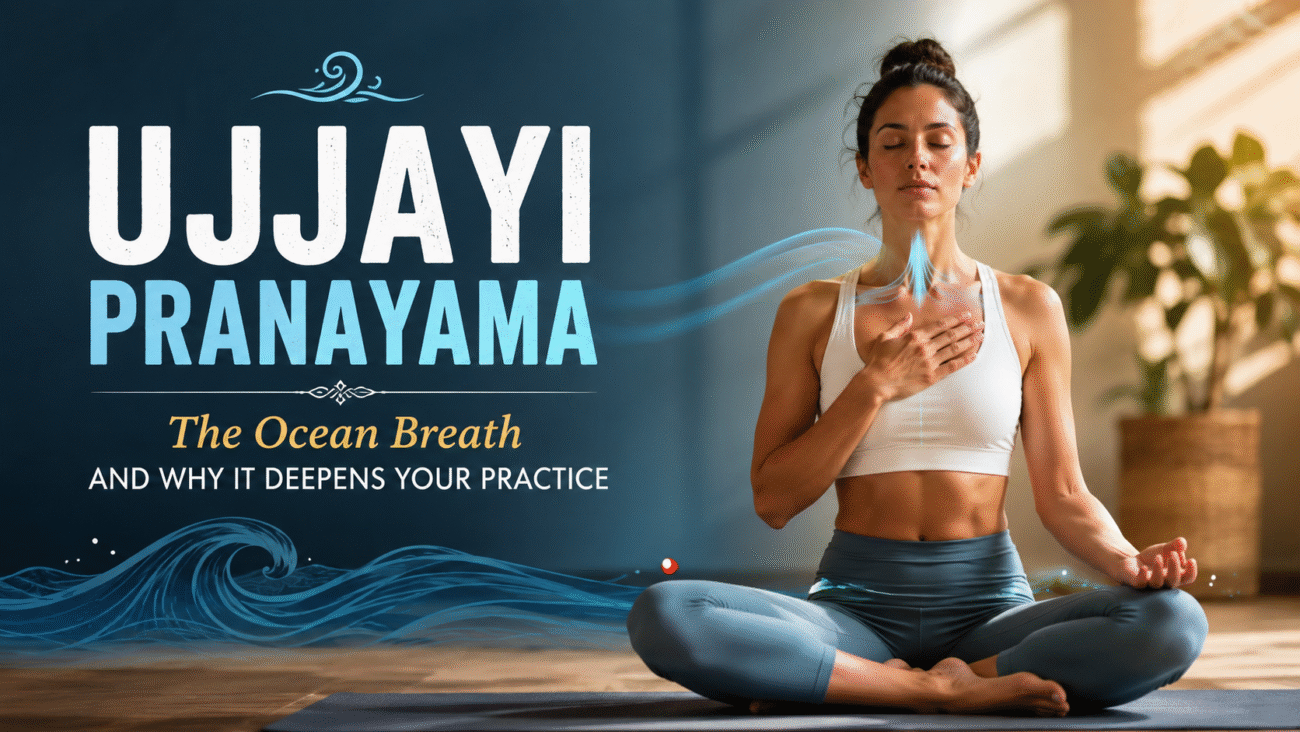
Have you ever noticed that your breath becomes uneven during yoga? Many beginners struggle to stay focused when poses become challenging. That’s where ujjayi pranayama can help. Often called the “ocean breath” yoga technique, it creates a slow, steady rhythm that helps calm the mind and support the body. In this guide, you’ll learn what ujjayi pranayama is, how to practice it safely, its benefits, common mistakes, and how it can deepen your yoga journey.
Ujjayi pranayama is a yogic breathing technique that involves slow breathing through the nose while gently narrowing the throat to create a soft ocean-like sound. It helps improve focus, supports steady breathing during yoga, promotes relaxation, and encourages better breath control for beginners and experienced practitioners alike.
What is Ujjayi Pranayama?
Ujjayi pranayama is a traditional yogic breathing practice used in many yoga styles, especially Vinyasa and Ashtanga yoga. The word “Ujjayi” comes from Sanskrit and is often translated as “victorious breath.”
It is also known as ocean breath yoga because the breath produces a gentle sound that resembles ocean waves.
Unlike normal breathing, ujjayi breathing is slow, controlled, and performed through the nose while lightly narrowing the back of the throat.
This technique helps connect movement with breath, making yoga feel smoother and more mindful.
Why It Matters
Breath is the foundation of yoga.
When your breathing becomes rushed, your body often becomes tense and your attention drifts. Ujjayi pranayama brings awareness back to your breath.
Regular practice can help:
- Improve concentration
- Create a calm mental state
- Support longer yoga sessions
- Build better breath awareness
- Encourage mindful movement
Many yoga teachers introduce ujjayi breathing early because it helps students stay present throughout their practice.
How Ujjayi Pranayama Works
The slight narrowing of the throat creates gentle resistance as air moves in and out.
This controlled breathing encourages:
- Slower breathing rate
- Deeper inhalation
- Longer exhalation
- Better breath control
- Increased body awareness
The sound also acts as a guide.
If you can hear your breath softly, you’re more likely to stay focused instead of letting your mind wander.
How to Practice Ujjayi Pranayama
Step 1: Find a Comfortable Position
Sit with your spine tall or stand comfortably.
Relax your shoulders and soften your face.
Step 2: Breathe Through Your Nose
Keep your mouth closed.
Inhale slowly through both nostrils.
Step 3: Gently Narrow the Throat
Imagine you are trying to fog up a mirror, but keep your mouth closed.
This creates the soft ocean-like sound.
Step 4: Exhale Slowly
Continue breathing through the nose while maintaining the same gentle throat engagement.
The inhale and exhale should sound smooth and even.
Step 5: Match Breath with Movement
If practicing yoga, allow each movement to follow your breath.
Over time, the breath naturally guides your practice.
How Long Should You Practice?
Beginners do not need long sessions.
A simple routine works well:
- 3-5 minutes for beginners
- 5-10 minutes as you become comfortable
- Throughout a Vinyasa yoga session
- During meditation for added focus
Consistency matters more than duration.
Benefits of Ujjayi Pranayama
Many people practice ujjayi breathing benefits from both physical and mental well-being.
Improves Focus
The steady sound keeps your attention on the present moment.
Supports Calmness
Slow breathing encourages relaxation and helps reduce everyday stress.
Enhances Yoga Practice
Breath and movement become more connected, making transitions feel smoother.
Builds Breath Awareness
Over time, you become more aware of how you breathe throughout the day.
Encourages Better Endurance
Controlled breathing may help you remain comfortable during longer yoga sessions.
Promotes Mindfulness
Each breath becomes an anchor that helps quiet mental distractions.
Risks, Side Effects, or Limitations
Ujjayi pranayama is generally gentle when practiced correctly.
However, avoid forcing the breath.
You should stop and rest if you notice the following:
- Dizziness
- Breathlessness
- Throat discomfort
- Chest pain
- Lightheadedness
People with respiratory or cardiovascular conditions should seek guidance from a qualified healthcare professional before beginning a new breathing practice.
The sound should remain soft—not loud or strained.
Practical Example
Imagine you’re holding Warrior II during a Vinyasa class.
Without steady breathing, your shoulders tense, and your mind focuses on discomfort.
With ujjayi pranayama, each inhale helps lengthen your posture, while each exhale encourages relaxation.
The breath becomes your rhythm, making the pose feel more stable and controlled.
Tips for Beginners
- Start with short sessions.
- Always breathe through the nose.
- Keep the sound gentle.
- Relax your jaw.
- Avoid forcing deep breaths.
- Practice in a quiet room first.
- Focus on smooth, even breathing rather than volume.
Common Mistakes to Avoid
Many beginners make simple mistakes.
Try to avoid:
- Breathing through the mouth
- Making the sound too loud
- Tightening the throat too much
- Raising the shoulders
- Holding the breath unnecessarily
- Rushing the inhale or exhale
- Practicing with unnecessary tension
Gentle breathing is always more effective than forceful breathing.
Expert Insights
One of the biggest improvements many yoga practitioners experience comes from consistency rather than intensity.
Practicing ujjayi pranayama for just a few minutes each day often develops better breath awareness over time.
Yoga teachers frequently encourage students to let the breath lead each movement rather than trying to keep up with others in class.
As your breathing becomes steadier, balance, concentration, and overall comfort during yoga often improve naturally.
If you want to deepen your understanding of breathwork beyond the basics, structured guidance can be valuable. An intermediate breathwork program, such as the Intermediate Breathwork Training Online from Kundalini Yoga Shala, explores pranayama techniques in greater depth and helps practitioners build a safe, progressive practice: https://kundaliniyogashala.com/intermediate-breathwork-training-online.php
Frequently Asked Questions
1. What is ujjayi pranayama?
Ujjayi pranayama is a yogic breathing technique performed through the nose while gently narrowing the throat. It creates a soft ocean-like sound that supports focus, relaxation, and mindful movement during yoga.
2. Why is it called ocean breath yoga?
It is called ocean breath because the gentle sound produced during breathing resembles calm ocean waves. The sound also helps practitioners maintain steady breathing and concentration.
3. Can beginners practice ujjayi breathing?
Yes. Beginners can safely learn ujjayi breathing by practicing slowly without forcing the breath. Starting with a few minutes daily is often enough to build confidence.
4. What are the main ujjayi breathing benefits?
Ujjayi breathing benefits include improved focus, greater breath awareness, better coordination between breath and movement, enhanced relaxation, and a more mindful yoga practice.
5. Is ujjayi pranayama only for yoga?
No. Although commonly used during yoga, ujjayi pranayama can also be practiced during meditation or quiet breathing sessions to improve concentration and encourage calmness.
6. How often should I practice?
Daily practice is ideal. Even 3 to 5 minutes each day can help you become more comfortable with the technique and improve breath control over time.
7. Should the breathing sound be loud?
No. The sound should be soft and smooth. If it feels strained or very loud, relax the throat and reduce the effort.
8. Can ujjayi pranayama reduce stress?
Many people find that slow, controlled breathing helps them feel calmer and more relaxed. While it is not a medical treatment for anxiety or stress disorders, it can be a helpful mindfulness practice as part of a healthy routine.
Conclusion
Ujjayi pranayama is more than just a breathing technique. It helps connect your body, breath, and mind into one steady rhythm. Whether you’re new to yoga or looking to deepen your practice, learning the ocean breath can improve focus, create a greater sense of calm, and make every movement feel more intentional.
Start with a few mindful breaths each day. As your confidence grows, you’ll likely notice that your yoga practice becomes steadier, more comfortable, and more enjoyable.
Continue Your Pranayama Journey
Building a strong foundation through pre-pranayama is the first step toward a safe and rewarding breathwork practice. Once you develop breath awareness, diaphragmatic control, and nervous system regulation, you can gradually progress through different levels of pranayama training.
Explore the next steps in your journey:
- Start with our 9-Day Foundation Breathwork & Pre-Pranayama Course
- Learn the fundamentals in our Beginner Pranayama Course
- Deepen your skills with the intermediate breathwork training.
- Master advanced techniques through our Advanced Pranayama Training
