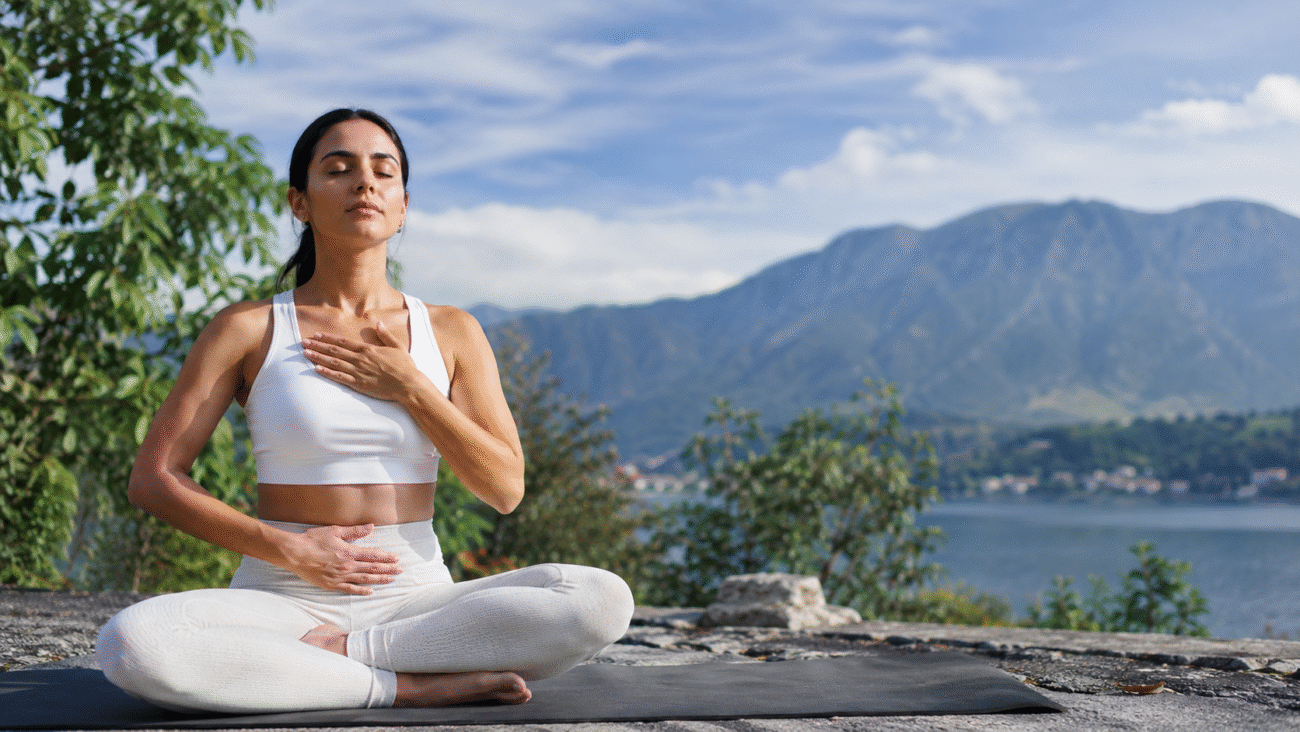
Pranayama for anxiety is the practice of using controlled breathing techniques to calm the nervous system and reduce stress. Slow, mindful breathing activates the parasympathetic nervous system, helping lower heart rate, relax muscles, and create a greater sense of emotional balance.
What Is Pranayama for Anxiety?
Pranayama is the yogic practice of controlling the breath. The word comes from Sanskrit, where “prana” means life energy and “ayama” means expansion or regulation.
When used for anxiety, pranayama focuses on slow, conscious breathing that helps relax both the mind and body.
Unlike ordinary breathing, pranayama teaches you to breathe with awareness. This simple shift can reduce physical tension and improve emotional well-being.
Why It Matters
When you’re anxious, your breathing often becomes the following:
- Fast
- Shallow
- Irregular
This signals your brain that danger may be present, even when you’re safe.
Controlled breathing sends the opposite message. It tells your brain that it’s okay to relax.
Over time, regular practice may help:
- Reduce everyday stress
- Improve emotional resilience
- Support better sleep
- Increase concentration
- Create a greater sense of calm
How Pranayama Works
Your breathing and nervous system are closely connected.
Slow breathing stimulates the vagus nerve, which helps activate the parasympathetic nervous system—often called the “rest and digest” response.
Here’s how it works:
Step 1: Slow Down the Breath
Begin by breathing slowly through the nose.
This naturally reduces over-breathing and encourages relaxation.
Step 2: Lengthen the Exhale
Making your exhale longer than your inhale helps signal the body to relax.
Many people notice an immediate feeling of calm.
Step 3: Improve Oxygen Exchange
Steady breathing allows more efficient oxygen delivery throughout the body.
This may reduce feelings of tension and fatigue.
Step 4: Calm the Mind
Focusing on your breath shifts attention away from anxious thoughts.
This creates mental space and improves emotional regulation.
Step 5: Build Daily Resilience
Like any healthy habit, consistent practice strengthens your ability to respond calmly to everyday stress.
5 Best Breathing Techniques for Stress and Anxiety
1. Nadi Shodhana (Alternate Nostril Breathing)
This is one of the most popular breathing practices for beginners.
How to practice:
- Sit comfortably.
- Close your right nostril.
- Inhale through the left.
- Close the left nostril.
- Exhale through the right.
- Repeat on the opposite side.
Benefits:
- Balances the nervous system
- Improves concentration
- Encourages emotional stability
2. Bhramari (Bee Breath)
Bhramari uses a gentle humming sound during exhalation.
How to practice:
- Inhale slowly.
- Exhale while making a soft humming sound.
- Feel the vibration around your face and head.
Benefits:
- Relaxes the mind
- Reduces mental tension
- Promotes inner calm
3. Deep Diaphragmatic Breathing
Also called belly breathing.
Instead of lifting the chest, allow your abdomen to expand naturally.
Benefits include:
- Better oxygen flow
- Reduced muscle tension
- Slower heart rate
4. Ujjayi Breathing
Sometimes called Ocean Breath.
Slightly narrow the throat while breathing through the nose to create a gentle ocean-like sound.
Benefits:
- Increases mindfulness
- Improves focus
- Creates a calming rhythm
5. Sama Vritti (Equal Breathing)
Inhale and exhale for the same number of counts.
Example:
- Inhale for four counts.
- Exhale for four counts.
This balanced breathing pattern helps create mental steadiness and emotional balance.
How Long Does It Take?
Some people feel calmer after just one breathing session.
However, lasting improvements usually come with regular practice.
A realistic routine is
- 5–10 minutes daily for beginners
- 15–20 minutes as confidence grows
Consistency is more important than long sessions.
Benefits of Pranayama for Anxiety
Regular practice may help:
- Lower stress levels
- Calm the nervous system
- Improve sleep quality
- Increase focus
- Support emotional balance
- Reduce muscle tension
- Encourage mindful living
- Improve breathing efficiency
Remember, pranayama supports well-being but is not a replacement for professional mental health care when needed.
Risks, Side Effects, and Limitations
Pranayama is generally safe when practiced gently.
However:
- Avoid forcing the breath.
- Stop if you feel dizzy.
- Practice in a comfortable position.
- Learn advanced techniques from a qualified teacher.
- If you have respiratory or heart conditions, consult your healthcare provider before starting.
Practical Example
Imagine Sarah, who feels anxious before work meetings.
Instead of scrolling on her phone, she spends five minutes practicing alternate nostril breathing.
Her breathing slows, her shoulders relax, and she enters the meeting feeling more focused and less overwhelmed.
While anxiety doesn’t disappear completely, the breathing practice helps her respond more calmly.
Tips for Beginners
- Practice at the same time each day.
- Choose a quiet space.
- Sit comfortably.
- Breathe gently through the nose.
- Never strain your breath.
- Start with five minutes.
- Be patient with yourself.
Common Mistakes to Avoid
- Breathing too quickly
- Holding the breath for too long
- Practicing immediately after a large meal
- Expecting instant results
- Forcing difficult techniques too early
- Ignoring dizziness or discomfort
Expert Insights
Breathwork has been practiced in yoga traditions for centuries because the breath directly influences both body and mind.
From practical teaching experience, beginners often see the best results by keeping their routine simple rather than trying many advanced exercises. A consistent five to ten minutes each day is usually more effective than practicing for an hour once a week.
If you’re completely new to pranayama, learning from an experienced instructor can help you build safe habits and gain confidence.
If you’re ready to establish a strong foundation, consider enrolling in the 9-Day Foundation Breathwork Course Online offered by Kundalini Yogashala. The structured program is designed for beginners and provides step-by-step guidance to develop proper breathing techniques and a sustainable daily practice:
https://kundaliniyogashala.com/9-day-foundation-breathwork-course-online.php
Frequently Asked Questions
1. Can pranayama help with anxiety?
Yes. Gentle pranayama may help reduce stress by encouraging slow, mindful breathing that supports relaxation. It works best as part of a healthy lifestyle and should not replace professional treatment for anxiety disorders.
2. Which pranayama is best for beginners?
Alternate nostril breathing and deep diaphragmatic breathing are excellent starting points because they are simple, gentle, and easy to learn.
3. How often should I practice?
Aim for 5–10 minutes daily. Consistency is more important than long sessions.
4. Can I practice before bed?
Yes. Many people find that slow breathing before bedtime helps quiet the mind and improve sleep quality.
5. Is pranayama safe for everyone?
Most gentle breathing exercises are safe for healthy adults. If you have medical conditions or are pregnant, seek guidance from your healthcare provider or a qualified yoga teacher.
6. Can breathing exercises replace medication?
No. Pranayama is a supportive wellness practice and should not replace prescribed medication or mental health treatment without professional advice.
7. When will I notice results?
Some people feel calmer immediately, while long-term benefits usually develop through regular daily practice over several weeks.
Conclusion
Practicing pranayama for anxiety is a simple yet powerful way to support your mental and physical well-being. By slowing your breath, you help calm the nervous system, reduce stress, and build greater emotional resilience.
Start with one easy technique, practice for a few minutes each day, and stay consistent. Small daily habits often lead to meaningful changes over time.
Continue Your Pranayama Journey
Building a strong foundation through pre-pranayama is the first step toward a safe and rewarding breathwork practice. Once you develop breath awareness, diaphragmatic control, and nervous system regulation, you can gradually progress through different levels of pranayama training.
Explore the next steps in your journey:
- Start with our 9-Day Foundation Breathwork & Pre-Pranayama Course
- Learn the fundamentals in our Beginner Pranayama Course
- Deepen your skills with the intermediate breathwork training.
- Master advanced techniques through our Advanced Pranayama Training
Each program is designed to help you progress step-by-step while mainta
