
If you’re wondering how long to practice pranayama, you’re not alone. Many beginners worry about doing too little or too much. The good news is that you don’t need hours of practice to enjoy the benefits.
In this guide, you’ll learn the ideal pranayama time for beginners, how to build a daily pranayama routine, common mistakes to avoid, and when a guided class can help you stay consistent.
Most beginners should practice pranayama for 10–15 minutes per day. As your breathing becomes more comfortable and your technique improves, you can gradually increase your practice to 20–30 minutes. If you want a complete guided experience, a structured 45-minute daily session that includes breathing techniques, relaxation, and meditation can provide a balanced routine without feeling overwhelming.
What Is Pranayama?
Pranayama is a yogic breathing practice that helps you control and improve your breath.
The word comes from Sanskrit:
- “Prana” means life energy.
- “Ayama” means expansion or control.
Instead of simply breathing automatically, pranayama teaches you how to breathe with awareness. Different techniques focus on calming the mind, increasing energy, or improving concentration.
Why Daily Practice Matters
Like any healthy habit, pranayama works best when practiced regularly.
Daily practice may help:
- Build healthier breathing habits
- Reduce everyday stress
- Improve focus
- Increase lung awareness
- Support relaxation before meditation
Even a short session every day is usually more effective than one long session once a week.
How Long Should You Practice Pranayama Each Day?
The ideal pranayama time depends on your experience level.
| Experience Level | Recommended Daily Time |
|---|---|
| Beginner | 10–15 minutes |
| Regular Practitioner | 20–30 minutes |
| Experienced Practitioner | 30–45 minutes or more with proper guidance |
Quality matters more than duration.
Practicing with correct technique for 10 minutes is far better than practicing incorrectly for 40 minutes.
If you’re just getting started, focus on learning proper breathing before increasing your session length.
How It Works
Step 1: Find a Quiet Place
Sit comfortably with your back straight.
Avoid distractions and keep your body relaxed.
Step 2: Begin with Natural Breathing
Spend two or three minutes observing your natural breath.
Don’t force anything.
Step 3: Practice Simple Techniques
Choose beginner-friendly practices such as:
- Deep diaphragmatic breathing
- Equal breathing
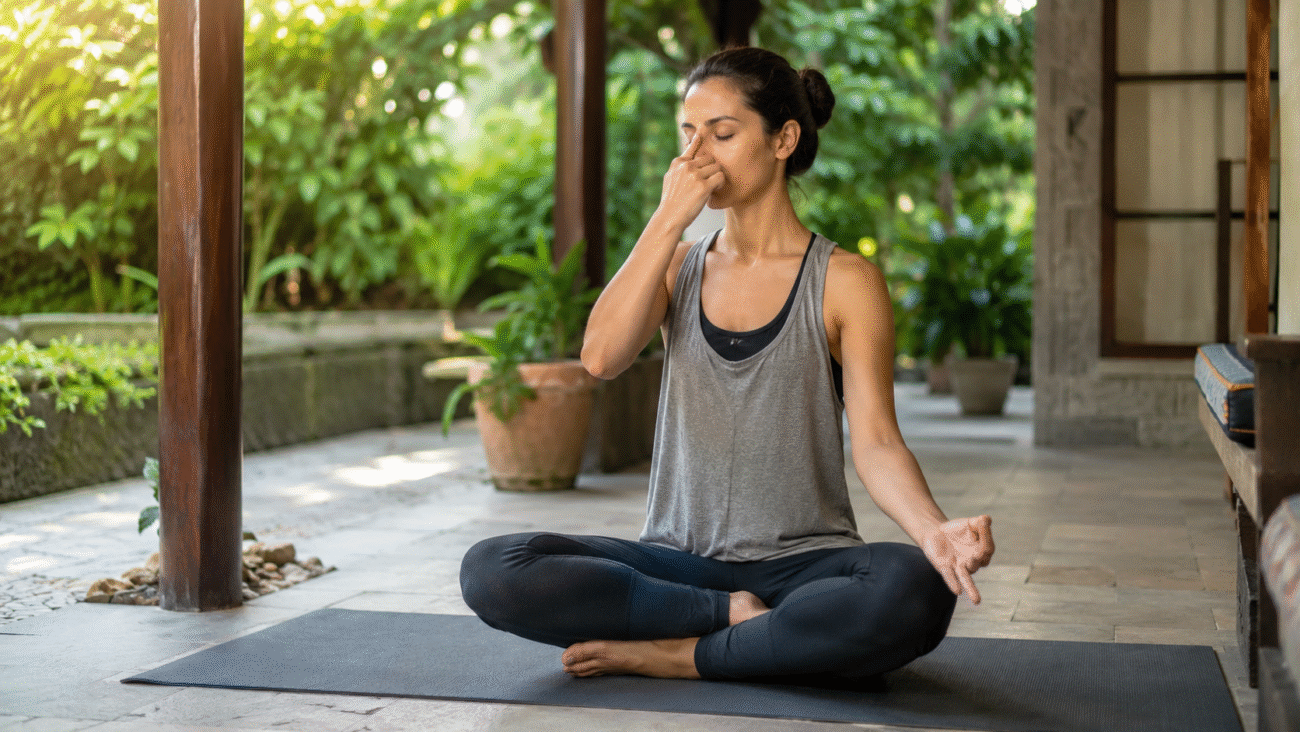
- Alternate nostril breathing (Nadi Shodhana)
Practice slowly and comfortably.
Step 4: Rest Between Techniques
Take a few normal breaths before changing techniques.
This helps your body adjust naturally.
Step 5: Finish with Quiet Sitting
Spend two to five minutes sitting quietly.
Notice how your breathing feels before ending the session.
Daily Pranayama Routine for Beginners
Here’s a simple 15-minute routine.
| Activity | Time |
| Natural breathing | 3 minutes |
| Deep breathing | 4 minutes |
| Alternate nostril breathing | 5 minutes |
| Quiet relaxation | 3 minutes |
As you become comfortable, you can gradually extend each section.
Many students find it easier to stay consistent by joining guided live sessions. A structured 45-minute daily class combines breathing, gentle preparation, relaxation, and meditation into one balanced practice, making it easier to build a lasting habit.
If you’re completely new, starting with a beginner-friendly course before joining daily classes can help you learn proper breathing techniques with confidence.
How Your Practice Changes Over Time
Your daily pranayama routine naturally grows as you gain experience.
First Week
- Learn posture
- Build breathing awareness
- Stay relaxed
First Month
- Improve consistency
- Feel more comfortable
- Increase breathing control
After Several Months
- Practice becomes smoother
- Better concentration
- Greater confidence
- Longer sessions feel easier
Progress is gradual.
There is no need to rush.
Benefits of Daily Pranayama
A consistent practice may help:
- Improve breathing awareness
- Support relaxation
- Reduce feelings of stress
- Increase focus
- Prepare the mind for meditation
- Encourage mindfulness
- Create a healthy daily routine
Results vary from person to person, and pranayama is not a substitute for medical treatment.
Risks, Side Effects, or Limitations
Pranayama is generally safe when practiced correctly.
However:
- Don’t force your breath.
- Stop if you feel dizzy.
- Avoid advanced breath retention without proper instruction.
- Practice gently if you have respiratory or heart conditions, and consult your healthcare provider when appropriate.
Comfort should always come before intensity.
Practical Example
Imagine Sarah, a complete beginner.
She starts with 10 minutes every morning before work.
After three weeks, she feels more relaxed during stressful meetings.
By the second month, she comfortably practices for 20 minutes and joins a guided 45-minute live class twice a week to improve her technique and stay motivated.
Her progress comes from consistency, not long sessions on day one.
Tips for Beginners
- Practice at the same time every day.
- Morning is often the easiest time.
- Sit comfortably.
- Wear loose clothing.
- Never strain your breathing.
- Increase your practice slowly.
- Follow a qualified instructor when learning new techniques.
Common Mistakes to Avoid
Many beginners make these simple mistakes:
- Trying advanced breathing too soon
- Holding the breath too long
- Practicing immediately after a heavy meal
- Comparing progress with others
- Skipping practice for several days
- Ignoring signs of discomfort
Slow and steady practice usually produces better long-term results.
Expert Insights
Experienced yoga teachers often notice that beginners improve faster when they focus on consistency instead of duration.
Practicing every day for 15 minutes usually creates a stronger habit than practicing for an hour once a week.
Many students also benefit from guided instruction because it helps them maintain proper breathing rhythm, posture, and relaxation. Once the basics become familiar, joining regular 45-minute live sessions can provide a complete daily practice without having to plan each session yourself.
Frequently Asked Questions
1. How long should beginners practice pranayama?
Most beginners should practice for about 10–15 minutes daily. This allows you to learn proper breathing without becoming tired or overwhelmed.
2. Can I practice pranayama every day?
Yes. Daily practice is generally recommended when done gently and with correct technique. Consistency is more important than long sessions.
3. What is the best time for pranayama?
Morning is often considered ideal because the mind is usually calmer and the stomach is empty. However, any regular time that fits your schedule can work well.
4. Is 45 minutes of pranayama too much?
Not necessarily. A well-structured 45-minute guided session often includes breathing exercises, relaxation, meditation, and rest rather than continuous breathing techniques. Beginners should build up gradually.
5. Should I practice before or after yoga?
Many practitioners perform gentle pranayama after physical yoga postures and before meditation. This sequence helps prepare the body and mind.
6. Can pranayama reduce stress?
Many people report feeling calmer after regular practice. Slow, mindful breathing may help support relaxation and improve emotional well-being.
7. Can I learn pranayama online?
Yes. A structured beginner course with experienced teachers can help you learn proper breathing techniques safely before moving into longer daily practice.
8. What if I miss a day?
Simply continue the next day. Missing one session is not a problem. Building a long-term habit matters more than perfection.
Conclusion
Knowing how long to practice pranayama is only the first step.
For most beginners, 10–15 minutes each day is enough to build confidence and healthy breathing habits. As your experience grows, you can gradually increase your practice and enjoy a more complete daily pranayama routine.
If you want expert guidance, learning through a structured beginner course and joining regular live classes can make your practice easier, safer, and more consistent.
Explore the Beginner Pranayama Course and Daily Live Classes here:
https://kundaliniyogashala.com/beginner-pranayama-course-online.php
Continue Your Pranayama Journey
Building a strong foundation through pre-pranayama is the first step toward a safe and rewarding breathwork practice. Once you develop breath awareness, diaphragmatic control, and nervous system regulation, you can gradually progress through different levels of pranayama training.
Explore the next steps in your journey:
- Start with our 9-Day Foundation Breathwork & Pre-Pranayama Course
- Learn the fundamentals in our Beginner Pranayama Course
- Deepen your skills with the intermediate breathwork training.
- Master advanced techniques through our Advanced Pranayama Training
