
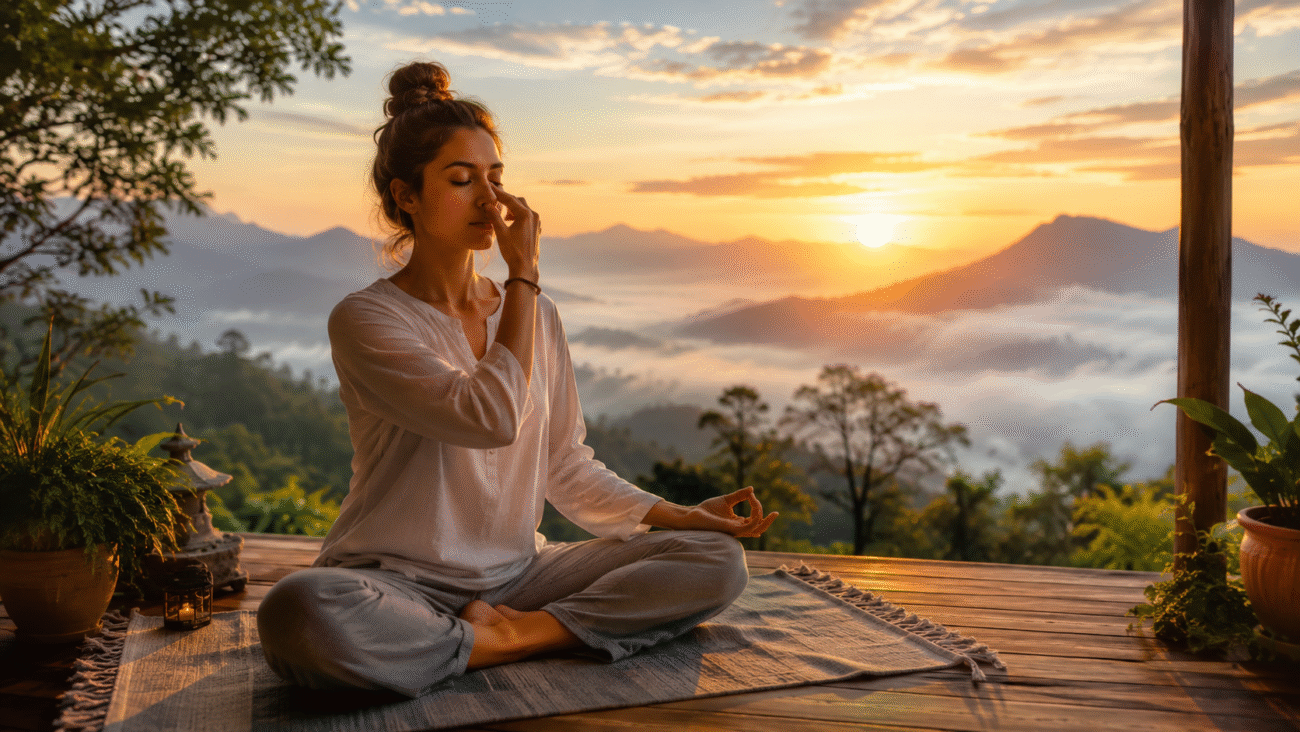
A regular morning pranayama practice can help you start the day feeling calm, focused, and energized. Many beginners wonder about the best time for pranayama and whether practicing in the morning really makes a difference.
The answer is yes—for most people, early morning offers the ideal environment for breathwork because the mind is quieter, the stomach is usually empty, and there are fewer distractions. In this guide, you’ll learn why morning is the best time, what to practice each day, and how to build a simple daily breathwork routine that you can stick with.
Morning is the best time to practice pranayama because your body and mind are fresh, your stomach is empty, and the air is generally cleaner and quieter. A simple 10–20 minute morning pranayama practice can improve focus, reduce stress, increase energy, and prepare you for meditation or yoga throughout the day.
What Is Morning Pranayama Practice?
Pranayama is the practice of controlling your breath through different breathing techniques.
A morning pranayama practice simply means doing these breathing exercises shortly after waking up. Many people practice before yoga, meditation, or breakfast.
The goal is not just to breathe deeply. It is to breathe with awareness, rhythm, and control.
Why Morning Is the Best Time for Pranayama
Morning is often considered the best time for pranayama because your body is naturally prepared for calm, focused breathing.
Here are the main reasons:
- Your mind is quieter after sleep.
- Your stomach is usually empty.
- Fewer distractions help improve concentration.
- Morning breathwork sets a positive tone for the day.
- It can increase alertness without relying on caffeine.
- Regular morning practice is easier to turn into a habit.
Many traditional yoga teachings also recommend practicing during the early morning when the environment is peaceful and the body feels refreshed.
How Morning Pranayama Works
Breathing exercises influence both your body and mind.
Instead of breathing quickly and without awareness, pranayama teaches slow, controlled breathing.
This may help:
- Slow the heart rate
- Relax the nervous system
- Improve oxygen exchange
- Increase mental clarity
- Prepare the mind for meditation
Consistent practice is usually more important than long sessions.
A Simple Daily Breathwork Routine
If you’re joining a 5:30 AM session or practicing at home, try this beginner-friendly routine.
Step 1: Sit Comfortably (1 Minute)
Sit with your back straight.
Relax your shoulders and close your eyes.
Take a few natural breaths.
Step 2: Deep Belly Breathing (3 Minutes)
Breathe in slowly through your nose.
Let your belly expand.
Exhale gently.
Repeat without forcing the breath.
Step 3: Alternate Nostril Breathing (5 Minutes)
Close one nostril while breathing through the other.
Switch sides after each breath.
Keep your breathing smooth and relaxed.
This practice may improve focus and mental balance.
Step 4: Gentle Humming Breath (3 Minutes)
Take a slow breath in.
While breathing out, make a soft humming sound.
The vibration can help create a calming effect.
Step 5: Quiet Breathing or Meditation (3–5 Minutes)
Sit quietly.
Notice your breathing without changing it.
Allow your mind to settle before starting your day.
How Long Should You Practice?
You do not need an hour every morning.
A simple schedule works well:
| Experience Level | Daily Time |
|---|---|
| Beginner | 10–15 minutes |
| Regular Practitioner | 15–20 minutes |
| Experienced | 20–30 minutes |
Practicing every day is usually more beneficial than practicing once a week for a long time.
Benefits of Morning Pranayama
A regular daily breathwork routine may provide several benefits.
Better Focus
Controlled breathing helps settle the mind before work or study.
Lower Stress
Slow breathing can encourage relaxation and reduce feelings of tension.
More Natural Energy
Many people feel refreshed after breathwork without needing extra caffeine.
Improved Breathing Awareness
You become more aware of your breathing patterns throughout the day.
Better Preparation for Meditation
A calm breath often makes meditation easier.
Healthy Morning Habit
Starting each day with intention can positively influence the rest of your routine.
Risks, Side Effects, or Limitations
Pranayama is generally safe when practiced gently.
However, keep these points in mind:
- Avoid forcing your breath.
- Stop if you feel dizzy.
- Practice on an empty or nearly empty stomach.
- People with certain medical conditions should consult a healthcare professional before beginning advanced breathing exercises.
- Pregnancy and heart or lung conditions may require modified techniques.
Beginners should start slowly instead of trying advanced methods immediately.
Practical Example
Imagine Sarah, who often wakes up feeling rushed.
Instead of checking her phone, she spends 15 minutes doing her morning pranayama practice.
She begins with deep breathing, practices alternate nostril breathing, finishes with a few minutes of quiet meditation, and then starts work.
After several weeks, she notices she feels calmer in stressful situations and finds it easier to concentrate during the morning.
Tips for Beginners
If you’re just getting started, keep things simple.
- Practice at the same time every day.
- Choose a quiet place.
- Wear comfortable clothing.
- Breathe through your nose unless instructed otherwise.
- Stay relaxed.
- Focus on consistency instead of perfection.
- Begin with 10 minutes if you’re short on time.
Building the habit is more important than doing complicated techniques.
Common Mistakes to Avoid
Many beginners make these simple mistakes.
- Holding the breath too long.
- Breathing too fast.
- Practicing immediately after eating.
- Slouching while sitting.
- Expecting instant results.
- Skipping practice for several days.
- Trying advanced techniques without guidance.
A calm, steady approach usually produces the best long-term results.
Expert Insights
Years of yoga teaching have shown that beginners succeed when they keep their practice simple and consistent.
A short session every morning often leads to better results than occasional long sessions.
Rather than chasing difficult breathing techniques, focus on developing smooth, comfortable breathing and making your daily practice enjoyable. Over time, you can gradually add new pranayama methods as your confidence grows.
Frequently Asked Questions
Is morning really the best time for pranayama?
Yes. Morning is generally considered the best time because your stomach is empty, your mind is calm, and distractions are minimal. This makes it easier to focus on breathing and develop a consistent habit.
Can beginners practice pranayama every day?
Yes. Most beginners can safely practice gentle breathing exercises daily. Start with 10–15 minutes and increase gradually as you become more comfortable.
Should I do pranayama before or after yoga?
Many people practice pranayama before meditation and either before or after gentle yoga, depending on their routine. The most important factor is maintaining comfortable breathing throughout your practice.
Can I practice pranayama after eating?
It is generally better to wait until your stomach is mostly empty. Practicing immediately after a large meal may feel uncomfortable and can affect your breathing.
How long does it take to notice benefits?
Some people feel calmer after their first session. Building lasting habits and experiencing ongoing benefits usually requires regular practice over several weeks.
Which pranayama is best for beginners?
Deep belly breathing and alternate nostril breathing are popular beginner-friendly techniques. They are gentle, easy to learn, and help develop breath awareness.
Can morning pranayama improve concentration?
Yes. Slow, mindful breathing may help reduce mental distractions and improve focus, making it a helpful way to prepare for work, study, or meditation.
What should I do if I feel dizzy?
Stop practicing immediately and return to normal breathing. Dizziness can happen if you breathe too quickly or force your breath. Resume only when you feel comfortable, and use gentler techniques.
Conclusion
A consistent morning pranayama practice is one of the simplest ways to begin your day with greater calm, focus, and energy. While the best time for pranayama may vary slightly depending on your schedule, early morning offers ideal conditions for building a lasting habit.
Start with just 10 to 15 minutes, follow a simple daily breathwork routine, and stay consistent. Small daily efforts often lead to meaningful improvements in your breathing, mindfulness, and overall well-being over time.
Continue Your Pranayama Journey
Building a strong foundation through pre-pranayama is the first step toward a safe and rewarding breathwork practice. Once you develop breath awareness, diaphragmatic control, and nervous system regulation, you can gradually progress through different levels of pranayama training.
Explore the next steps in your journey:
- Start with our 9-Day Foundation Breathwork & Pre-Pranayama Course
- Learn the fundamentals in our Beginner Pranayama Course
- Deepen your skills with the intermediate breathwork training.
- Master advanced techniques through our Advanced Pranayama Training
