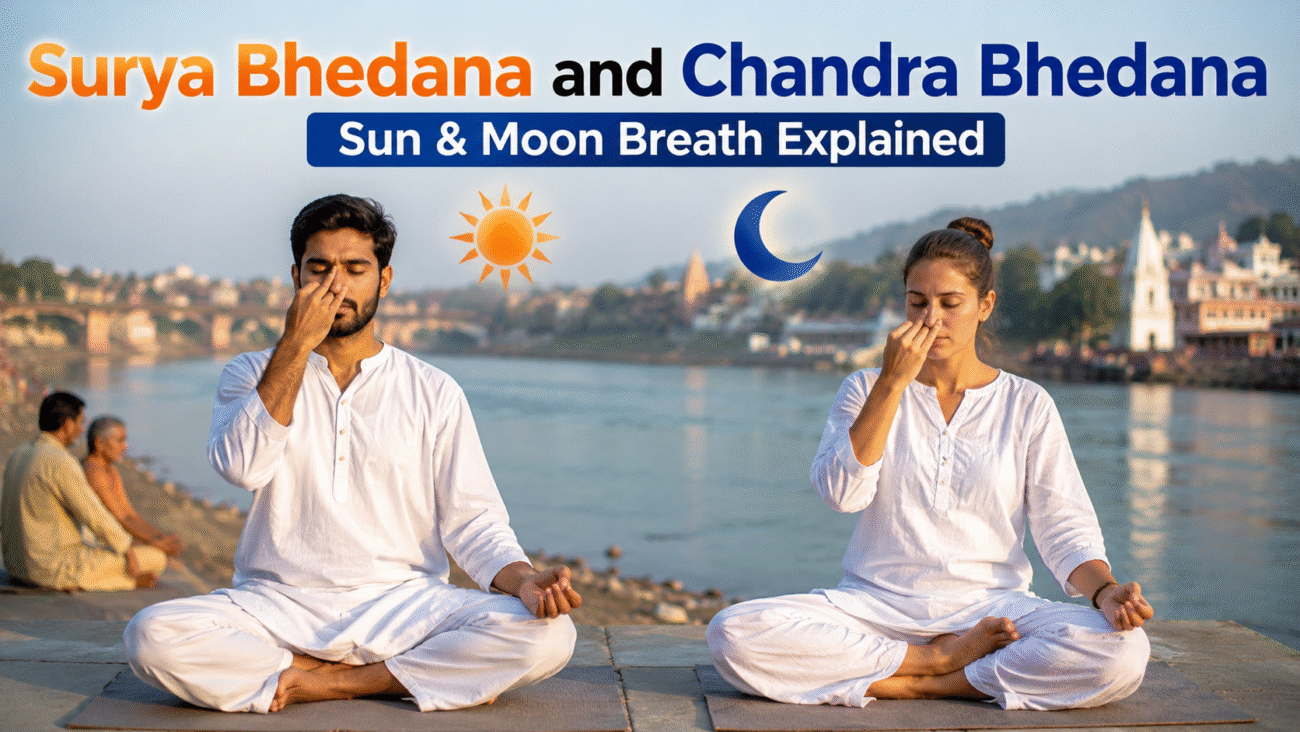
Surya Bhedana Pranayama is a breathing technique that involves inhaling through the right nostril and exhaling through the left to increase energy, warmth, and alertness. Chandra Bhedana is the opposite—it involves inhaling through the left nostril and exhaling through the right to promote relaxation, cooling, and mental calmness. Together, they help balance the body’s solar and lunar energies.
What is Surya Bhedana and Chandra Bhedana?
Surya Bhedana Pranayama means “piercing the sun channel.” In yoga, the right nostril is connected with the Pingala Nadi, which represents solar energy, activity, and vitality.
Chandra Bhedana means “piercing the moon channel.” It activates the Ida Nadi, associated with cooling energy, relaxation, intuition, and mental peace.
Both techniques are traditional pranayama practices that help regulate the nervous system through controlled breathing.
Why It Matters
Modern life often pushes us toward either too much stress or too little energy.
These breathing techniques offer a simple way to influence how you feel without needing any equipment.
Practicing the right technique at the right time may help you:
- Improve focus
- Reduce stress
- Support emotional balance
- Prepare for meditation
- Improve breath awareness
- Balance energy naturally
How Solar and Lunar Breathing Works
In yogic philosophy, each nostril is connected with a different energy pathway.
| Surya Bhedana | Chandra Bhedana |
|---|---|
| Right nostril inhale | Left nostril inhale |
| Activates Pingala Nadi | Activates Ida Nadi |
| Warming | Cooling |
| Energizing | Relaxing |
| Improves alertness | Promotes calmness |
| Best in morning | Best in evening |
Although modern science is still studying these effects, controlled breathing is known to influence the autonomic nervous system, which helps regulate stress, heart rate, and relaxation.
How to Practice
Find a Comfortable Position
Sit with your spine straight.
Relax your shoulders and soften your face.
Step 2: Use Nasika Mudra
Use your right hand.
Close one nostril gently with your thumb or ring finger without pressing too hard.
Practice Surya Bhedana Pranayama
- Close the left nostril.
- Inhale slowly through the right nostril.
- Close the right nostril.
- Exhale through the left nostril.
- Repeat for 5–10 rounds.
Step 4: Practice Chandra Bhedana
- Close the right nostril.
- Inhale through the left nostril.
- Close the left nostril.
- Exhale through the right nostril.
- Repeat for 5–10 rounds.
Step 5: Observe the Effects
Sit quietly for one or two minutes.
Notice changes in your breathing, energy, and state of mind.
Timeline or Duration
Beginners should practice for:
- 5–10 rounds
- Around 3–5 minutes
- Once daily
More experienced practitioners may gradually increase the duration under the guidance of a qualified yoga teacher.
Benefits
Surya Bhedana Pranayama
- Increases alertness
- Supports concentration
- Generates internal warmth
- May improve morning energy
- Helps prepare for physical yoga practice
- Encourages active breathing patterns
Chandra Bhedana
- Calms the nervous system
- Encourages relaxation
- Helps reduce mental restlessness
- May improve sleep preparation
- Supports meditation
- Promotes emotional balance
Risks, Side Effects, or Limitations
These breathing techniques are generally safe when practiced gently.
However, avoid or seek professional guidance if you have the following:
- Uncontrolled high blood pressure
- Serious heart conditions
- Severe respiratory illness
- Fever (avoid warming practices like Surya Bhedana)
- Very low blood pressure (use cooling practices carefully)
Never force the breath or hold it longer than feels comfortable, especially if you are a beginner.
Practical Example
Imagine two different situations.
You wake up feeling tired before work.
Practicing Surya Bhedana Pranayama for a few minutes may help you feel more awake and focused.
Later, after a stressful day, your mind feels busy before bedtime.
Practicing Chandra Bhedana may help your breathing slow down and prepare your body for rest.
The key is choosing the breathing technique that matches what your body needs.
Tips for Beginners
- Practice on an empty or light stomach.
- Sit comfortably without straining.
- Keep your breathing smooth and quiet.
- Start with only a few rounds.
- Stop if you feel dizzy or uncomfortable.
- Practice consistently rather than for long periods.
- Learn advanced techniques from a qualified teacher.
If you want to deepen your understanding of pranayama and traditional breathwork practices, consider joining the Intermediate Breathwork Training offered by Kundalini Yogashala:
https://kundaliniyogashala.com/intermediate-breathwork-training-online.php
Common Mistakes to Avoid
- Breathing too fast
- Forcing deep breaths
- Sitting with poor posture
- Practicing immediately after eating
- Holding the breath unnecessarily
- Confusing the nostril sequence
- Expecting instant results
Slow, gentle, and regular practice is more effective than trying to do too much.
Expert Insights
Experienced yoga teachers often emphasize that pranayama is not just about breathing—it is about awareness.
Many beginners focus only on which nostril to use. In reality, the quality of the breath matters even more.
A relaxed, steady breath helps create a calmer nervous system and a more focused mind.
As your practice develops, you may notice subtle changes in energy, attention, and emotional balance. These effects often come through consistent practice rather than dramatic experiences.
Frequently Asked Questions
1. What is the difference between Surya Bhedana Pranayama and Chandra Bhedana?
Surya Bhedana increases warmth and alertness by inhaling through the right nostril. Chandra Bhedana encourages cooling and relaxation by inhaling through the left nostril. They are opposite breathing techniques used for different purposes.
2. Which breathing technique is better for beginners?
Both are suitable for beginners when practiced gently. Start with a few rounds and avoid breath retention until you receive proper instruction.
3. Can I practice Surya Bhedana every day?
Yes. Many people practice it daily, especially in the morning. However, if you have medical conditions such as uncontrolled high blood pressure, consult a healthcare professional or experienced yoga teacher first.
4. Is Chandra Bhedana good before sleep?
Yes. Because it promotes relaxation and cooling, many practitioners find it helpful before meditation or bedtime.
5. Can I practice both techniques on the same day?
Yes. Some practitioners use Surya Bhedana in the morning for energy and Chandra Bhedana in the evening for relaxation, depending on their individual needs.
6. How long should beginners practice?
Start with 5–10 rounds or about 3–5 minutes. Gradually increase your practice as you become more comfortable.
7. Are these breathing techniques scientifically proven?
Research on yogic breathing continues to grow. Studies suggest controlled breathing can influence stress, relaxation, and nervous system function, though more research is needed on specific traditional pranayama techniques.
8. Should I learn advanced pranayama from a teacher?
Yes. While basic breathing practices can be learned safely, advanced pranayama, breath retention, and energy-based practices are best learned under qualified instruction.
Conclusion
Surya Bhedana Pranayama and Chandra Bhedana are two complementary breathing practices that help balance the body’s solar and lunar energies.
If you need more energy and focus, Surya Bhedana may be the better choice. If you need calmness and relaxation, Chandra Bhedana can be a helpful practice.
Start slowly, breathe naturally, and stay consistent. Over time, these simple techniques can become valuable tools for supporting your yoga practice and overall well-being. For those ready to explore pranayama in greater depth, structured training with experienced teachers can provide safe guidance and a deeper understanding of traditional breathwork.
Continue Your Pranayama Journey
Building a strong foundation through pre-pranayama is the first step toward a safe and rewarding breathwork practice. Once you develop breath awareness, diaphragmatic control, and nervous system regulation, you can gradually progress through different levels of pranayama training.
Explore the next steps in your journey:
- Start with our 9-Day Foundation Breathwork & Pre-Pranayama Course
- Learn the fundamentals in our Beginner Pranayama Course
- Deepen your skills with the intermediate breathwork training.
- Master advanced techniques through our Advanced Pranayama Training
