
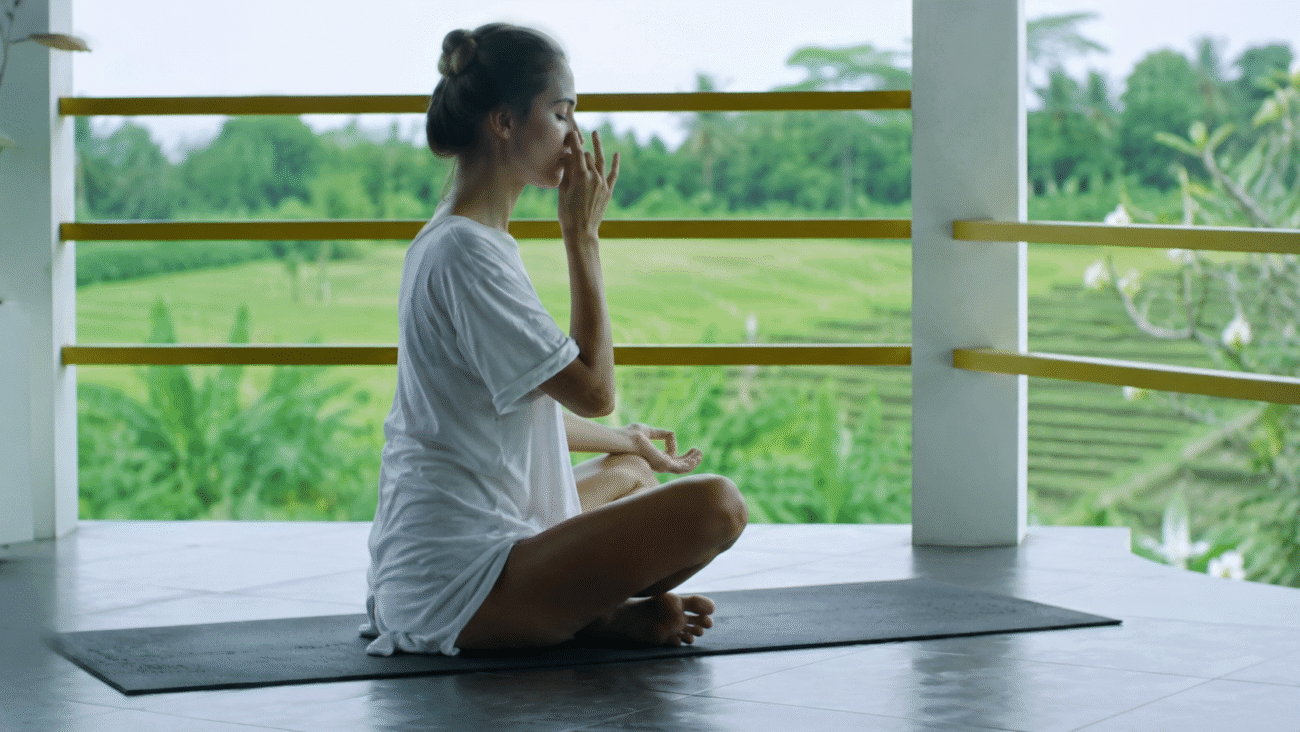
The 5 vayus in yoga are five different movements of prana (life force energy) within the body. They are Prana Vayu, Apana Vayu, Samana Vayu, Udana Vayu, and Vyana Vayu. Each governs specific physical and mental functions, and pranayama practices help balance these energies to support health, emotional stability, and spiritual growth.
What Is Prana?
“Prana” is often translated as “life force energy.” It is the subtle energy believed to flow through every living being.
In yoga philosophy, breathing is one of the easiest ways to influence prana, but prana is not exactly the same as air or oxygen. Breath carries prana, while prana powers the body, mind, and consciousness.
The ancient yogic texts describe thousands of energy channels called nadis through which prana flows. When this flow is balanced, we often experience better health, clearer thinking, and a calmer mind.
What Are the 5 Vayus in Yoga?
The word “vayu” means “wind” or “movement.” The five vayus describe five major directions in which prana moves inside the body.
| Vayu | Main Function | Primary Area |
|---|---|---|
| Prana Vayu | Receiving energy | Chest and lungs |
| Apana Vayu | Elimination and grounding | Lower abdomen |
| Samana Vayu | Digestion and balance | Navel region |
| Udana Vayu | Speech and growth | Throat and head |
| Vyana Vayu | Circulation throughout the body | Entire body |
Together, these five energies work continuously to keep the body and mind functioning smoothly.
Why Understanding the Five Vayus Matters
Learning about the five vayus helps you understand yoga beyond physical postures.
It explains:
- Why breathing affects emotions
- How digestion connects with energy
- Why grounding practices reduce stress
- How meditation becomes easier
- Why balanced energy supports overall wellness
Rather than seeing pranayama as simple breathing exercises, you begin to understand it as a complete energy management practice.
How Pranayama Balances the Five Vayus
Pranayama works by creating awareness of the breath and gradually refining the flow of prana.
Step 1: Observe Your Breath
Begin by noticing your natural breathing without changing it.
Awareness is the first step toward balance.
Step 2: Slow the Breath
Gentle, slow breathing helps calm the nervous system and supports balanced energy flow.
Step 3: Practice Simple Pranayama
Techniques such as diaphragmatic breathing, alternate nostril breathing, and gentle lengthened exhalations help regulate different vayus.
Step 4: Build Consistency
A few minutes of daily practice is often more beneficial than occasional long sessions.
Step 5: Learn Advanced Techniques Safely
Advanced pranayama methods should be learned from experienced teachers because they involve deeper control of breath and energy.
If you want to study these practices in greater depth, structured guidance is available through the Advanced Pranayama Training Online program:
https://kundaliniyogashala.com/advanced-pranayama-training-online.php
The Five Vayus Explained
Prana Vayu
Prana Vayu governs inhalation and the intake of life energy.
It is centered around the heart and lungs.
Main functions include:
- Breathing
- Receiving energy
- Mental alertness
- Emotional openness
When balanced, people often feel inspired, awake, and emotionally steady.
Apana Vayu
Apana Vayu moves downward.
It supports elimination and grounding.
Its responsibilities include:
- Digestion’s final stage
- Urination
- Reproductive functions
- Stability
- Feeling rooted
When Apana is weak, people may feel anxious, scattered, or physically uncomfortable.
Samana Vayu
Samana Vayu is centered around the navel.
It balances inward and outward energy.
Its role includes:
- Digestion
- Nutrient absorption
- Decision making
- Mental clarity
A balanced Samana supports both healthy digestion and balanced emotions.
Udana Vayu
Udana Vayu moves upward.
It influences:
- Speech
- Communication
- Memory
- Personal growth
- Confidence
Healthy Udana helps people express themselves clearly and think positively.
Vyana Vayu
Vyana Vayu spreads energy throughout the entire body.
It supports:
- Blood circulation
- Movement
- Coordination
- Muscle function
- Overall energy distribution
It connects all the other vayus into one harmonious system.
Benefits of Balancing the Vayus
Although everyone’s experience is different, balanced prana flow may support:
- Better breathing awareness
- Improved concentration
- Greater emotional balance
- More stable energy levels
- Improved body awareness
- Deeper meditation
- Reduced mental restlessness
- Better coordination between body and mind
These practices are meant to support well-being and are not a replacement for medical care.
Risks, Side Effects, or Limitations
Pranayama is generally gentle when practiced correctly.
However:
- Avoid forcing the breath.
- Stop if you feel dizzy.
- Practice advanced techniques only with qualified guidance.
- People with certain medical conditions should seek advice from their healthcare provider before beginning intensive breathing practices.
Progress comes from patience rather than effort.
Practical Example
Imagine two people starting their morning.
One wakes up feeling anxious and immediately rushes into work.
The other spends ten minutes practicing slow breathing and simple pranayama.
Although both face similar challenges during the day, the second person may find it easier to stay calm, focused, and emotionally balanced because mindful breathing supports a steadier flow of prana.
Tips for Beginners
- Practice at the same time every day.
- Sit comfortably with a straight spine.
- Breathe gently through the nose.
- Never strain your breathing.
- Focus on relaxation before technique.
- Learn gradually instead of rushing into advanced practices.
- Stay consistent.
Frequently Asked Questions
What are the five vayus in yoga?
The five vayus are the five primary movements of prana within the body: prana, apana, samana, udana, and vyana. Together they regulate breathing, digestion, circulation, communication, elimination, and overall energy balance.
What is the difference between prana and pranayama?
Prana is the life force energy itself. Pranayama is the yogic practice of regulating the breath to influence and balance that life force.
Which vayu controls breathing?
Prana Vayu mainly governs inhalation and the intake of life energy. It is associated with the lungs, chest, and heart region.
Why is Apana Vayu important?
Apana Vayu supports elimination, grounding, and reproductive health. It helps maintain physical stability and emotional balance.
Can beginners practice pranayama?
Yes. Beginners can safely start with simple breathing awareness and gentle pranayama techniques. More advanced methods should be learned under qualified instruction.
How do the five vayus affect daily life?
The five vayus influence many everyday functions, including breathing, digestion, movement, communication, circulation, and emotional balance. Understanding them can help make yoga practice more meaningful.
Does balancing the vayus improve meditation?
Balanced prana may help create a calmer and more focused mind, which can support meditation practice. Individual experiences vary, and regular practice is important.
How long does it take to notice benefits?
Some people notice increased calmness after a few sessions, while deeper awareness and lasting changes usually develop through regular, consistent practice over time.
Conclusion
Understanding pranayama and prana opens the door to a deeper experience of yoga. The **5 vayus in yoga—Prana, Apana, Samana, Udana, and Vyana—**describe how life force energy moves throughout the body and mind.
Rather than viewing pranayama as only breathing exercises, you can begin to see it as a practice for balancing energy, improving awareness, and supporting overall well-being. Start with simple techniques, practice consistently, and learn advanced methods with proper guidance as your understanding grows.
Continue Your Pranayama Journey
Building a strong foundation through pre-pranayama is the first step toward a safe and rewarding breathwork practice. Once you develop breath awareness, diaphragmatic control, and nervous system regulation, you can gradually progress through different levels of pranayama training.
Explore the next steps in your journey:
- Start with our 9-Day Foundation Breathwork & Pre-Pranayama Course
- Learn the fundamentals in our Beginner Pranayama Course
- Deepen your skills with the intermediate breathwork training.
- Master advanced techniques through our Advanced Pranayama Training
