
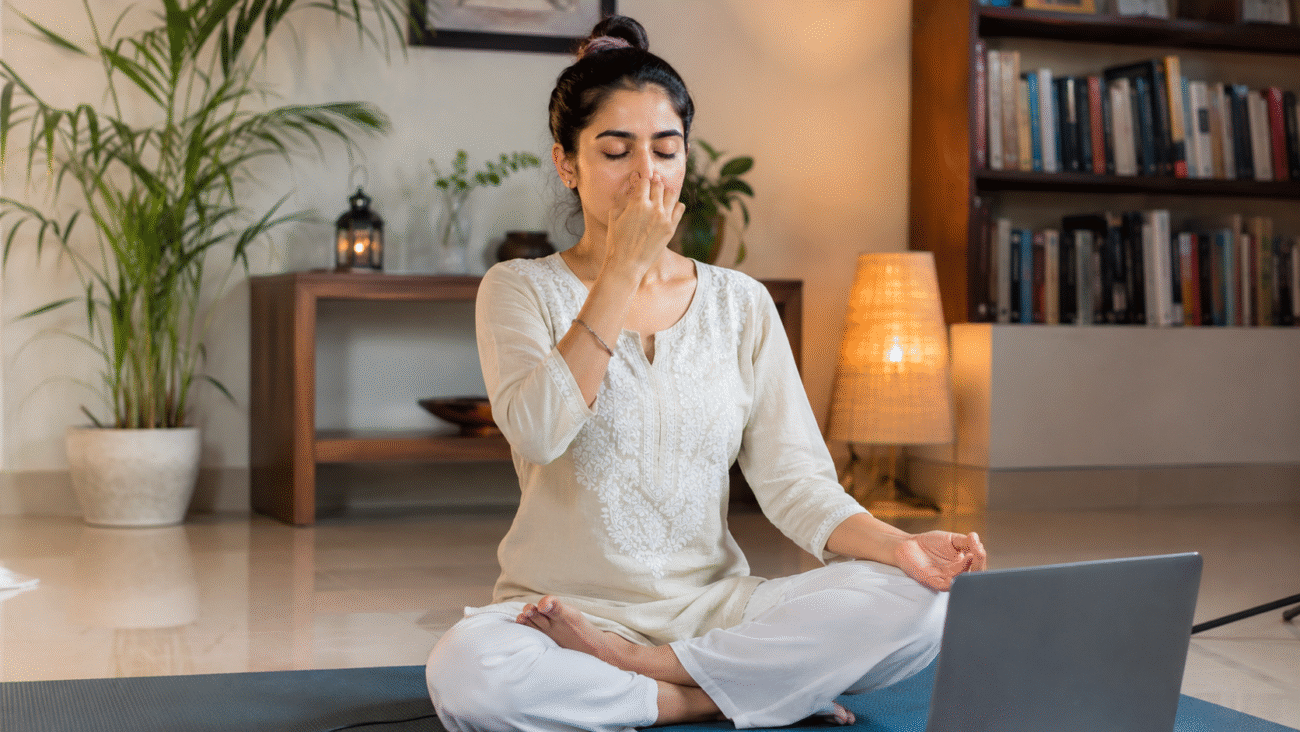
Live online pranayama classes are generally better than recorded videos because they provide real-time guidance, personalized feedback, structured learning, and accountability. Recorded videos are flexible and affordable, but they cannot correct mistakes or adapt to your needs. If your goal is long-term progress and safe practice, live instruction is usually the stronger choice.
What Is Online Pranayama Learning?
Online pranayama learning allows you to study yogic breathing techniques from home using the internet.
There are two common ways to learn:
- Live online classes with a teacher
- Pre-recorded video courses that you watch anytime
Both methods teach breathing exercises, but the learning experience is very different.
Why Choosing the Right Format Matters
Pranayama is more than copying breathing patterns.
Proper posture, timing, rhythm, and awareness all matter. Small mistakes may reduce the benefits or make practice uncomfortable.
Choosing the right format helps you:
- Build correct breathing habits
- Stay motivated
- Learn safely
- Progress step by step
- Develop a regular practice
Live Online Pranayama Classes vs. Recorded Videos
| Feature | Live Online Pranayama Classes | Recorded Videos |
|---|---|---|
| Teacher Interaction | Yes | No |
| Personal Feedback | Yes | No |
| Question Support | Immediate | Not available |
| Learning Structure | Guided | Self-paced |
| Motivation | High | Depends on self-discipline |
| Flexibility | Scheduled | Anytime |
| Technique Correction | Yes | No |
| Community Learning | Yes | Usually no. |
For most beginners, live classes provide a more supportive learning environment.
How Live Online Pranayama Classes Work
Step 1: Join a Scheduled Session
You attend a class at a fixed time using your computer, tablet, or phone.
Step 2: Learn the Basics
Your instructor explains breathing techniques, posture, and preparation before practice begins.
Step 3: Practice Together
Everyone practices under the teacher’s guidance, making it easier to stay focused.
Step 4: Receive Personal Corrections
If your breathing rhythm or posture needs adjustment, the teacher can guide you in real time.
Step 5: Build a Consistent Routine
Regular sessions help create healthy habits and encourage long-term practice.
Types of Online Pranayama Learning
Live Online Pranayama Classes
Ideal for people who:
- Want personal guidance
- Prefer structured learning
- Need motivation
- Have health-related questions
- Enjoy interactive learning
Recorded Video Courses
Suitable for people who:
- Have unpredictable schedules
- Already know the basics
- Want to review techniques
- Prefer learning at their own pace
Benefits of Live Online Pranayama Classes
Personalized Guidance
Every learner is different.
A live teacher can suggest changes based on your breathing pattern, comfort level, and experience.
Better Technique
Correct breathing is easier to learn when someone observes your practice.
Higher Consistency
Fixed class timings help create discipline.
Many students find it easier to maintain a routine with scheduled sessions.
Real-Time Answers
Instead of guessing, you can ask questions during class.
This reduces confusion and improves confidence.
Greater Motivation
Learning alongside others often makes practice more enjoyable.
The group environment encourages regular attendance.
Progressive Learning
Live classes usually follow a structured plan.
Each lesson builds on the previous one, helping beginners improve gradually.
Learn Traditional Methods
Many students looking for a pranayama online course in India prefer teachers trained in traditional yoga schools. Live classes can provide a deeper understanding of breathing practices while allowing direct interaction with experienced instructors.
Risks, Side Effects or Limitations
Live Classes
Limitations include:
- Fixed schedules
- Dependence on internet connection
- Usually cost more than recorded courses
Recorded Videos
Challenges include:
- No personal correction
- Easy to lose motivation
- Difficult to know if you’re practicing correctly
- No immediate answers to questions
- One-size-fits-all teaching
Neither format is perfect, but beginners often benefit from additional guidance during the learning process.
Practical Example
Imagine two beginners.
Rahul watches recorded videos whenever he has free time. Sometimes he skips practice for weeks. He is unsure whether his breathing technique is correct.
Priya joins a live online class twice a week. Her instructor corrects her posture, answers her questions, and encourages regular practice.
After several weeks, Priya has developed a steady routine and feels more confident because she receives ongoing guidance.
This example shows how structured support can make learning easier, especially in the early stages.
Tips for Beginners
If you’re starting pranayama for the first time:
- Choose beginner-friendly classes.
- Practice in a quiet space.
- Sit comfortably with a straight spine.
- Never force your breathing.
- Stay consistent instead of practicing for long hours.
- Ask questions whenever you’re unsure.
- Follow your instructor’s guidance carefully.
If you’re planning to learn pranayama from Rishikesh, look for experienced teachers who emphasize proper technique, gradual progression, and individual attention during live sessions.
Common Mistakes to Avoid
Many beginners make these mistakes:
- Breathing too fast
- Holding the breath longer than instructed
- Practicing immediately after eating
- Ignoring posture
- Trying advanced techniques too early
- Learning only from random internet videos
- Practicing inconsistently
Avoiding these habits helps create a safer and more comfortable experience.
Expert Insights
Experienced yoga teachers often notice that beginners improve faster when they receive timely feedback.
Live classes allow instructors to adjust breathing pace, posture, and practice intensity according to each student’s comfort level. This personalized approach can help learners build confidence while reducing common mistakes.
Recorded videos remain useful for reviewing lessons or maintaining practice between live sessions, but they work best as a supplement rather than a complete replacement for guided learning.
Frequently Asked Questions
Are live online pranayama classes better than recorded videos?
For most beginners, yes. Live classes offer personal guidance, technique correction, and direct interaction with a teacher. Recorded videos provide flexibility but cannot adapt to your individual needs.
Can beginners learn pranayama online?
Yes. Many beginners successfully learn online when classes are structured and taught by qualified instructors. Starting with basic breathing exercises and progressing gradually is important.
Is it safe to learn pranayama from videos?
Basic breathing exercises may be suitable for videos, but more advanced practices are better learned under qualified supervision. Personal guidance helps reduce mistakes and improves confidence.
How often should I practice pranayama?
Many beginners benefit from practicing several times each week. Short, regular sessions are usually more effective than occasional long sessions. Following your instructor’s recommendations is the best approach.
What equipment do I need for online pranayama classes?
Very little is required. A stable internet connection, a quiet room, comfortable clothing, and a yoga mat or cushion are usually enough.
Can I combine live classes with recorded lessons?
Yes. Many learners attend live classes for guidance and use recorded lessons to review techniques between sessions. This combination supports consistent learning.
Why do many students choose teachers from Rishikesh?
Rishikesh is widely recognized for its long-standing yoga tradition. Many students seek teachers trained there because of the emphasis on traditional practices and structured instruction.
How long does it take to see progress?
Progress depends on regular practice, correct technique, and individual goals. Many beginners notice improved breathing awareness and relaxation after practicing consistently over several weeks.
Conclusion
Both live online classes and recorded videos have their place, but they serve different purposes.
Recorded videos offer convenience and flexibility. They are helpful for reviewing lessons or fitting practice into a busy schedule.
However, if your goal is to build correct breathing habits, stay motivated, and receive expert guidance, online pranayama classes live offer clear advantages. Personalized feedback, structured learning, and real-time support can make the learning process smoother and more rewarding.
If you’re beginning your pranayama journey, choosing a live program led by experienced instructors can provide the confidence and foundation needed to develop a safe, consistent, and enjoyable practice.
Continue Your Pranayama Journey
Building a strong foundation through pre-pranayama is the first step toward a safe and rewarding breathwork practice. Once you develop breath awareness, diaphragmatic control, and nervous system regulation, you can gradually progress through different levels of pranayama training.
Explore the next steps in your journey:
- Start with our 9-Day Foundation Breathwork & Pre-Pranayama Course
- Learn the fundamentals in our Beginner Pranayama Course
- Deepen your skills with the intermediate breathwork training.
- Master advanced techniques through our Advanced Pranayama Training
