
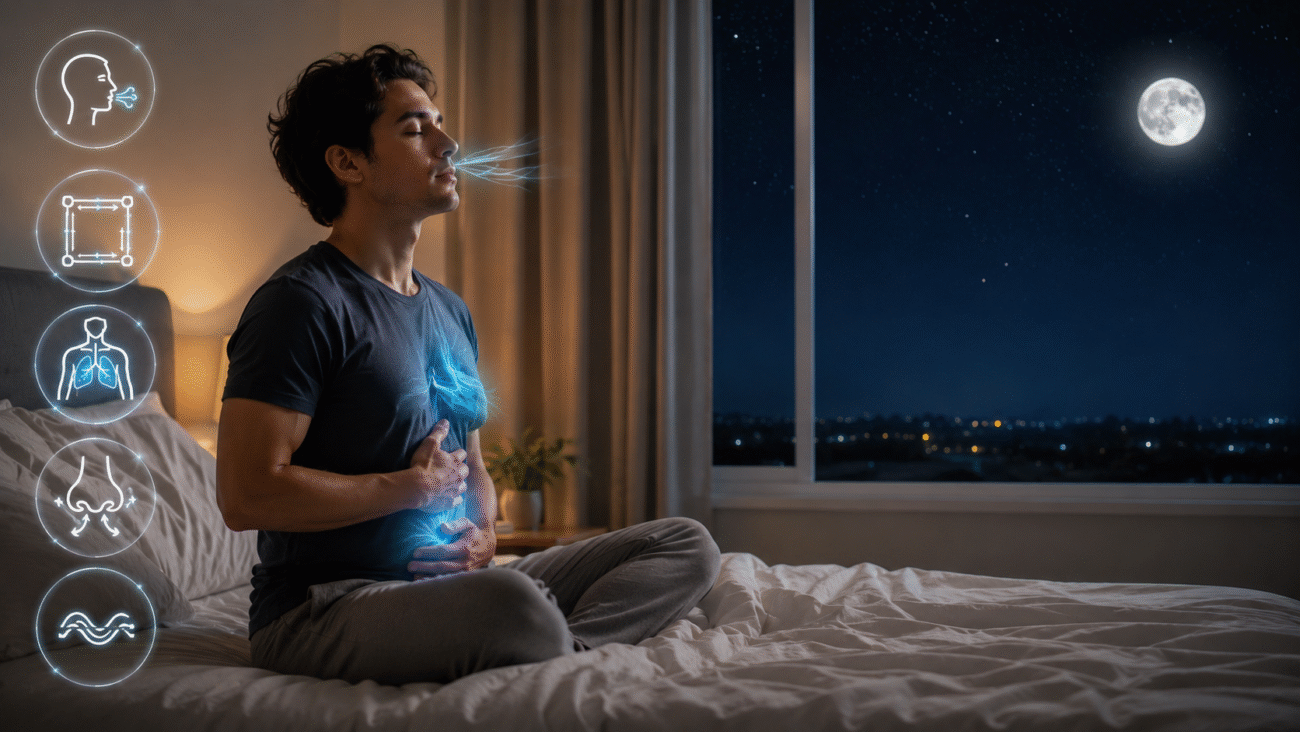
Breathing techniques for better sleep naturally are simple exercises that help slow your breathing and relax your nervous system. When you breathe in a calm and controlled way, your body receives a signal that it is safe to relax.
This can lower stress, reduce anxiety, and make it easier to fall asleep without relying on medication.
How It Works
Your breathing is closely connected to your nervous system.
When you are stressed, breathing often becomes fast and shallow. This keeps your body alert and awake.
When you breathe slowly and deeply:
- Heart rate slows down
- Muscles relax
- Stress hormones decrease
- Mind becomes calmer
- Sleep becomes easier
The goal is to shift your body into a relaxed state before bedtime.
Timeline or Duration
Most breathing exercises take only 2 to 10 minutes.
Some people feel relaxed after just one session. Others may need a few days of practice before noticing improvements in sleep quality.
Consistency is the key.
Top 5 Breathing Techniques
1. 4-7-8 Breathing
This is one of the most popular sleep-breathing exercises.
How to do it:
- Sit or lie down comfortably.
- Breathe in through your nose for 4 seconds.
- Hold your breath for 7 seconds.
- Slowly breathe out through your mouth for 8 seconds.
- Repeat 4 times.
Why it helps:
- Calms the nervous system
- Reduces stress
- Helps you fall asleep faster
This method is great for beginners.
2. Box Breathing
Box breathing is simple and easy to remember.
How to do it:
- Inhale for 4 seconds.
- Hold for 4 seconds.
- Exhale for 4 seconds.
- Hold again for 4 seconds.
- Repeat for several rounds.
Why it helps:
- Improves focus
- Reduces anxiety
- Creates a feeling of balance
Many people use this technique after a stressful day.
3. Belly Breathing
Also called diaphragmatic breathing, this technique encourages deeper breathing.
How to do it:
- Place one hand on your chest.
- Place the other hand on your stomach.
- Breathe in through your nose.
- Let your stomach rise more than your chest.
- Exhale slowly.
Why it helps:
- Encourages full oxygen exchange
- Relaxes muscles
- Supports natural sleep
This is one of the easiest natural sleep techniques to practice.
4. Alternate Nostril Breathing
This breathing method comes from traditional yoga practices.
How to do it:
- Close your right nostril with your thumb.
- Inhale through your left nostril.
- Close the left nostril.
- Exhale through the right nostril.
- Continue alternating sides.
Why it helps:
- Promotes calmness
- Balances breathing patterns
- Reduces mental stress
Practice gently without forcing your breath.
5. Resonant Breathing
This technique focuses on slow and steady breathing.
How to do it:
- Breathe in for 5 seconds.
- Breathe out for 5 seconds.
- Continue for 5 to 10 minutes.
Why it helps:
- Creates a calming rhythm
- Supports heart health
- Improves sleep relaxation techniques
Many people find this exercise soothing before bedtime.
Benefits
Using breathing techniques for better sleep naturally can provide several benefits:
- Helps you fall asleep faster
- Improves sleep quality
- Reduces stress and anxiety
- Promotes relaxation
- Supports a healthy bedtime routine
- May reduce nighttime restlessness
- Easy to practice anywhere
For example, if you often lie awake thinking about work or daily tasks, a few minutes of deep breathing for sleep can help quiet those thoughts.
Risks or Side Effects
Breathing exercises are generally safe.
However, some people may experience the following:
- Lightheadedness
- Mild dizziness
- Temporary discomfort when holding breath
To stay safe:
- Practice gently
- Never force your breathing
- Stop if you feel uncomfortable
- Consult a healthcare professional if you have a breathing condition
Tips for Beginners
If you’re new to sleep breathing exercises, start simple.
- Practice for 2–5 minutes first
- Choose one technique and stick with it
- Create a quiet environment
- Turn off bright screens before bed
- Focus on slow and natural breathing
- Be patient with the process
Building a habit is more important than doing long sessions.
Common Mistakes to Avoid
Many beginners make these mistakes:
- Breathing too fast
- Forcing deep breaths
- Expecting instant results
- Practicing inconsistently
- Holding the breath too long
Remember, the goal is relaxation, not perfection.
FAQs
Which breathing technique is best for sleep?
The 4-7-8 breathing method is one of the most popular options because it helps calm the body and mind quickly.
How long should I do breathing exercises before bed?
Most people benefit from 5 to 10 minutes of practice before sleeping.
Can breathing exercises help with insomnia?
Breathing exercises may help reduce stress and promote relaxation, which can support better sleep for some people.
Is it safe to practice breathing exercises every day?
Yes. Most healthy adults can safely practice relaxation breathing methods daily.
How quickly do breathing techniques work?
Some people feel relaxed immediately, while others notice benefits after several days of regular practice.
Can I do breathing exercises while lying in bed?
Yes. Many bedtime breathing exercises are designed to be practiced comfortably while lying down.
Do breathing exercises replace medical treatment for sleep disorders?
No. If you have a serious sleep disorder, seek advice from a qualified healthcare professional.
Conclusion
Learning breathing techniques for better sleep naturally is a simple and effective way to improve your bedtime routine. These exercises help calm the mind, reduce stress, and prepare the body for restful sleep.
Start with one technique, practice it consistently, and give yourself time to build the habit. Even a few minutes each night can make a noticeable difference in your sleep quality.
