
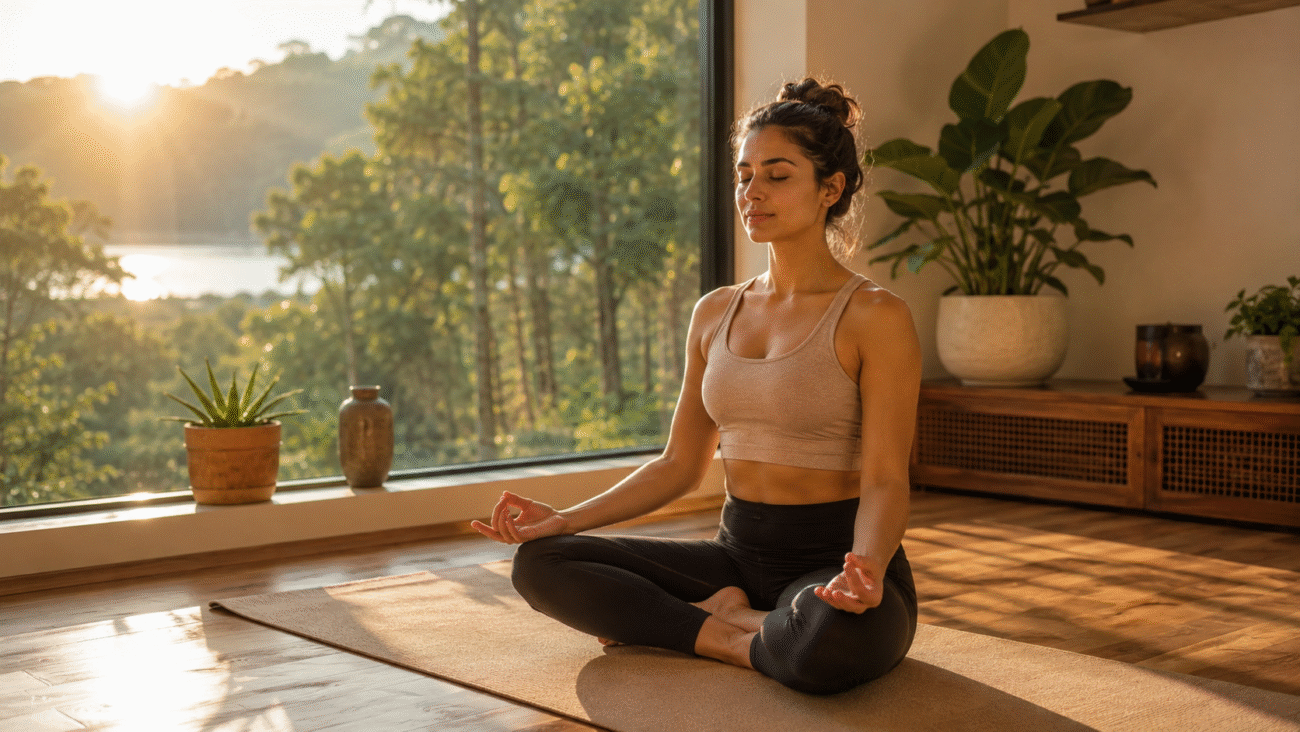
Do you often feel stressed, tired, or unable to focus? Many people face these problems every day. The good news is that a simple breathing practice can help.
Pranayama is a powerful breathing technique from yoga that helps calm the mind and improve overall health. If you are wondering how to practice pranayama at home for beginners, this guide will walk you through everything in a simple and easy way.
By the end of this article, you will understand what pranayama is, how it works, its benefits, common mistakes to avoid, and simple tips to start safely at home.
What Is Pranayama?
Pranayama is a breathing practice that comes from ancient yoga traditions.
The word “Prana” means life energy, and “Yama” means control. Together, pranayama means controlling or managing your breath.
In simple terms, pranayama teaches you how to breathe slowly, deeply, and mindfully.
Many beginners start pranayama to:
- Reduce stress
- Improve focus
- Feel more relaxed
- Support overall wellness
- Build healthy breathing habits
How It Works
Your breath is closely connected to your body and mind.
When you are stressed, your breathing becomes fast and shallow. When you are calm, your breathing becomes slow and steady.
Pranayama helps you take control of your breathing patterns. This sends calming signals to your nervous system and helps your body relax.
Here is a simple step-by-step guide on how to practice pranayama at home for beginners:
Step 1: Choose a Quiet Place
Find a clean and peaceful space in your home.
Avoid noisy areas that may distract you.
Step 2: Sit Comfortably
Sit on a yoga mat, cushion, or chair.
Keep your back straight but relaxed.
Step 3: Relax Your Body
Loosen your shoulders and relax your face.
Place your hands on your knees.
Step 4: Start Deep Breathing
Breathe in slowly through your nose.
Let your belly expand gently.
Step 5: Exhale Slowly
Breathe out through your nose.
Try to make the exhale slightly longer than the inhale.
Step 6: Repeat
Continue for 5 to 10 minutes.
Focus only on your breathing.
How Long Should Beginners Practice?
When starting pranayama at home, keep it simple.
Recommended practice time:
- Week 1: 5 minutes daily
- Week 2: 7–10 minutes daily
- Week 3 and beyond: 10–15 minutes daily
Consistency is more important than duration.
Even a few minutes every day can make a difference.
Simple Pranayama Techniques for Beginners
Deep Belly Breathing
This is one of the easiest breathing exercises for beginners.
Steps:
- Place one hand on your stomach.
- Inhale slowly through your nose.
- Feel your belly rise.
- Exhale slowly.
- Repeat for several minutes.
Alternate Nostril Breathing
This technique is also called Nadi Shodhana.
Steps:
- Close your right nostril.
- Inhale through the left nostril.
- Close the left nostril.
- Exhale through the right nostril.
- Continue alternating sides.
This practice may help improve focus and relaxation.
Equal Breathing
Inhale and exhale for the same count.
For example:
- Inhale for 4 counts
- Exhale for 4 counts
This simple technique is great for beginners.
Benefits of Pranayama
Regular pranayama practice offers many benefits.
Better Stress Management
Slow breathing helps calm the mind and reduce tension.
Improved Focus
Many people notice better concentration after regular practice.
Better Sleep
Relaxed breathing may help you fall asleep more easily.
Increased Energy
Proper breathing supports oxygen flow throughout the body.
Emotional Balance
Pranayama can help you feel calmer during stressful situations.
Improved Breathing Awareness
You become more aware of your breathing habits and learn healthier patterns.
Risks or Side Effects
Although pranayama is generally safe, beginners should practice carefully.
Possible issues include:
- Dizziness
- Lightheadedness
- Shortness of breath
- Discomfort from forcing the breath
To stay safe:
- Never hold your breath for too long
- Avoid pushing yourself
- Stop if you feel uncomfortable
- Practice in a comfortable position
- Consult a healthcare professional if you have breathing or heart conditions
Tips for Beginners
If you are learning how to practice pranayama at home for beginners, these tips can help.
- Practice on an empty stomach
- Choose the same time each day
- Start slowly
- Focus on comfort
- Breathe through the nose
- Keep your posture relaxed
- Be patient with yourself
Remember, progress comes with regular practice.
Common Mistakes to Avoid
Many beginners make simple mistakes.
Breathing Too Fast
Slow and controlled breathing is the goal.
Forcing the Breath
Never strain your lungs.
Practicing After Heavy Meals
Wait at least two hours after eating.
Poor Posture
Sit comfortably with a straight spine.
Expecting Instant Results
Benefits often develop gradually over time.
FAQs
Can I practice pranayama every day?
Yes. Daily practice is often recommended for beginners.
What is the best time to practice pranayama?
Early morning is ideal, but any quiet time can work.
How long does it take to see results?
Some people feel relaxed after one session, while other benefits may appear after a few weeks of regular practice.
Can beginners do pranayama without a yoga teacher?
Yes. Simple breathing exercises can be practiced safely at home when done gently.
Should I practice pranayama before or after exercise?
It is usually best before yoga or after light stretching.
Can pranayama help with stress?
Many people use pranayama to support relaxation and stress management.
Is pranayama safe for older adults?
In many cases, yes. However, anyone with medical conditions should speak with a healthcare professional first.
Conclusion
Learning how to practice pranayama at home for beginners is easier than many people think. You only need a quiet place, a few minutes each day, and a willingness to focus on your breathing.
Start with simple techniques, practice regularly, and avoid rushing the process. Over time, pranayama can become a valuable part of your daily wellness routine.
Take a deep breath, start small, and enjoy the journey toward a calmer and healthier life.
