
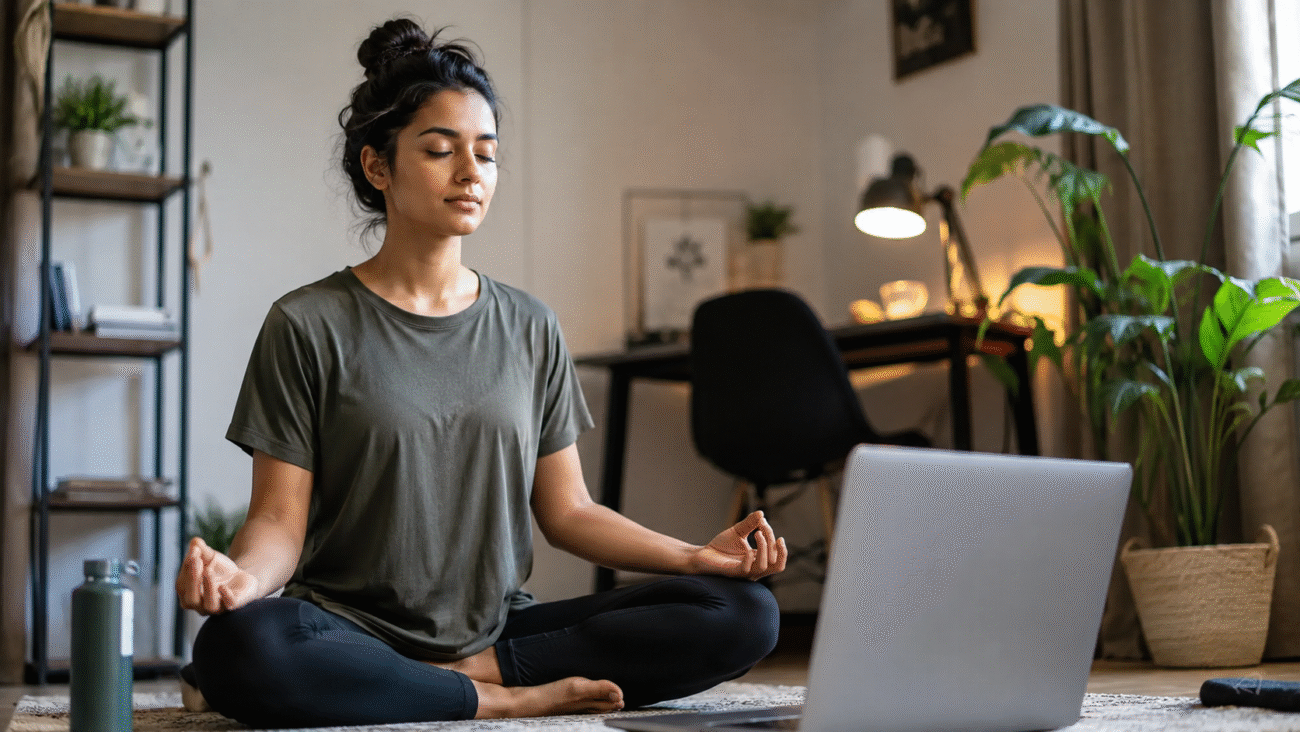
Life feels busy for many people today. Work, family, social media, and daily responsibilities can create stress and mental fatigue. Many people want a simple way to feel calmer, sleep better, and improve their overall well-being.
This is where the benefits of joining an online meditation and breathing course become valuable. These courses help people learn simple techniques to relax the mind, improve focus, and manage stress from the comfort of home.
In this article, you will learn what online meditation and breathing courses are, how they work, their benefits, possible risks, beginner tips, common mistakes, and answers to frequently asked questions.
What Is an Online Meditation and Breathing Course?
An online meditation and breathing course is a structured program that teaches relaxation techniques through video lessons, live sessions, guided practices, and exercises.
These courses focus on:
- Mindfulness meditation
- Deep breathing exercises
- Stress management techniques
- Relaxation practices
- Mental wellness improvement
Most courses can be accessed through websites, mobile apps, or live online classes.
People of all ages can join, even if they have never practiced meditation before.
How It Works
Learning meditation online is usually simple and beginner-friendly.
Step 1: Enroll in a Course
Choose a course that matches your goals, such as stress relief, better sleep, or improved concentration.
Step 2: Follow Guided Sessions
Most online meditation classes include audio or video guidance that helps you stay focused.
Step 3: Practice Breathing Exercises
You learn breathing techniques for relaxation, such as slow breathing and mindful breathing.
Step 4: Build a Daily Routine
Many courses encourage practicing for 10–20 minutes daily.
Step 5: Track Your Progress
Over time, you may notice improvements in your mood, focus, and stress levels.
Timeline or Duration
The duration varies depending on the course.
Typical options include the following:
- 7-day beginner programs
- 21-day mindfulness courses
- 4-week meditation training
- 8-week wellness programs
Many people start noticing small benefits within a few weeks of regular practice.
Benefits
The benefits of joining an online meditation and breathing course go beyond relaxation.
Reduces Stress
One of the biggest reasons people join meditation programs is stress relief.
Breathing exercises help calm the nervous system and reduce feelings of tension.
Improves Focus
Meditation trains the mind to stay present.
This can help improve concentration at work, at school, or during daily activities.
Better Sleep Quality
Many people struggle with racing thoughts at bedtime.
Mindfulness meditation techniques can help relax the mind and support healthier sleep patterns.
Supports Emotional Well-Being
Regular practice may help people feel calmer and more balanced emotionally.
It can also encourage positive thinking and self-awareness.
Convenient Learning
Online courses allow you to learn from home.
There is no need to travel or attend physical classes.
Flexible Schedule
You can practice whenever it fits your routine.
This flexibility makes online learning ideal for busy people.
Builds Healthy Habits
Daily meditation encourages consistency and self-care.
Even a few minutes each day can become a valuable wellness habit.
Helps Manage Anxiety
Many breathing techniques for relaxation focus on slowing down the breath.
This may help reduce feelings of nervousness and overwhelm.
Risks or Side Effects
Meditation is generally safe for most people, but beginners should be aware of a few things.
Temporary Discomfort
Some people may feel restless or impatient during early sessions.
This is normal and usually improves with practice.
Emotional Awareness
Meditation may bring attention to emotions that have been ignored.
While this can be helpful, it may feel uncomfortable at first.
Unrealistic Expectations
Meditation is not a quick fix.
Results often come gradually through regular practice.
Medical Conditions
People with serious mental health concerns should consult a healthcare professional before starting any intensive meditation program.
Tips for Beginners
Starting meditation does not have to be difficult.
Follow these simple tips:
- Start with 5–10 minutes daily
- Choose a quiet space
- Sit comfortably
- Focus on your breathing
- Be patient with yourself
- Follow guided sessions
- Practice consistently
Remember that progress comes with time.
Common Mistakes to Avoid
Many beginners make small mistakes that slow their progress.
Expecting Instant Results
Meditation is a skill that develops gradually.
Skipping Practice
Regular practice is more effective than occasional long sessions.
Trying Too Hard
Meditation is about awareness, not perfection.
Comparing Yourself to Others
Everyone experiences meditation differently.
Ignoring Breathing Techniques
Breathing exercises are an important part of the learning process.
Additional Breathwork Resources
To learn more about the science behind breathing techniques and overall wellness, visit the World Health Organization (WHO): https://www.who.int
If you’re ready to experience guided breathwork training, explore our 9-Day Foundation Breathwork Course Online:
https://kundaliniyogashala.com/9-day-foundation-breathwork-course-online.php
Understanding healthy breathing habits can help you get even more value from this online breathwork course.
FAQs
Is an online meditation and breathing course suitable for beginners?
Yes. Most courses are designed specifically for beginners and provide step-by-step guidance.
How long should I meditate each day?
Many experts recommend starting with 10–20 minutes daily.
Can meditation help reduce stress?
Yes. Stress management techniques taught in meditation courses often help people feel calmer and more relaxed.
Do I need special equipment?
No. Most people only need a quiet place and an internet connection.
How quickly will I see results?
Some people notice benefits within a few weeks, while others may take longer depending on consistency.
Are online meditation classes effective?
Yes. Many people find online classes effective because they offer flexibility and guided instruction.
Can breathing exercises improve sleep?
Many people report better sleep after regularly practicing breathing exercises and mindfulness meditation.
Conclusion
The benefits of joining an online meditation and breathing course can be life-changing for beginners looking to reduce stress, improve focus, and build healthier habits. These courses offer flexible learning, practical guidance, and simple techniques that fit into almost any lifestyle.
Start small, stay consistent, and give yourself time to learn. Even a few minutes of daily practice can make a positive difference in your overall well-being.
