
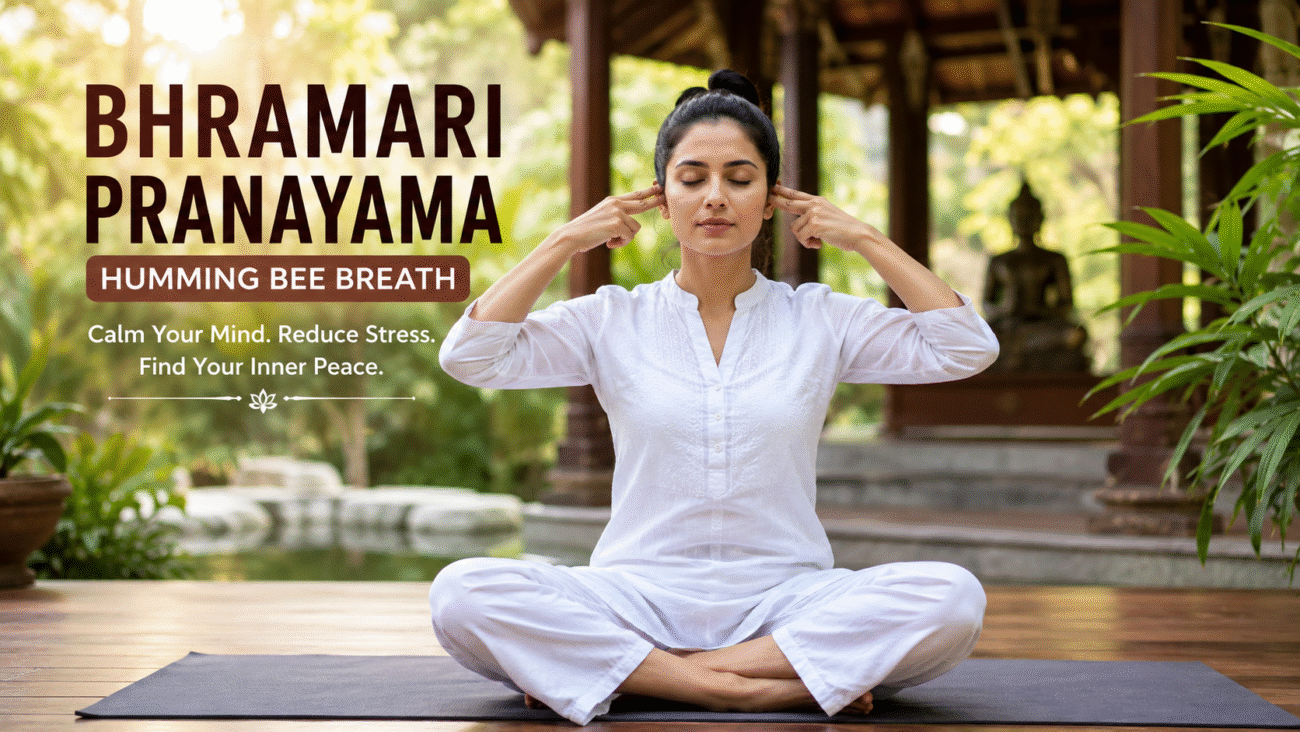
Bhramari Pranayama, or Humming Bee Breath, is a yogic breathing technique where you create a soft humming sound while exhaling. This vibration helps calm the mind, reduce stress, improve concentration, and promote emotional balance. It is often practiced for 5–10 minutes daily, preferably in a quiet environment.
What is Bhramari Pranayama?
Bhramari Pranayama is a traditional yogic breathing practice named after the black Indian bee.
The word “Bhramari” means “bee.” During the practice, you produce a soft humming sound similar to the buzzing of a bee while exhaling.
This gentle vibration creates a soothing effect on the brain and nervous system, making it one of the most relaxing pranayama techniques for beginners.
Why It Matters
Modern life keeps many people under constant mental pressure.
Stress, screen time, lack of sleep, and daily responsibilities can leave the mind feeling overwhelmed.
Bhramari Pranayama offers a simple way to slow down, relax, and reconnect with your breath. Even a few minutes of practice can help create a sense of calm and mental clarity.
How It Works
The humming sound created during exhalation produces gentle vibrations in the head and facial region.
These vibrations may help:
- Relax the nervous system
- Reduce mental chatter
- Improve focus
- Encourage deeper breathing
- Support emotional balance
The combination of slow breathing and sound awareness makes Bhramari an effective mindfulness practice.
How to Practice Bhramari Pranayama
Step 1: Sit Comfortably
Sit in a comfortable position with your spine straight.
You may sit cross-legged on the floor or on a chair if needed.
Step 2: Relax Your Body
Close your eyes and relax your shoulders, jaw, and facial muscles.
Take a few natural breaths.
Step 3: Inhale Slowly
Breathe in gently through your nose.
Avoid forcing the breath.
Step 4: Create a Humming Sound
As you slowly exhale through the nose, make a soft humming sound like a bee.
Keep the sound smooth and steady.
Step 5: Repeat
Continue for 5–10 rounds or several minutes.
Focus on the vibration and the calming effect it creates.
Timeline and Duration
For beginners:
- Start with 3–5 minutes daily
- Gradually increase to 10 minutes
- Practice 5–7 days per week
Many people notice a feeling of calm immediately after practice. Consistent practice may provide greater benefits over time.
Benefits of Bhramari Pranayama
1. Helps Reduce Stress
One of the most popular humming bee breath benefits is stress relief.
The gentle vibrations and slow breathing encourage relaxation and help reduce feelings of tension.
2. Calms the Mind
Bhramari can help quiet mental noise and overthinking.
Many practitioners use it before meditation because it helps create mental stillness.
3. Supports Better Sleep
Practicing before bedtime may help relax the mind and prepare the body for restful sleep.
4. Improves Concentration
A calmer mind often leads to better focus and attention.
Students and professionals may find it helpful before mentally demanding tasks.
5. Encourages Mindfulness
The sound and vibration naturally bring awareness to the present moment.
This can improve mindfulness and emotional balance.
6. Promotes Relaxed Breathing
The practice encourages slower and more controlled breathing patterns.
This may help reduce feelings of nervousness and restlessness.
7. Beginner Friendly
Unlike some advanced breathing techniques, Bhramari is easy to learn and suitable for most beginners.
Risks, Side Effects, or Limitations
Bhramari Pranayama is generally considered safe when practiced gently.
However, keep these points in mind:
- Avoid forcing the humming sound
- Do not strain the breath
- Stop if you feel dizzy or uncomfortable
- Practice in a quiet, comfortable environment
- Consult a qualified yoga teacher if you have specific medical concerns
This practice supports well-being but should not replace professional medical treatment.
Practical Example
Imagine you have had a stressful day at work.
Your mind is racing, and you feel mentally exhausted.
You sit quietly for five minutes, close your eyes, and practice Bhramari Pranayama.
With each humming exhalation, your breathing slows down, your thoughts become quieter, and you begin to feel more relaxed and centered.
Tips for Beginners
- Practice on an empty or light stomach
- Choose a quiet space
- Keep your humming sound gentle
- Focus on the vibration rather than volume
- Start slowly and stay consistent
- Practice at the same time each day
Common Mistakes to Avoid
Breathing Too Fast
Slow, relaxed breathing is essential.
Avoid rushing the inhale or exhale.
Making the Sound Too Loud
The humming should feel soothing, not forceful.
Practicing with Tension
Relax your face, shoulders, and jaw before beginning.
Expecting Instant Results
While some benefits may be felt immediately, regular practice often brings the greatest improvements.
Poor Posture
Sit comfortably with an upright spine for better breathing.
Expert Insights
In traditional yoga practice, Bhramari Pranayama is often recommended for people who struggle with mental stress, emotional imbalance, or difficulty concentrating.
For beginners, it serves as an excellent introduction to pranayama because it combines breath awareness, sound, and mindfulness in a simple and accessible way.
The key is consistency rather than intensity. A few minutes daily can be more beneficial than occasional long sessions.
Frequently Asked Questions
What is Bhramari Pranayama?
Bhramari Pranayama is a yogic breathing technique that involves making a humming bee-like sound while exhaling. It is commonly practiced to calm the mind, reduce stress, and improve concentration.
What are the main humming bee breath benefits?
The main benefits include stress relief, mental relaxation, improved focus, emotional balance, and support for mindfulness. Many people also use it to prepare for meditation or sleep.
How long should beginners practice Bhramari Pranayama?
Beginners can start with 3–5 minutes daily. As comfort increases, the duration can gradually be extended to around 10 minutes.
When is the best time to practice Bhramari Pranayama?
Early morning is often considered ideal. However, it can also be practiced in the evening or whenever you need mental relaxation.
Can Bhramari Pranayama help with stress?
Yes. Bhramari for stress relief is one of the most common reasons people practice this technique. The humming sound and slow breathing encourage relaxation and mental calmness.
Can children practice Bhramari Pranayama?
In many cases, children can practice it under proper guidance. The technique is simple and gentle, making it accessible for different age groups.
Should I practice Bhramari before meditation?
Yes. Many yoga practitioners use it before meditation because it helps quiet the mind and improve focus.
Can I practice Bhramari Pranayama every day?
Yes. Daily practice is commonly recommended. Consistency helps develop better breath awareness and relaxation over time.
Is Bhramari Pranayama difficult to learn?
No. It is one of the easiest pranayama techniques for beginners and can usually be learned quickly with proper instruction.
Conclusion
Bhramari Pranayama is a simple yet powerful breathing practice that helps calm the mind, reduce stress, and improve focus.
Its gentle humming sound makes it unique among pranayama techniques and especially suitable for beginners.
Start with just a few minutes each day, practice consistently, and observe how the humming bee breath supports greater relaxation and mental clarity over time.
If you are new to breathwork and want structured guidance, consider learning the fundamentals of pranayama through a beginner-friendly course before exploring advanced techniques.
Continue Your Pranayama Journey
Building a strong foundation through pre-pranayama is the first step toward a safe and rewarding breathwork practice. Once you develop breath awareness, diaphragmatic control, and nervous system regulation, you can gradually progress through different levels of pranayama training.
Explore the next steps in your journey:
- Start with our 9-Day Foundation Breathwork & Pre-Pranayama Course
- Learn the fundamentals in our Beginner Pranayama Course
- Deepen your skills with the intermediate breathwork training.
- Master advanced techniques through our Advanced Pranayama Training
Each program is designed to help you progress step-by-step while maintaining safety, awareness, and authentic yogic principles.
