
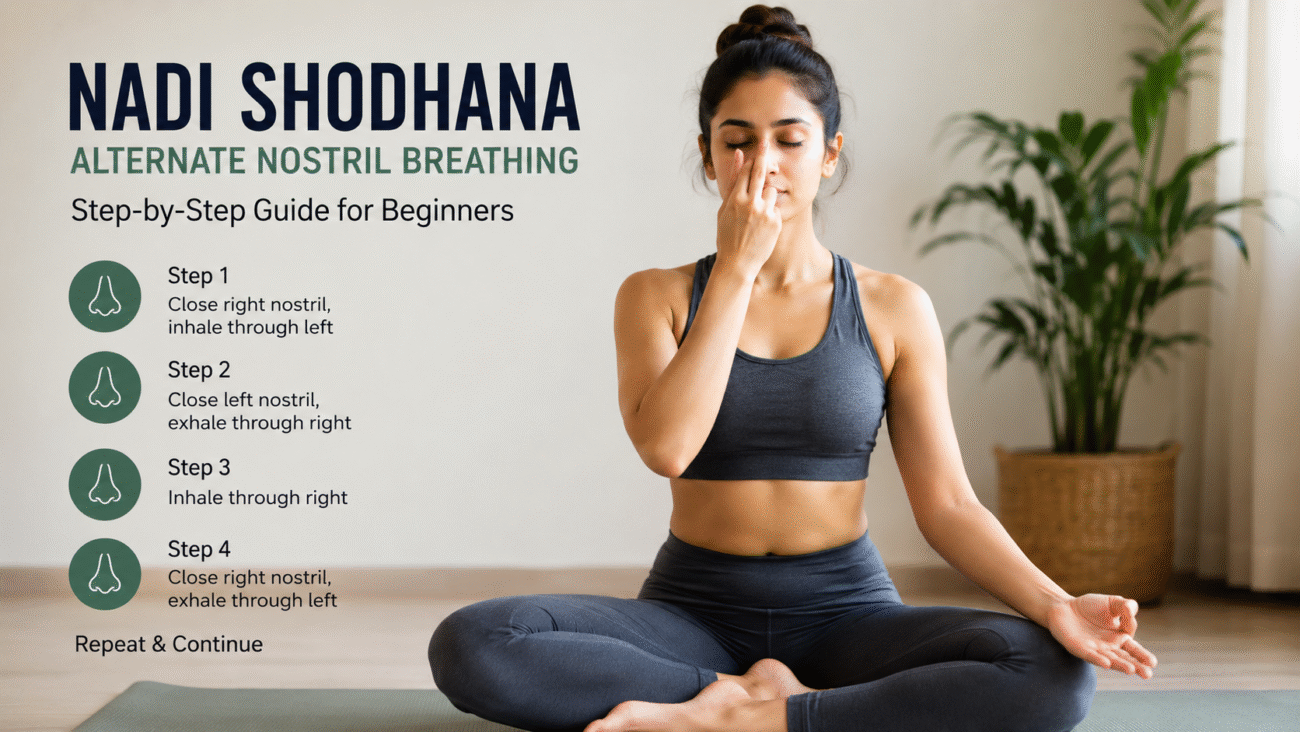
Nadi Shodhana pranayama, or alternate nostril breathing, is a yogic breathing technique that involves breathing through one nostril at a time in a specific pattern. It helps calm the nervous system, improve focus, reduce stress, and create mental balance. Beginners can safely practice it for 5–10 minutes daily.
What is Nadi Shodhana?
Nadi Shodhana is a traditional pranayama practice from yoga. The term comes from Sanskrit:
- Nadi = Energy channel
- Shodhana = Purification or cleansing
The practice is often called alternate nostril breathing because you inhale through one nostril and exhale through the other in a controlled pattern.
According to yogic teachings, this technique helps clear energetic pathways and promote balance between the body’s active and calming energies.
Why It Matters
Modern life constantly stimulates the nervous system.
Many beginners struggle with:
- Stress
- Anxiety
- Poor concentration
- Restlessness
- Sleep issues
Nadi Shodhana offers a simple solution. By slowing and balancing the breath, it encourages the body to shift into a calmer state.
Many yoga teachers include this technique as one of the first breathing practices students learn because it is gentle, accessible, and highly effective.
How Nadi Shodhana Works
Alternate nostril breathing influences the nervous system by encouraging slower, more mindful breathing patterns.
When practiced regularly, it may help:
- Slow the heart rate
- Improve oxygen flow
- Support mental clarity
- Encourage relaxation
- Improve focus and awareness
The practice creates a natural rhythm that helps the mind settle and become more present.
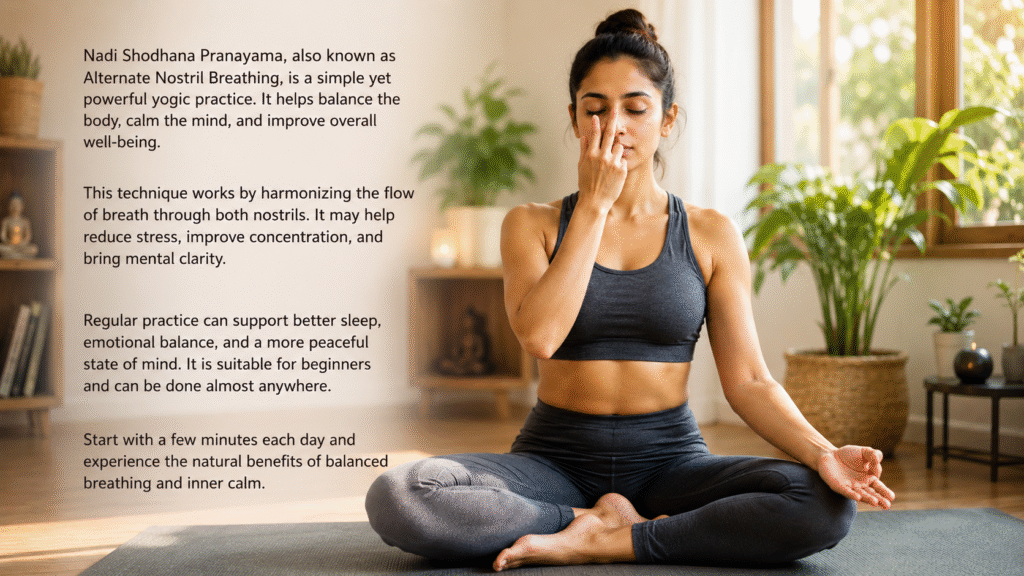
Step-by-Step Guide for Beginners
Follow these simple steps.
Step 1: Find a Comfortable Position
Sit comfortably with your spine straight.
You may sit.
- Cross-legged on the floor
- On a meditation cushion
- In a chair with feet flat on the ground
Relax your shoulders and face.
Step 2: Position Your Hand
Use your right hand.
Traditionally:
- Thumb controls the right nostril
- The ring finger controls the left nostril
Keep the index and middle fingers lightly resting between the eyebrows or folded inward.
Step 3: Close the Right Nostril
Use your thumb to gently close the right nostril.
Inhale slowly through the left nostril.
Take a smooth, comfortable breath.
Step 4: Switch Sides
Close the left nostril with your ring finger.
Release the right nostril.
Exhale slowly through the right nostril.
Then inhale through the right nostril.
Step 5: Complete the Cycle
Close the right nostril again.
Release the left nostril.
Exhale through the left nostril.
This completes one full round of Nadi Shodhana Pranayama.
Continue for 5–10 rounds at a comfortable pace.
How Long Should You Practice?
Beginners should start slowly.
Recommended duration:
| Experience Level | Duration |
|---|---|
| Beginner | 5 minutes |
| Regular Practitioner | 10–15 minutes |
| Advanced Practitioner | 20+ minutes |
Morning practice is often ideal, but it can also be used during stressful moments throughout the day.
Benefits of Nadi Shodhana Pranayama
1. Reduces Stress
One of the most recognized nadi shodhana benefits is stress reduction.
Slow breathing helps calm the nervous system and promotes relaxation.
2. Improves Focus
Many practitioners report improved concentration after just a few minutes of practice.
It can be useful before studying, working, or meditating.
3. Promotes Emotional Balance
Alternate nostril breathing may help create a sense of emotional stability and calm.
4. Supports Better Sleep
Practicing before bedtime may help quiet racing thoughts and prepare the mind for rest.
5. Enhances Mindfulness
Because attention stays on the breath, Nadi Shodhana naturally encourages present-moment awareness.
6. Prepares the Mind for Meditation
Many yoga traditions teach this technique before meditation because it helps settle mental activity.
Risks and Limitations
Nadi Shodhana is generally safe for most healthy individuals.
However:
- Do not force the breath.
- Avoid practicing when severely congested.
- Stop if you feel dizzy or uncomfortable.
- Consult a healthcare professional if you have respiratory or cardiovascular concerns.
The practice should always feel smooth and comfortable.
Practical Example
Imagine you’re preparing for an important meeting.
Your thoughts are racing and your heart feels tense.
Instead of reaching for your phone or another distraction, spend five minutes practicing alternate nostril breathing.
Many people notice:
- Slower breathing
- Improved focus
- Reduced nervousness
- Better mental clarity
This simple technique can become a valuable daily tool.
Tips for Beginners
To get the most from your practice:
- Start with just 5 minutes daily.
- Focus on smooth breathing rather than perfection.
- Practice in a quiet place.
- Keep your posture comfortable.
- Stay consistent.
Even a few minutes each day can make a noticeable difference over time.
Common Mistakes to Avoid
Breathing Too Fast
The breath should be slow and gentle.
Forcing the Breath
Never strain or hold your breath beyond your comfort level.
Poor Posture
A slouched position can restrict breathing.
Practicing Irregularly
Consistency matters more than duration.
Obsessing Over Technique
Beginners should focus on comfort and rhythm first.
Expert Insights
In traditional pranayama training, Nadi Shodhana is often introduced before more advanced breathing practices.
Experienced yoga teachers frequently recommend it because:
- It is easy to learn.
- It is suitable for most beginners.
- It supports mental and emotional balance.
- It prepares students for deeper pranayama and meditation work.
If you’re interested in learning pranayama systematically, consider enrolling in a structured training program such as the Beginner Pranayama Course offered by Kundalini Yogashala: https://kundaliniyogashala.com/beginner-pranayama-course-online.php
Guided instruction can help you build confidence and establish a safe, effective practice.
Frequently Asked Questions
1. What is the main purpose of Nadi Shodhana?
The main purpose of Nadi Shodhana is to balance the body and mind through controlled breathing. It helps calm the nervous system and improve mental clarity.
2. Is alternate nostril breathing good for beginners?
Yes. Alternate nostril breathing is one of the safest and easiest pranayama techniques for beginners. It is simple to learn and does not require breath retention.
3. How many minutes should I practice daily?
Most beginners can start with 5 minutes daily. As comfort increases, practice time can gradually extend to 10–15 minutes.
4. Can Nadi Shodhana help with anxiety?
Many people use Nadi Shodhana to manage feelings of stress and anxiety. Slow, mindful breathing may help create a calmer mental state.
5. Should I practice on an empty stomach?
Yes. Like most pranayama techniques, it is generally best practiced on an empty stomach or several hours after a meal.
6. Can I practice before sleep?
Absolutely. Many practitioners find that alternate nostril breathing helps relax the mind and prepare the body for restful sleep.
7. Is breath retention necessary?
No. Beginners can practice without holding their breath. Simple inhalation and exhalation through alternate nostrils is sufficient.
8. How quickly will I notice benefits?
Some people feel calmer after a single session. Long-term benefits usually develop through consistent daily practice.
Conclusion
Nadi Shodhana Pranayama is a simple yet powerful breathing technique that can help reduce stress, improve focus, and promote emotional balance.
For beginners, it offers an accessible entry point into the world of pranayama and mindful breathing. Start with just a few minutes each day, stay consistent, and focus on gentle, comfortable breathing.
Over time, alternate nostril breathing can become a valuable practice for supporting both mental clarity and overall well-being.
Continue Your Pranayama Journey
Building a strong foundation through pre-pranayama is the first step toward a safe and rewarding breathwork practice. Once you develop breath awareness, diaphragmatic control, and nervous system regulation, you can gradually progress through different levels of pranayama training.
Explore the next steps in your journey:
- Start with our 9-Day Foundation Breathwork & Pre-Pranayama Course
- Learn the fundamentals in our Beginner Pranayama Course
- Deepen your skills with the intermediate breathwork training.
- Master advanced techniques through our Advanced Pranayama Training
Each program is designed to help you progress step-by-step while maintaining safety, awareness, and authentic yogic principles.
