
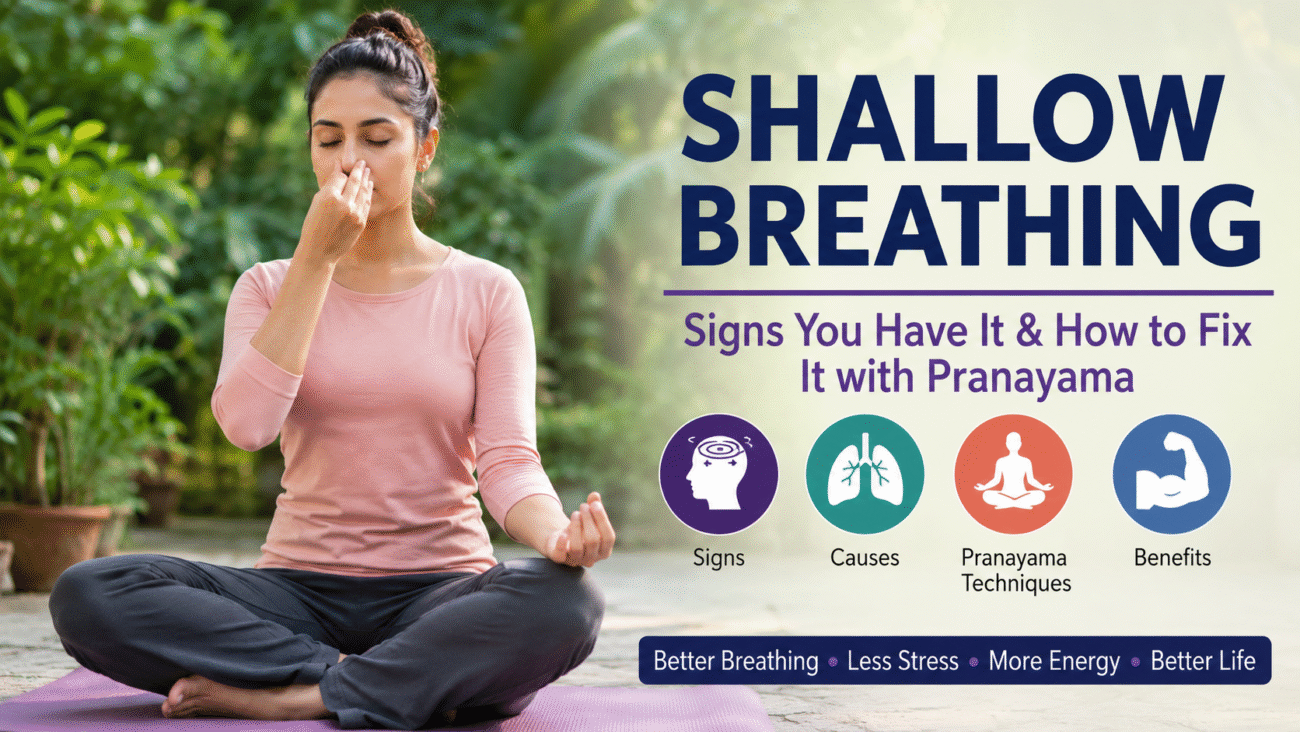
Shallow breathing happens when you take small, quick breaths that mainly use the upper chest.
Instead of fully expanding the lungs, the breath stays near the top of the chest. This limits oxygen exchange and can make the body work harder than necessary.
Healthy breathing typically involves the diaphragm, a large muscle below the lungs. When the diaphragm moves properly, the belly gently expands during inhalation.
Shallow Breathing: A breathing pattern characterized by short, rapid breaths that rely mostly on chest muscles rather than the diaphragm, reducing breathing efficiency.
Why It Matters
Breathing affects almost every system in the body.
When breathing becomes shallow for long periods, it may contribute to:
- Increased stress
- Anxiety symptoms
- Muscle tension
- Reduced energy
- Poor sleep quality
- Brain fog
- Reduced physical performance
Many people don’t realize their breathing habits may be contributing to these issues.
How Breathing Works
Understanding normal breathing makes it easier to spot problems.
Step 1: Air Enters Through the Nose
The nose filters, warms, and humidifies incoming air.
Step 2: The Diaphragm Contracts
The diaphragm moves downward, creating space for the lungs to expand.
Step 3: The Lungs Fill Efficiently
More air reaches the lower parts of the lungs where oxygen exchange is most effective.
Step 4: Oxygen Reaches the Bloodstream
Oxygen travels throughout the body to support organs and tissues.
Step 5: Carbon Dioxide Leaves the Body
A relaxed exhalation removes waste gases and helps maintain balance.
When breathing becomes shallow, this process becomes less efficient.
Signs You Have Shallow Breathing
Many signs can appear gradually.
Common symptoms include:
- Frequent sighing
- Feeling out of breath easily
- Chest breathing instead of belly breathing
- Tight shoulders and neck muscles
- Anxiety or nervousness
- Fatigue despite adequate sleep
- Poor concentration
- Lightheadedness
- Rapid breathing during stress
- Difficulty taking a deep breath
Simple Self-Test
Place one hand on your chest and one on your stomach.
Take a normal breath.
If your chest moves much more than your belly, you may be relying on shallow chest breathing.
Common Causes
Several factors can contribute to shallow breathing.
Stress and Anxiety
Stress often triggers faster, shorter breaths.
Poor Posture
Slouching limits diaphragm movement and lung expansion.
Sedentary Lifestyle
Long periods of sitting can affect breathing mechanics.
Chronic Tension
Tight chest, neck, and shoulder muscles may restrict breathing.
Habitual Breathing Patterns
Sometimes shallow breathing becomes an unconscious habit developed over years.
How to Fix Shallow Breathing with Pranayama
Pranayama is the yogic practice of breath control.
These techniques can help retrain the body to breathe more deeply and efficiently.
1. Diaphragmatic Breathing
This is often the best starting point.
Steps
- Sit or lie comfortably.
- Place one hand on your chest.
- Place the other on your belly.
- Inhale slowly through your nose.
- Let the belly rise first.
- Exhale gently through the nose.
Practice for 5 minutes daily.
2. Nadi Shodhana (Alternate Nostril Breathing)
This technique helps calm the nervous system.
Steps
- Sit comfortably.
- Close the right nostril.
- Inhale through the left nostril.
- Close the left nostril.
- Exhale through the right nostril.
- Inhale through the right.
- Switch sides and continue.
Practice for 3–5 minutes.
3. Ujjayi Breathing
Often called “ocean breath.”
Steps
- Inhale through the nose.
- Slightly narrow the throat.
- Create a soft ocean-like sound.
- Exhale slowly through the nose.
This helps slow breathing and improve awareness.
4. Sama Vritti (Box Breathing)
This method encourages balanced breathing.
Steps
- Inhale for 4 counts
- Hold for 4 counts
- Exhale for 4 counts
- Hold for 4 counts
Repeat several rounds.
5. Bhramari Pranayama
Known as humming bee breath.
Steps
- Inhale deeply.
- Exhale while making a gentle humming sound.
- Feel the vibration throughout the face and head.
This can help reduce stress-related shallow breathing.
How Long Does It Take to Improve?
Many people notice increased awareness within a few days.
For lasting improvement:
| Practice Frequency | Expected Improvement |
|---|---|
| Daily for 1 week | Better breathing awareness |
| 2-4 weeks | Reduced tension and stress |
| 1-3 months | Improved breathing habits |
| 3+ months | Stronger diaphragmatic breathing patterns |
Consistency matters more than intensity.
Benefits of Correcting Shallow Breathing
Improving breathing patterns may offer several benefits.
Physical Benefits
- Better oxygen delivery
- Improved stamina
- Less neck and shoulder tension
- Better sleep quality
Mental Benefits
- Reduced stress
- Improved focus
- Better emotional regulation
- Increased sense of calm
Wellness Benefits
- Greater body awareness
- Improved relaxation
- Better mindfulness practice
Risks, Side Effects, or Limitations
Pranayama is generally safe for most healthy individuals.
However:
- Avoid forcing deep breaths.
- Stop if dizziness occurs.
- Progress gradually.
- People with respiratory or cardiovascular conditions should consult a healthcare professional before starting advanced breathing practices.
Pranayama supports healthy breathing but is not a substitute for medical treatment.
Practical Example
Imagine Sarah, a desk worker who spends eight hours daily at a computer.
She often feels anxious and tired and experiences neck tension.
After learning diaphragmatic breathing and practicing Nadi Shodhana for 10 minutes daily, she notices:
- Less stress during work
- Fewer episodes of breathlessness
- Better concentration
- Improved relaxation before sleep
This is a common example of how breathing awareness can positively affect daily life.
Tips for Beginners
Start simple.
- Practice for 5 minutes daily.
- Breathe through the nose whenever possible.
- Focus on relaxed breathing.
- Sit comfortably.
- Be patient with progress.
- Use reminders throughout the day.
Small improvements add up over time.
Common Mistakes to Avoid
Avoid these common errors:
- Forcing large breaths
- Raising the shoulders while inhaling
- Practicing inconsistently
- Holding the breath excessively
- Ignoring discomfort
- Expecting instant results
The goal is natural, comfortable breathing.
Expert Insights
One pattern commonly seen in beginners is overthinking the breath.
The most effective approach is often gentle awareness rather than aggressive correction.
Many yoga and breathing instructors encourage focusing first on diaphragmatic breathing before moving to advanced pranayama techniques. Building a strong foundation helps create long-term breathing improvements.
Frequently Asked Questions
1. Is shallow breathing dangerous?
Not always. Occasional shallow breathing during stress is normal. However, chronic shallow breathing may contribute to fatigue, anxiety, and discomfort. Persistent breathing problems should be evaluated by a healthcare professional.
2. Can anxiety cause shallow breathing?
Yes. Anxiety often triggers rapid chest breathing. This response is part of the body’s stress reaction and can become a habit if stress is frequent.
3. What is the best pranayama for shallow breathing?
Diaphragmatic breathing is usually the best starting point. Nadi Shodhana and Ujjayi breathing are also helpful for improving breathing awareness and relaxation.
4. How many minutes of pranayama should beginners do?
Most beginners can start with 5–10 minutes daily. Consistency is more important than long sessions.
5. Can shallow breathing cause fatigue?
Yes. Less efficient breathing may contribute to feelings of tiredness and reduced energy, especially when combined with stress and poor posture.
6. Should my stomach move when I breathe?
In healthy diaphragmatic breathing, the belly usually expands gently during inhalation and relaxes during exhalation.
7. Can posture affect breathing?
Absolutely. Slouching can restrict diaphragm movement and make shallow breathing more likely. Sitting and standing upright can improve breathing efficiency.
8. How quickly can pranayama improve breathing?
Many people notice better awareness within days. Significant improvements often occur after several weeks of regular practice.
Conclusion
Shallow breathing is more common than many people realize. Signs such as fatigue, anxiety, chest tightness, and frequent sighing may indicate that you’re relying too much on chest breathing.
The good news is that pranayama offers simple and effective tools to improve breathing habits. Techniques like diaphragmatic breathing, Nadi Shodhana, Ujjayi breathing, and Bhramari can help restore deeper, calmer breathing over time.
Start with just a few minutes each day. Small, consistent practice can make a meaningful difference in your breathing, stress levels, and overall well-being.
Modern breathing research published by the National Institutes of Health (NIH) suggests that controlled breathing may support stress management and nervous system regulation.
Continue Your Pranayama Journey
Building a strong foundation through pre-pranayama is the first step toward a safe and rewarding breathwork practice. Once you develop breath awareness, diaphragmatic control, and nervous system regulation, you can gradually progress through different levels of pranayama training.
Explore the next steps in your journey:
- Start with our 9-Day Foundation Breathwork & Pre-Pranayama Course
- Learn the fundamentals in our Beginner Pranayama Course
- Deepen your skills with the intermediate breathwork training.
- Master advanced techniques through our Advanced Pranayama Training
Each program is designed to help you progress step-by-step while maintaining safety, awareness, and authentic yogic principles.
