
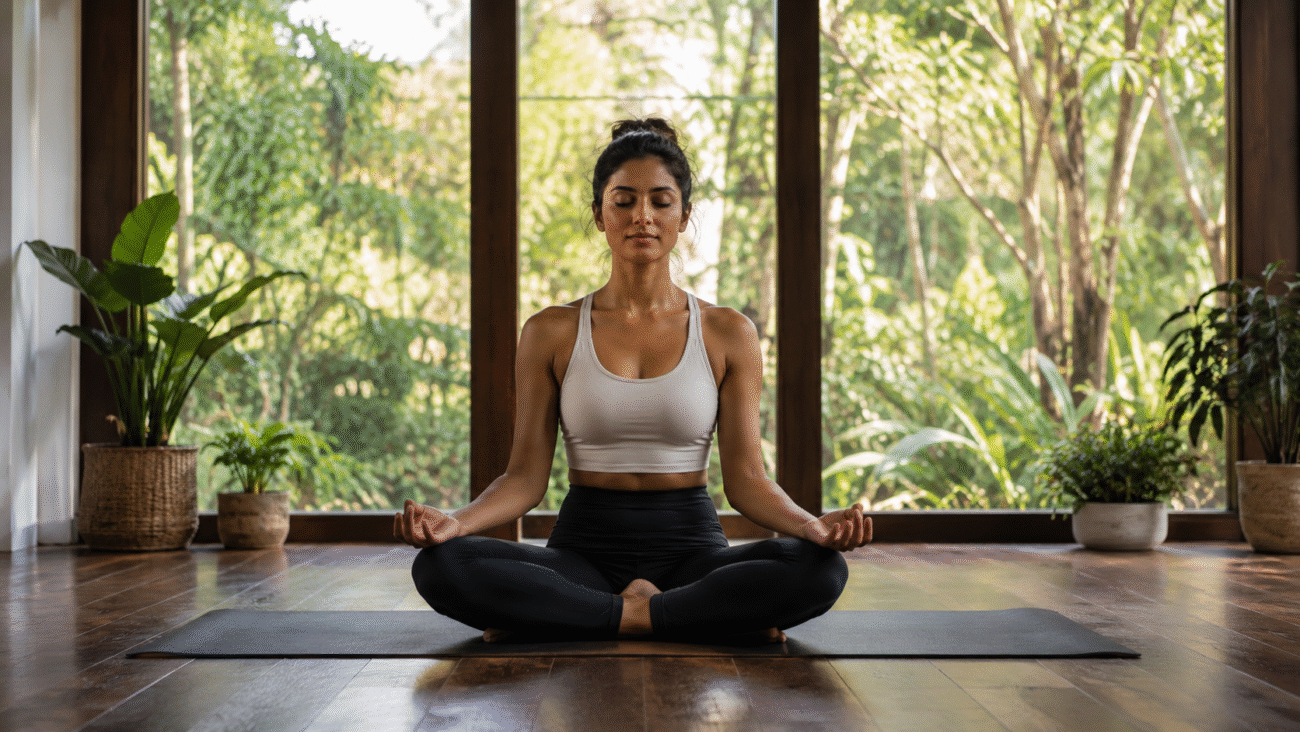
What Is Pre-Pranayama?
Pre-pranayama is the preparation stage that comes before formal pranayama practice.
Think of it as warming up before exercise.
Just as athletes prepare their muscles before intense training, yoga practitioners prepare their breath and nervous system before practicing pranayama.
Pre-pranayama typically includes:
- Breath awareness
- Diaphragmatic breathing
- Postural correction
- Gentle movement
- Relaxation techniques
- Nervous system regulation
- Rib cage mobility exercises
Its purpose is not to control the breath aggressively.
Instead, it helps restore natural breathing mechanics and awareness.
Why Pre-Pranayama Matters
Most modern people do not breathe efficiently.
Long hours at desks, stress, poor posture, excessive screen time, and anxiety often lead to the following:
- Shallow chest breathing
- Tight shoulders
- Restricted diaphragm movement
- Reduced lung expansion
- Chronic stress responses
When these patterns exist, advanced breathing techniques may feel uncomfortable.
Some people experience:
- Dizziness
- Headaches
- Anxiety
- Breathlessness
- Increased tension
Pre-pranayama helps correct these issues before introducing more structured breathing practices.
Pre-pranayama matters because it prepares the body, breath, and nervous system for safe and effective pranayama practice.
How Pre-Pranayama Works
The process usually follows a gradual progression.
Step 1: Observe Your Natural Breath
Begin by noticing:
- Breathing speed
- Breath depth
- Chest movement
- Belly movement
No changes are made initially.
The goal is awareness.
Step 2: Release Physical Tension
Many breathing restrictions come from tight muscles.
Focus on:
- Neck relaxation
- Shoulder mobility
- Rib cage expansion
- Gentle stretching
When tension decreases, breathing naturally improves.
Step 3: Activate the Diaphragm
The diaphragm is the primary breathing muscle.
Many people rely too heavily on their upper chest.
Simple belly breathing exercises help the following:
- Strengthen diaphragm function
- Improve oxygen exchange
- Create calmer breathing patterns
Step 4: Regulate the Nervous System
Breathing and the nervous system are deeply connected.
Slow, comfortable breathing helps shift the body from a stress response into a calmer state.
This creates an ideal environment for pranayama practice.
Step 5: Build Breath Awareness
Only after breathing becomes more natural and comfortable should structured pranayama techniques begin.
This creates a safer learning progression.
Timeline for Learning Pre-Pranayama
There is no fixed timeline.
For many beginners:
| Stage | Duration |
|---|---|
| Breath Awareness | 2-3 Days |
| Diaphragm Activation | 3-5 Days |
| Posture & Mobility Work | 1 Week |
| Nervous System Regulation | Ongoing |
| Readiness for Pranayama | 1-3 Weeks |
The timeline varies depending on individual breathing habits and lifestyle.
Types of Pre-Pranayama Practices
Breath Observation
Simply noticing how you breathe.
Diaphragmatic Breathing
Learning to engage the belly and diaphragm.
Somatic Movement
Gentle movements that release tension and improve body awareness.
Postural Awareness
Improving spinal alignment and chest mobility.
Relaxation Practices
Reducing unnecessary muscular and mental tension.
Benefits of Pre-Pranayama
Pre-pranayama offers many benefits.
Better Breathing Mechanics
You learn to breathe more efficiently.
Reduced Stress
Calmer breathing helps calm the mind.
Improved Lung Function
The lungs can expand more fully.
Better Posture
Breathing muscles work more effectively.
Greater Breath Awareness
You become aware of unhealthy breathing habits.
Easier Pranayama Practice
Advanced techniques become more comfortable and effective.
Increased Body Awareness
You learn to notice tension and release it naturally.
Risks, Side Effects, or Limitations
Pre-pranayama is generally safe.
However, expectations should remain realistic.
It Is Not a Quick Fix
Breathing patterns often develop over years.
They require consistent practice to improve.
Results Vary
Everyone starts with a different breathing baseline.
Some people notice changes within days.
Others need several weeks.
Medical Conditions Require Guidance
People with respiratory, cardiovascular, or serious health conditions should consult qualified healthcare professionals before beginning breathing programs.
Practical Example
Imagine two beginners.
Person A watches a video and immediately starts rapid breathing exercises.
Within minutes they feel dizzy and uncomfortable.
Person B spends a week learning:
- Belly breathing
- Breath awareness
- Postural alignment
- Relaxation techniques
When Person B begins pranayama, the experience feels smoother, safer, and more natural.
This demonstrates why preparation matters.
Tips for Beginners
If you are new to breathing practices:
- Start slowly
- Never force the breath
- Focus on awareness first
- Practice daily for a few minutes
- Sit comfortably
- Maintain good posture
- Stop if you feel uncomfortable
- Learn from qualified teachers
Remember:
Better breathing is built through consistency, not intensity.
Common Mistakes to Avoid
Skipping the Foundation
Many beginners rush into advanced techniques.
Forcing Deep Breaths
Breathing should feel comfortable.
Holding the Breath Too Soon
Breath retention should only be introduced when appropriate.
Ignoring Posture
Poor posture restricts breathing efficiency.
Chasing Sensations
The goal is healthy breathing, not dramatic experiences.
Practicing Inconsistently
Small daily sessions are better than occasional long sessions.
Expert Insights
One of the most common patterns seen in new students is chronic chest breathing.
Many people believe they are breathing deeply when they are actually lifting their shoulders and tightening their neck muscles.
In traditional yoga education, the foundation always comes first.
A calm nervous system, functional diaphragm, relaxed posture, and breath awareness create the conditions needed for successful pranayama.
The most effective practitioners are rarely the ones who push hardest.
They are usually the ones who build patiently and consistently.
Frequently Asked Questions
What is pre-pranayama in yoga?
Pre-pranayama is the preparation stage before pranayama. It focuses on improving breathing mechanics, posture, awareness, and nervous system balance so that formal breathing practices can be performed safely and effectively.
Can beginners start pranayama without pre-pranayama?
Technically yes, but it is not recommended. Without proper preparation, many beginners struggle with poor breathing habits that can reduce the effectiveness of pranayama practice.
How long should I practice pre-pranayama?
Most beginners benefit from one to three weeks of foundational practice. The exact timeline depends on breathing patterns, posture, stress levels, and individual needs.
Is diaphragmatic breathing part of pre-pranayama?
Yes. Diaphragmatic breathing is one of the most important pre-pranayama techniques because it helps restore natural breathing function and improves breath awareness.
Can pre-pranayama help with stress?
Yes. Gentle breathing awareness and nervous system regulation practices often help reduce stress and promote relaxation by encouraging slower and more balanced breathing patterns.
What happens if I skip pre-pranayama?
Some people may experience discomfort, tension, dizziness, or difficulty performing breathing techniques effectively. A strong foundation usually leads to better long-term results.
Is pre-pranayama the same as pranayama?
No. Pre-pranayama prepares the body and breath. Pranayama involves structured breathing techniques designed to regulate and expand the breath more intentionally.
Can I practice pre-pranayama every day?
Yes. Daily practice is encouraged because gentle breath awareness, posture work, and diaphragmatic breathing are generally safe and beneficial for most healthy individuals.
Conclusion
Pre-pranayama is the foundation of every successful breathing practice.
Before learning advanced pranayama techniques, it is important to understand how you currently breathe, release tension, activate the diaphragm, and calm the nervous system.
By taking time to build this foundation, you can improve breathing efficiency, reduce stress, increase awareness, and create a safer path.
If you are just starting your breathwork journey, begin with pre-pranayama first. A strong foundation today can make every future breathing practice more effective, comfortable, and rewarding.
Modern breathing research published by the National Institutes of Health (NIH) suggests that controlled breathing may support stress management and nervous system regulation.
Continue Your Pranayama Journey
Building a strong foundation through pre-pranayama is the first step toward a safe and rewarding breathwork practice. Once you develop breath awareness, diaphragmatic control, and nervous system regulation, you can gradually progress through different levels of pranayama training.
Explore the next steps in your journey:
- Start with our 9-Day Foundation Breathwork & Pre-Pranayama Course
- Learn the fundamentals in our Beginner Pranayama Course
- Deepen your skills with the intermediate breathwork training.
- Master advanced techniques through our Advanced Pranayama Training
Each program is designed to help you progress step-by-step while maintaining safety, awareness, and authentic yogic principles.
